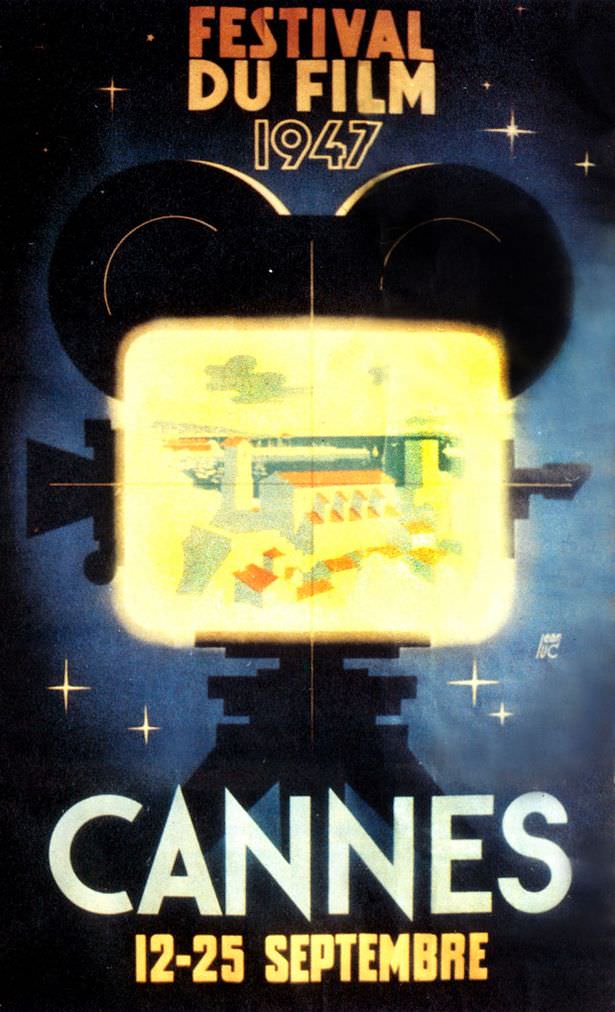
Bold lettering announces “Festival du Film 1947” above a stylized camera silhouette, its glowing screen spilling light across a deep, star-speckled background. The design leans into mid-century optimism: a night-sky palette, crisp typography, and a sense that cinema itself is a kind of beacon. At the bottom, “CANNES” dominates the poster, with “12–25 Septembre” grounding the dreaminess in a specific festival window.
What makes this Cannes cover art especially telling is how it echoes the post-war mood of international film culture—celebration first, rivalry second. The title’s wry point about country-based nominations hints at an era when recognition could be distributed in a way that kept delegates, studios, and audiences on good terms, turning the awards process into a diplomatic exercise as much as an artistic one. In that context, the poster’s cosmic sparkle reads like more than decoration; it suggests a big, shared stage where everyone could feel included in the story cinema was telling about itself.
For readers searching Cannes 1947, early film festival history, or vintage festival poster design, this image offers a compact lesson in how festivals sold their own mythology. The graphic camera becomes both machine and monument, framing cinema as modern, international, and a little magical—exactly the tone you’d want when welcoming films “from everywhere” and ensuring, as the title jokes, that nobody leaves empty-handed. Even without naming specific winners, the poster captures the spirit of an awards culture designed to send people home smiling.