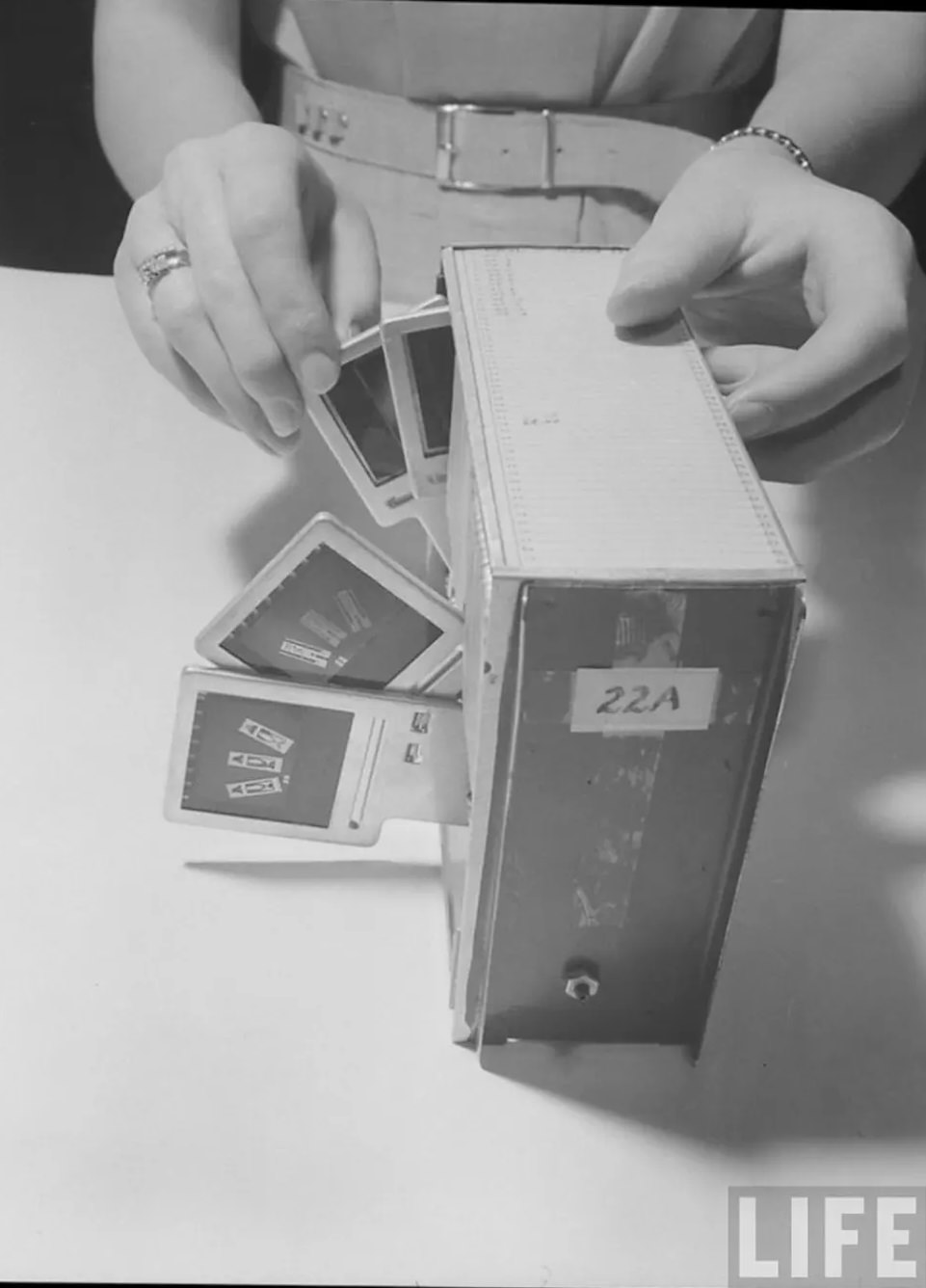
Hands hover over a chunky, box-like device as small rectangular “screens” fan outward like a deck of cards, each one offering a different product view. A handwritten label on the side and the tactile, mechanical feel of the controls suggest a retail experiment built for an era when shopping technology had to be physical—part catalog, part machine. Instead of scrolling a webpage, the customer appears to flip through miniature displays to browse choices in a pre-internet online shopping store concept.
Long before e-commerce became everyday life, inventors and retailers were already chasing the dream of ordering from a screen and having goods shipped to your door. Systems like the one pictured hint at early interactive shopping: curated images, numbered selections, and a structured way to transmit an order without wandering aisles. The promise was convenience—bringing the store to the shopper—using the tools available at the time: slides, panels, buttons, and a lot of clever engineering.
For anyone fascinated by the history of inventions and consumer technology, this photo is a reminder that “online shopping” didn’t begin with the web; it evolved from bold prototypes that tried to digitize choice before digital networks were common. The design language—modular, labeled, and built for demonstration—reads like a bridge between mail-order catalogs and modern digital retail. Seen today, it’s both quaint and surprisingly familiar: browse, select, order, ship—the same workflow, just made tangible.