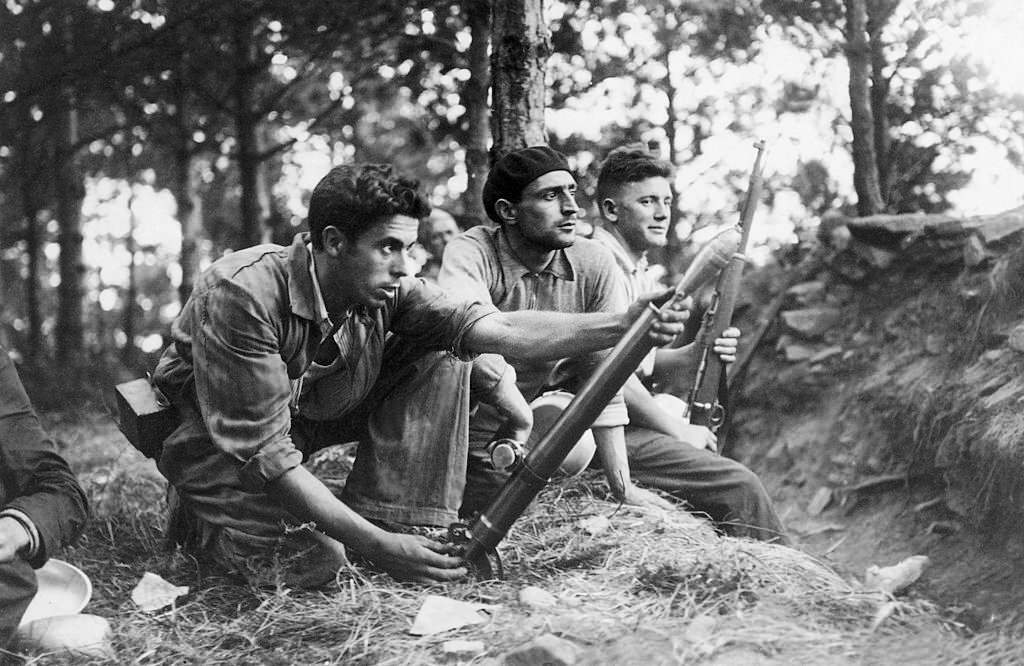
Tension settles over a wooded position as a small band of militiamen crouch behind a low earthen bank, their faces turned toward an unseen front. One man steadies a mortar tube angled upward, while others clutch rifles and wait for the signal, the scene framed by trees and scattered undergrowth. The title’s “Nationalist Enemy” places the moment squarely in the civil-war atmosphere of 1936, where improvised defenses and quick decisions often mattered as much as heavy equipment.
Close attention reveals the practical details of irregular warfare: sleeves rolled, simple caps, and a mix of gear that suggests volunteers rather than a fully standardized army. The mortar—portable, bluntly functional—promises a sudden arc of explosive force from behind cover, letting attackers strike without exposing themselves directly. Even in stillness, the composition conveys urgency, with bodies leaned forward and weapons held ready, as though the next command could come at any second.
For readers exploring Civil Wars history, this photograph offers more than battlefield drama; it hints at how modern conflict blurred into everyday landscapes, turning forests and embankments into firing positions. The interplay of light through leaves and the hard lines of weapons underscores the contrast between natural calm and human violence. As a historical image for a WordPress post, it speaks to militia organization, tactics like mortar fire, and the charged language of “Nationalist” versus “enemy” that defined so many fractures of the era.