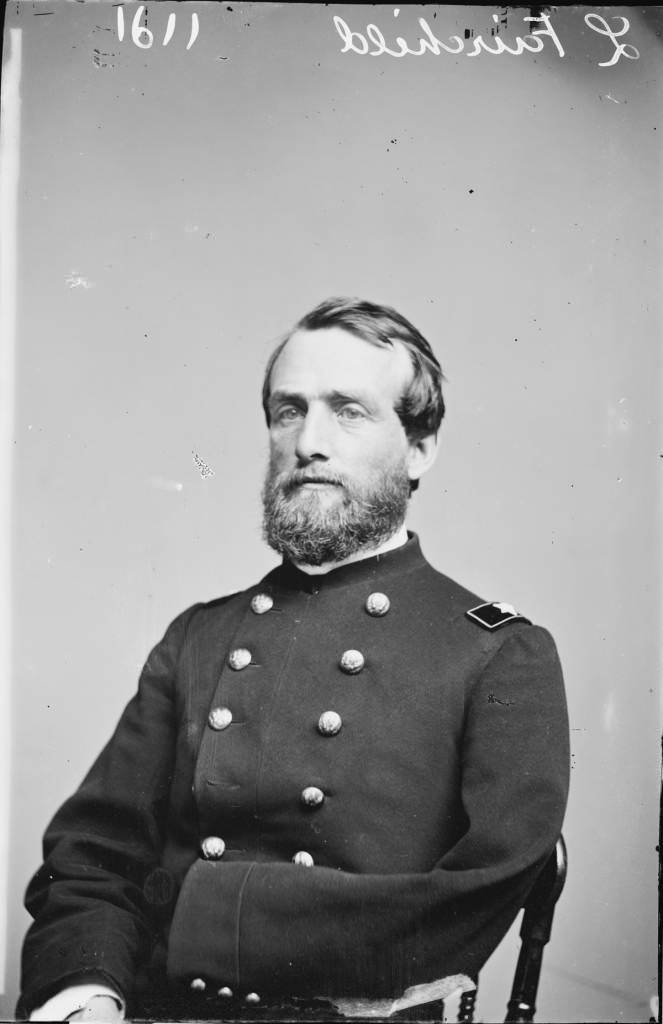
Lucius Fairchild appears here in a formal military portrait, posed with a steady, direct gaze that suits the era’s studio style. The dark double-breasted uniform and bright metal buttons draw the eye, while the plain backdrop keeps attention fixed on the man himself—an officer presented with dignity rather than drama. Small details, from the neat collar to the carefully arranged posture, suggest an image meant to convey authority and public confidence.
Behind that composed surface lies the brutal turning point noted in the title: Fairchild lost his left arm on the first day of the Battle of Gettysburg in 1863. For many Civil War veterans, such wounds became lifelong markers of sacrifice, reshaping careers and identities long after the firing stopped. The portrait’s restraint—no battlefield scenery, no visible spectacle—makes the story feel even more intimate, inviting viewers to consider what is absent as much as what is shown.
Wisconsin politics enters the frame through what came next, when Fairchild was elected Governor of Wisconsin in 1866, part of a broader postwar moment when veteran service carried powerful civic weight. As a historical photo, it works on two levels: a carefully crafted likeness of a uniformed officer and a visual doorway into the Civil War’s long aftermath. Readers searching for Gettysburg history, Civil War portraits, or Wisconsin governors will find in this image a reminder of how personal loss and public leadership often intersected in the nineteenth century.