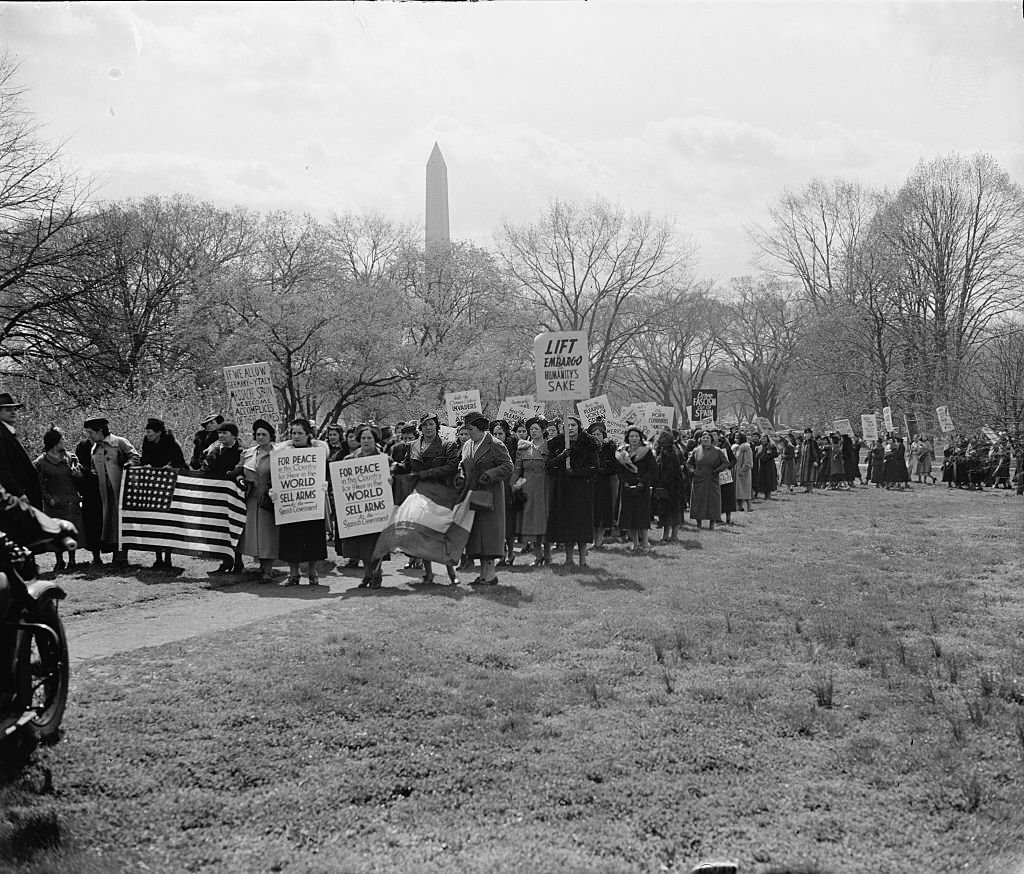
A long procession of women stretches along a Washington, D.C. park path, their coats and hats suggesting a brisk early spring day as they move toward the State Department. In the distance the Washington Monument rises above bare trees, anchoring the scene firmly in the capital’s monumental landscape. At the front, marchers hold both an American flag and a Spanish flag, signaling a protest aimed not only at Spain’s crisis but also at U.S. policy and public opinion.
Handmade placards turn the march into a moving argument: “FOR PEACE FOR OUR WORLD DON’T SELL ARMS,” and “LIFT EMBARGO HUMANITY’S SAKE,” among other slogans that call for aid and oppose the selling of weapons. The tone is urgent but orderly, with participants packed closely together as the line continues far back along the road. The image fits the post’s “Civil Wars” framing, evoking the era when international conflict spilled into American streets through petitions, rallies, and public demonstrations.
Rather than a quiet diplomatic tableau, the photograph reveals activism as a form of diplomacy—citizens pressing their case at the doorstep of government. It also highlights the role of women as organizers and spokespersons, using banners and visibility to demand action in a moment of global tension. For readers interested in historical protests in Washington, D.C., Spanish civil conflict, and debates over embargoes and arms sales, this scene offers a vivid snapshot of how foreign policy was contested in public view.