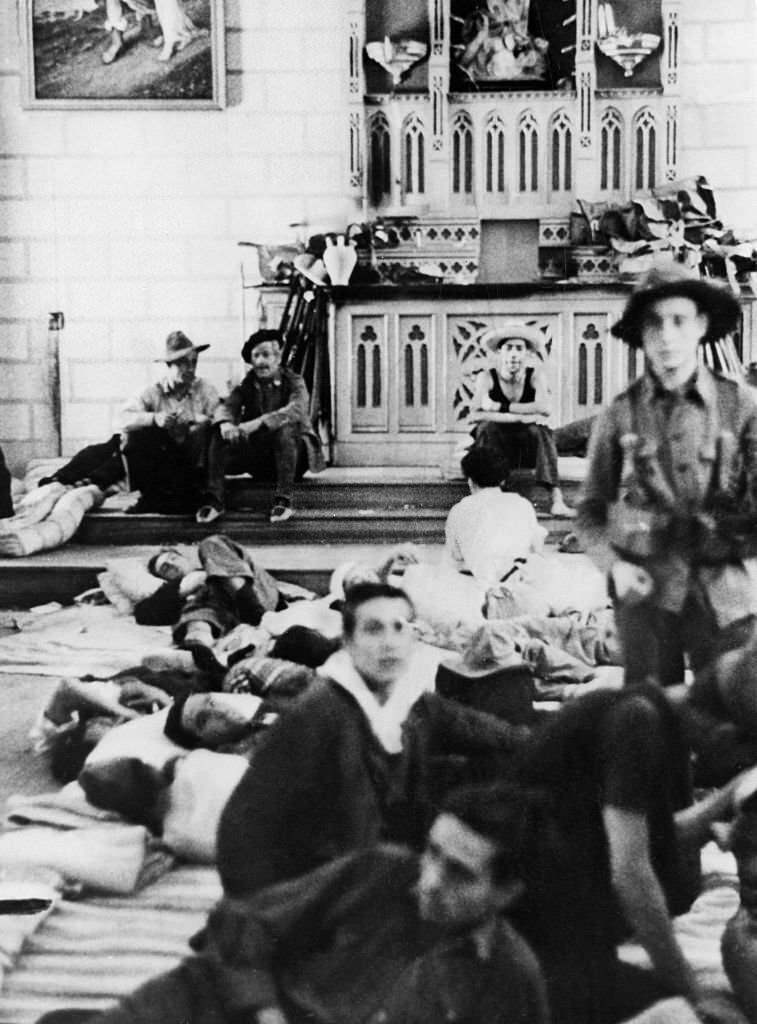
Inside a commandeered interior that feels more like a sanctuary than a barracks, exhausted men lie shoulder to shoulder on the floor while a few sit propped against the steps of an ornate altar. The camera catches the uneasy overlap of sacred architecture and wartime necessity: carved panels and gothic arches rising above improvised bedding, personal gear piled where offerings might once have been. A blurred figure moving through the foreground suggests constant motion—messages carried, guards сменяющиеся, and the restless vigilance that comes with a siege.
The title places this moment in 1936 during the Spanish Civil War and the bitter Siege of the Alcázar, when Republican troops encircled the fortress and those inside endured weeks of pressure, shortages, and fear. Rather than a triumphant battlefield tableau, the photograph emphasizes the human cost of civil conflict—fatigue, overcrowding, and the thin margin between routine and catastrophe. It also hints at how quickly familiar spaces were repurposed, with public and religious buildings turned into makeshift quarters as the front pressed into daily life.
For readers searching Spanish Civil War history, the Siege of the Alcázar, or Republican operations in 1936, this image offers an intimate look at what siege conditions meant away from the firing line. The men’s varied postures—sleeping, staring, waiting—convey a long pause punctuated by sudden danger, a pattern common to urban warfare and encirclement. As a historical photo for a WordPress post, it invites reflection on how war rearranges not only cities and fortresses, but also the private rhythms of those caught inside them.