Category: Artworks
Step into the world of timeless artworks that shaped our visual culture. Explore rare paintings, sculptures, and creative masterpieces that reveal the evolution of artistic expression through centuries.From Renaissance genius to modern minimalism, each piece tells a story of imagination, innovation, and beauty that continues to inspire artists and collectors worldwide.
-
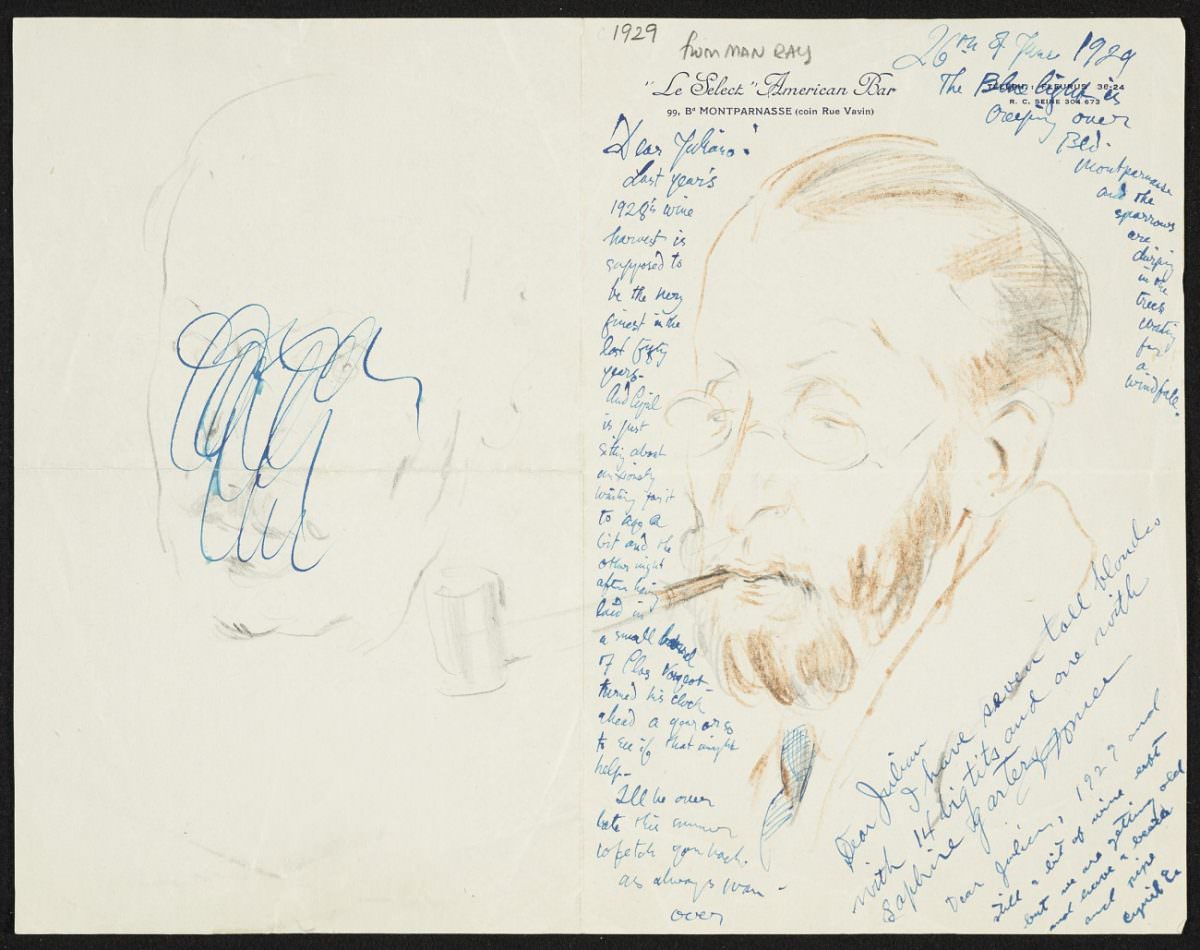
#21 Man Ray to painter Julian E. Levi, 1929.
A lively sheet of correspondence becomes an artwork in its own right here, mixing handwritten notes with quick, confident drawing. Across the page, Man Ray’s message to painter Julian E. Levi is layered over a sketched male profile—bearded, contemplative—rendered in soft brown tones, as if the letter paused to become a portrait. The composition feels…
-
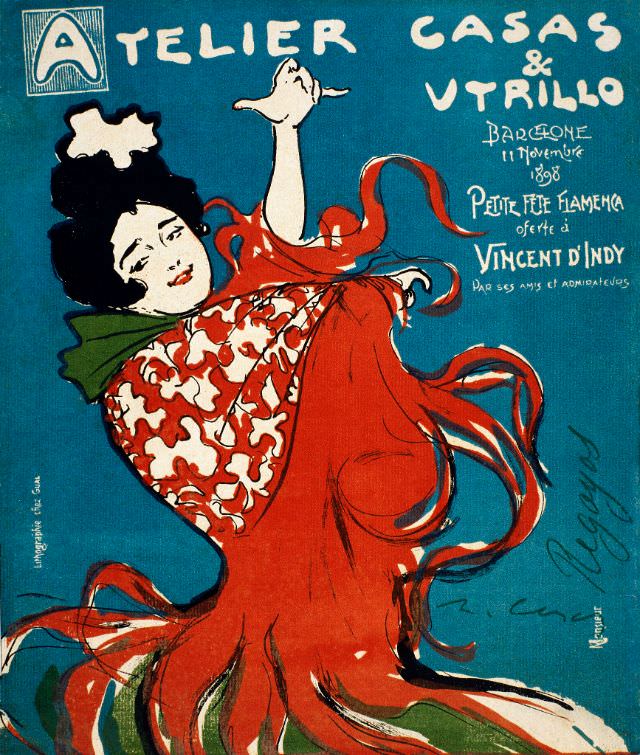
#6 Atelier Casas & Utrillo, Barcelone, 1898
A bold sweep of blue sets the stage for a swirling flamenco dancer, her red dress exploding into ribbon-like curves that seem to move even on paper. The stylized figure—dark hair piled high, pale face turned in mid-gesture—signals the energy of Barcelona’s late‑19th‑century art scene, when posters and prints were becoming public spectacles as much…
-
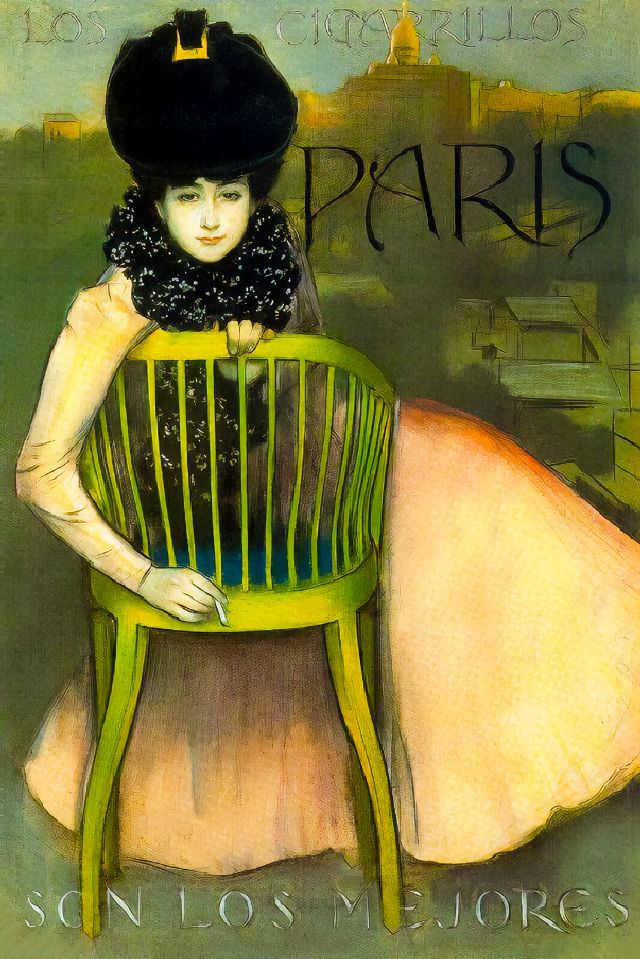
#22 Cigarrillos Paris, Montmartre, 1901
Montmartre’s bohemian air lingers in the poster-like artwork titled “Cigarrillos Paris, Montmartre, 1901,” where a poised woman turns toward the viewer from behind a vivid green chair. Her oversized black hat and dark, textured scarf frame a pale face and a steady gaze, while a slender cigarette rests in her hand—an emblem of modern leisure…
-
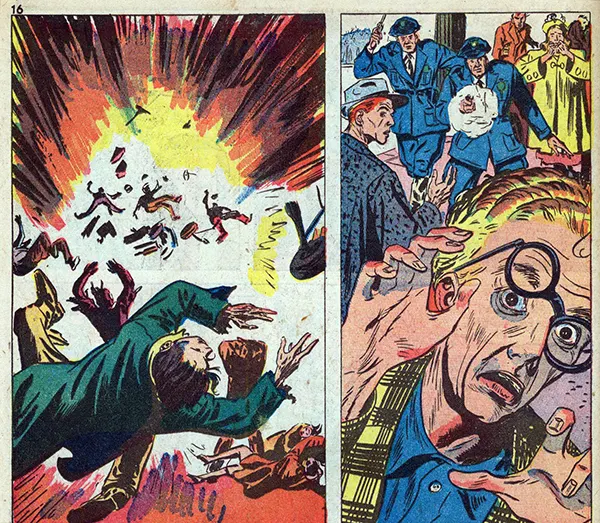
#9 Is This Tomorrow: America Under Communism! A Vivid Comic Book of 1947 America’s Communist Fears
Pulp-color panic erupts on the page in this striking panel from *Is This Tomorrow: America Under Communism!*—a piece of 1940s propaganda art that turned Cold War anxieties into vivid, fast-moving comic drama. A blast of flame and debris fills one side while figures tumble in the chaos, rendered with exaggerated motion and high-contrast color meant…
-
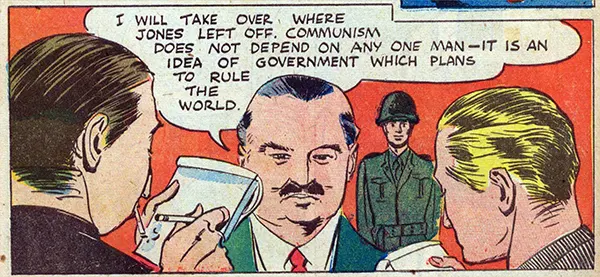
#25 Is This Tomorrow: America Under Communism! A Vivid Comic Book of 1947 America’s Communist Fears #25 Art
Cold War anxiety leaps off the page in this piece of comic book art, where a stern, mustached figure dominates the center of the panel while two men flank him in tense conversation. A uniformed soldier stands in the background like a warning made visible, reinforcing the sense that politics and policing have merged into…
-
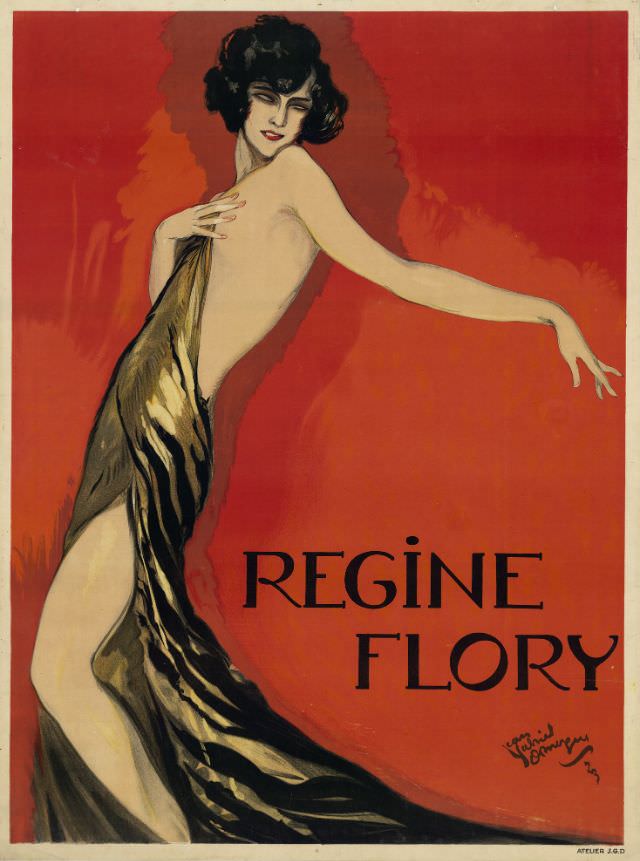
#15 Régine Flory, 1925
Reǵine Flory steps out of the 1920s with the kind of theatrical poise that defined the era’s visual culture. In this artwork, a sleek figure turns in profile, one arm extended as if mid-dance, while a dark, liquid gown clings and drapes with dramatic shine. The warm red-orange background heightens the sense of spotlight and…
-

#1 Claude Monet’s Personal Eden: The Studio and Gardens of Giverny #1 Artworks
A vast, high-ceilinged studio opens up like a private stage, where monumental canvases line the walls and light pours in from above. At the center, everyday furnishings—a simple sofa, a chair, and a small work table—soften the scale, hinting that this was not merely a workspace but a lived-in refuge. The arrangement feels deliberate: painting,…
-
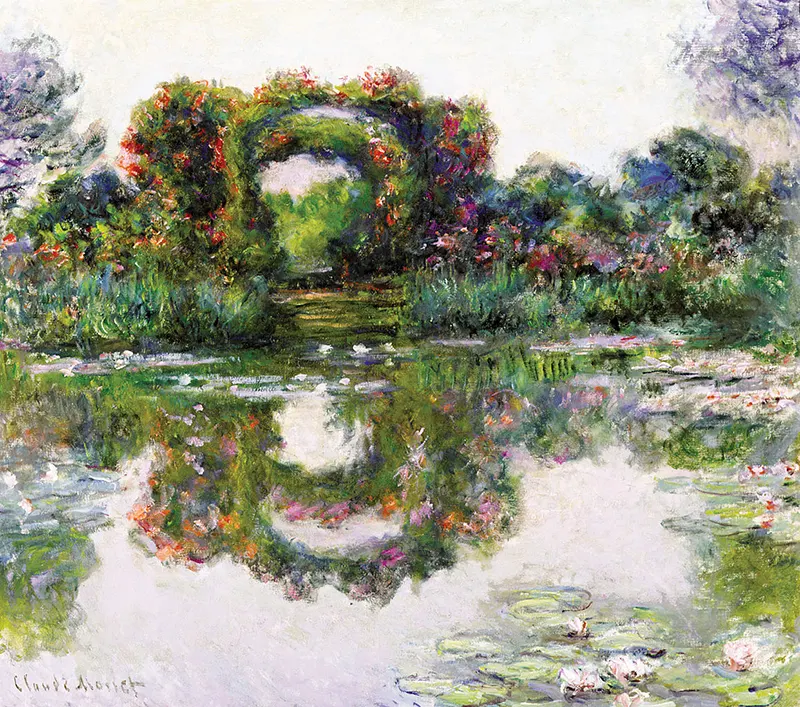
#17 Flowering Arches, Giverny, 1913, Phoenix Art Museum.
Color and atmosphere take the lead in “Flowering Arches, Giverny, 1913,” where a garden structure thick with blooms rises like a green portal above a quiet pond. The arch’s rounded opening draws the eye inward, while reds, violets, and fresh spring greens are laid down in soft, broken strokes that let light feel as tangible…
-
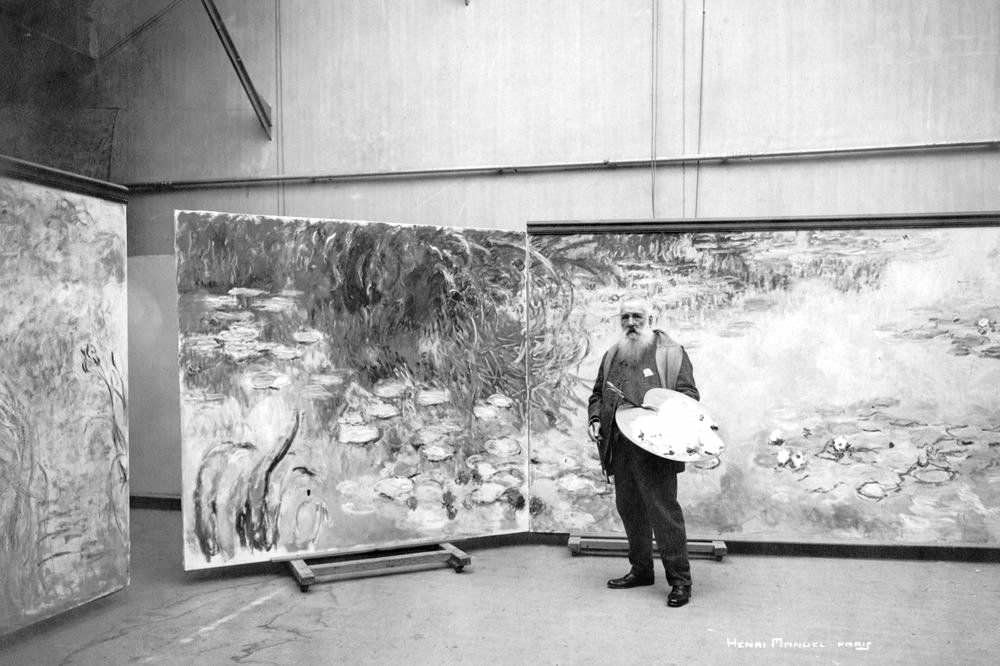
#33 Claude Monet’s Personal Eden: The Studio and Gardens of Giverny #33 Artworks
Inside a high-ceilinged studio, monumental panels of water lilies rise like walls of rippling light, dwarfing the lone painter who stands before them with palette in hand. The scene hints at the sheer ambition behind Claude Monet’s late work, where brushstrokes become atmosphere and the garden becomes an entire world. Even in a simple historical…
-
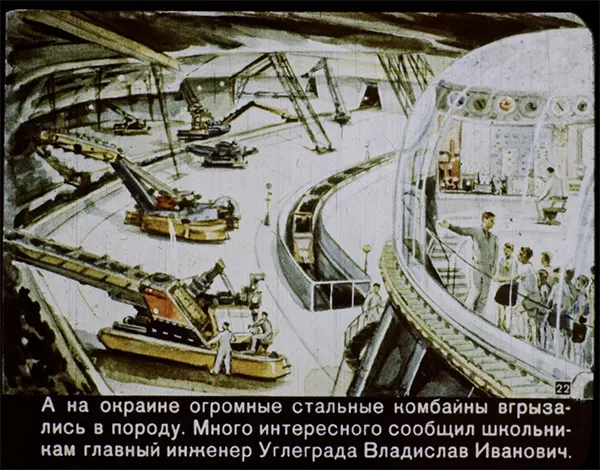
#16 On the outskirts, huge steel combines drill into the earth. Uglegrad’s head engineer, Vladislav Ivanovich, tells the school children all about the city’s fascinating work.
Far from the tidy streets of Uglegrad, the work of extraction and construction dominates the landscape, where massive steel combines bite into the ground with the steady patience of industry. The scene leans into scale: long arms of machinery, conveyors and platforms, and a cavernous interior that makes the human figures feel small by design.…