Category: Colorization
See history come to life with colorized photographs of the past. From wars to daily life, these restored images bridge time with emotion and realism.
Each colorized photo revives forgotten stories and gives a fresh perspective on iconic historical moments.
-
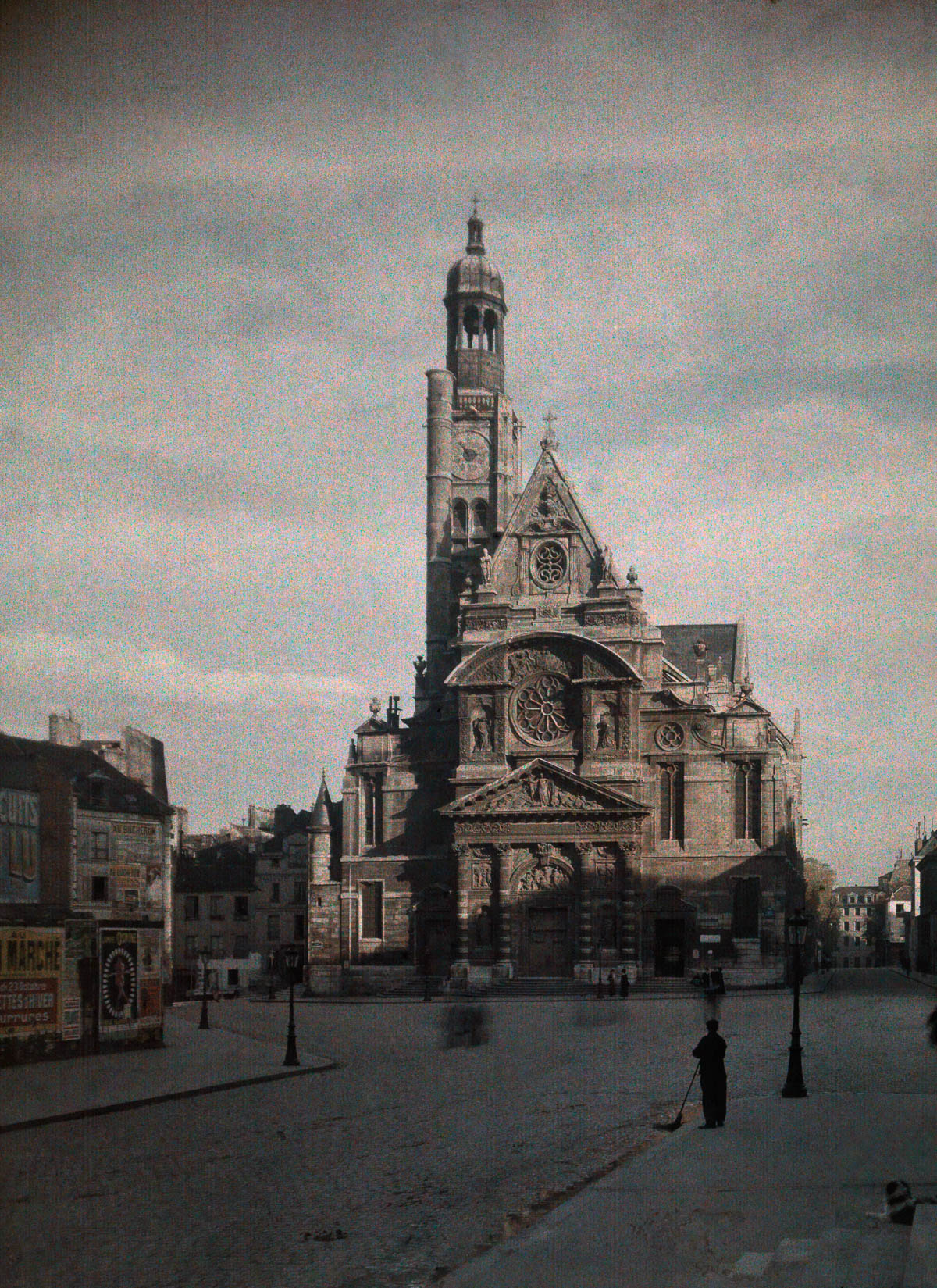
#106 Paris, 1920s
Morning light falls across a broad Parisian square, where an imposing church façade rises with a tall bell tower and layered stonework. Rose windows, carved figures, and a deep arched entrance give the building a solemn grandeur, while the surrounding blocks sit lower and quieter at the edges of the frame. With its careful colorization,…
-
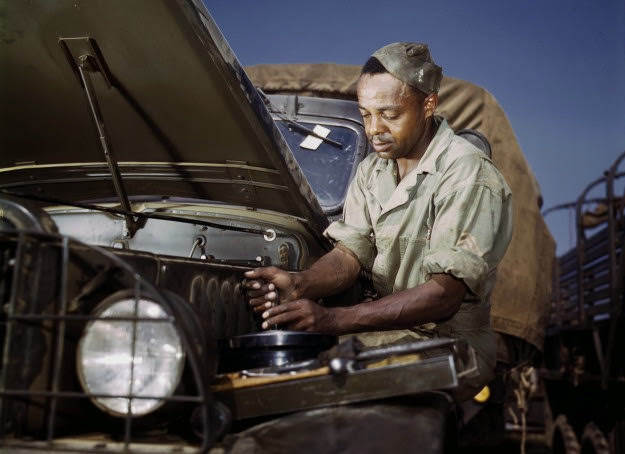
#1 A colored mechanic in the motor maintenance section at Fort Knox, Kentucky, 1942.
Under the raised hood of a military vehicle at Fort Knox, Kentucky, a mechanic concentrates on the essential, unglamorous work that kept the Army moving in 1942. The colorization brings out the dusty tones of the motor maintenance area and the sheen of metal parts, while the worker’s rolled sleeves and steady posture suggest long…
-
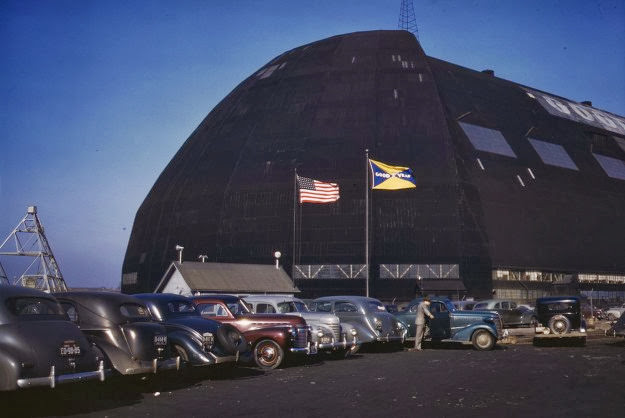
#17 A huge building, formerly an aircraft dock, houses aircraft sub-assembly shops at the Goodyear Aircraft Corp., Akron, Ohio, 1941.
Rising like a dark hill against the sky, the former aircraft dock at Goodyear Aircraft Corp. dominates the Akron, Ohio, scene in 1941, its curved walls hinting at an earlier life built for immense airships and oversized engineering. Two flags—one the U.S. banner and the other bearing the Goodyear name—add movement and identity to the…
-

#33 Annette del Sur publicizes a salvage campaign at Douglas Aircraft Company, Long Beach, California, 1942.
Against a glittering backdrop of curled metal shavings, Annette del Sur smiles as she models a headpiece and necklace made from salvaged material at the Douglas Aircraft Company in Long Beach, California, in 1942. The colorized look heightens the contrast between her neat work attire and the reflective scrap around her, turning industrial leftovers into…
-

#4 Chicago, April 1943. More of those yellow Proviso rails. “General view of one of the departure yards at Chicago & North Western RR’s Proviso Yard.” 4×5 Kodachrome transparency by Jack Delano for the OWI.
From a high vantage point over Chicago & North Western’s Proviso Yard, the departure tracks spread outward like a fan, their yellow-painted rails catching what little light breaks through a heavy Midwestern sky. Long strings of freight cars sit in orderly lines while a pair of steam locomotives work the middle distance, trailing pale plumes…
-
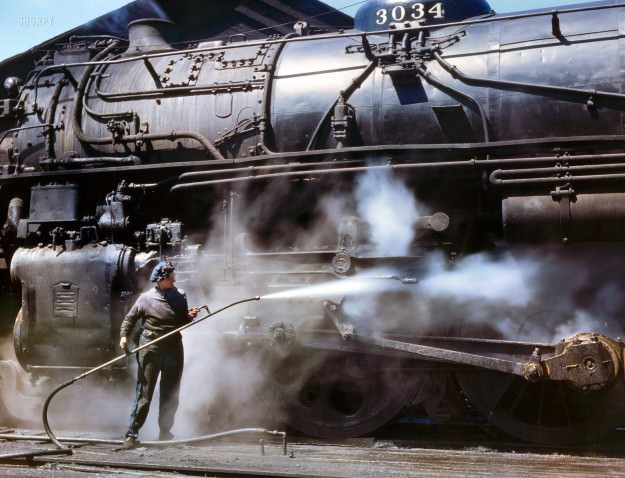
#20 April 1943. “Viola Sievers, one of the wipers at the Chicago & North Western roundhouse, giving a giant “H” class locomotive a bath of live steam at Clinton, Iowa. Mrs. Sievers is the sole support of her mother and has a son-in-law in the Army.” Kodachrome transparency by Jack Delano.
April 1943 places us inside the working rhythm of the Chicago & North Western roundhouse at Clinton, Iowa, where Viola Sievers stands beside a towering “H” class steam locomotive, hose in hand, as live steam billows around the running gear. The Kodachrome color renders the engine’s dark metal skin and riveted contours with startling immediacy,…
-
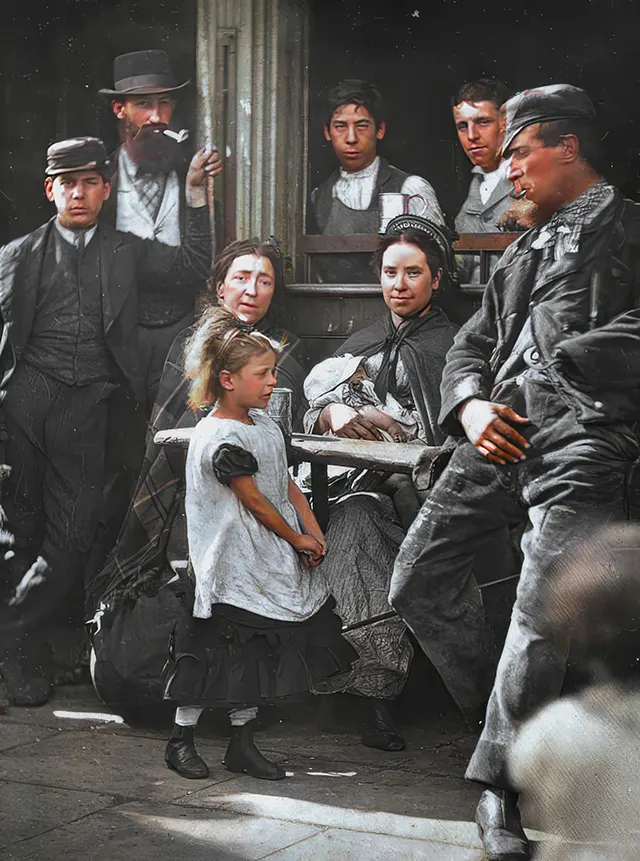
#13 A young girl named Hookey Alf waits outside a London pub, 1890s.
Hookey Alf stands small and self-possessed at the edge of adult conversation, her light dress and dark stockings setting her apart from the heavier coats and caps around her. Outside a London pub in the 1890s, the pavement becomes a kind of waiting room for the neighborhood—half threshold, half stage—where people pause between work, home,…
-
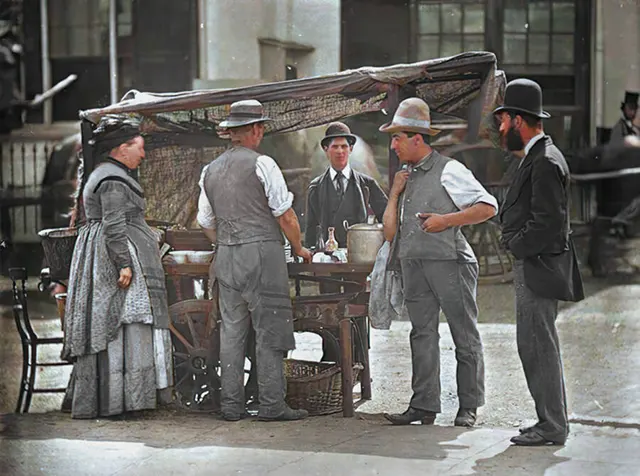
#29 Crowds gather around a shellfish stand, 1890s.
Street life in the 1890s comes alive around a makeshift shellfish stand, where a small crowd leans in close to see what’s on offer. A canvas awning and netting hang over the cart like a quick-built shelter, while baskets, tins, and a steaming pot suggest food meant to be served fast and eaten on the…
-

#4 A young woman dead in her bed, 1930.
Seen from above, the cramped room feels more like a witness box than a bedroom: a narrow bed with striped bedding, a single pillow, and a small stool pushed close to the wall. The colorization heightens the uneasy realism—muted wood tones, worn floorboards, and the stark contrast between everyday furnishings and the still figure at…
-

#20 The body of a man named Antonio Pemear, who was found murdered in his bed in Brooklyn, 1915.
An overhead view draws you into a cramped Brooklyn room where Antonio Pemear lies motionless on a narrow bed, his clothing disturbed and his chest exposed beneath a loosened jacket. The colorization heightens the immediacy: pale sheets bunched at the edges, a stark splash of red near the pillows, and the hard, worn tones of…