Category: Cover Art
Dive into a gallery of vintage cover art from books, magazines, and albums. Discover how graphic design and illustration reflected the moods of their times.
These covers capture the essence of cultural evolution — from bold propaganda to elegant minimalism.
-
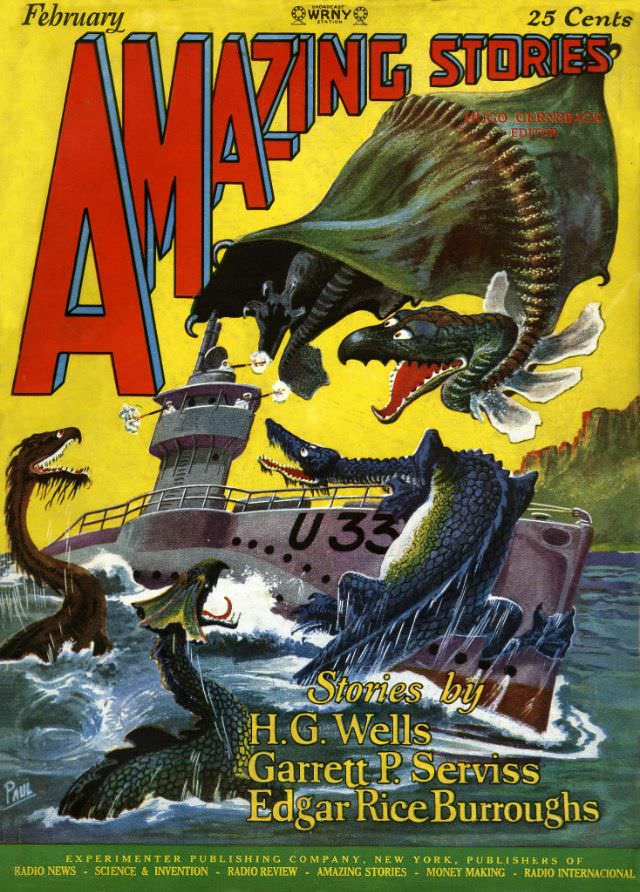
#12 Amazing Stories cover, February 1927
February 1927 arrives in a burst of pulp-era color on the cover of *Amazing Stories*, where a sleek submarine marked “U33” fights through churning seas as monstrous, dragon-like creatures rise and dive around it. A bright yellow background and oversized red lettering shout the magazine’s title, while the action below is all teeth, spray, and…
-

#28 Amazing Stories cover, Summer 1928
Blazing orange and electric blues pull you straight into the Summer Edition of 1928, where the bold “AMAZING STORIES QUARTERLY” masthead dominates the top like a marquee for the future. The cover’s dramatic palette and oversized typography are classic newsstand bait from the early science-fiction era, designed to be spotted from across a crowded rack.…
-
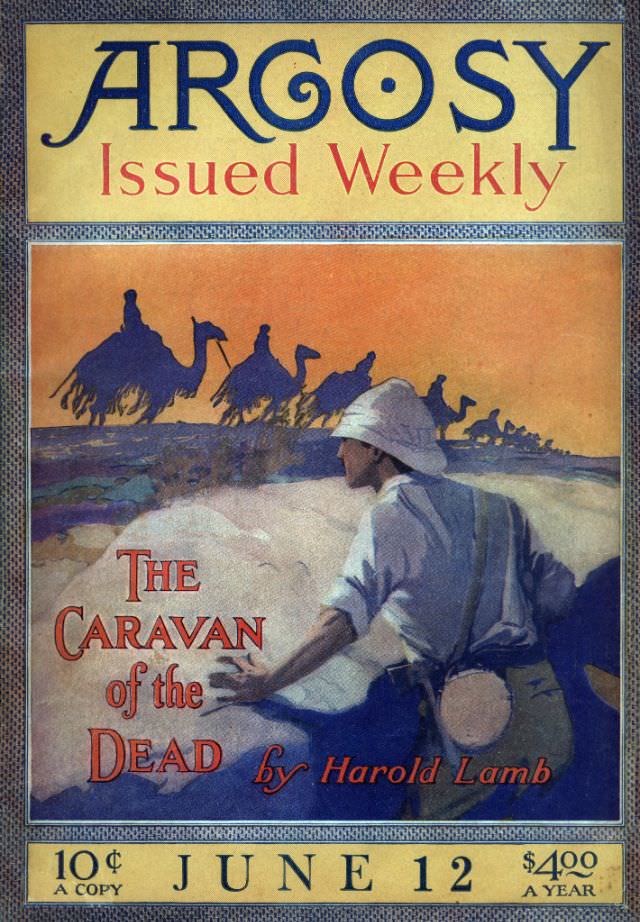
#9 Argosy cover, June 12, 1920
Bold serif lettering announces “ARGOSY” across the top of this June 12, 1920 issue, with “Issued Weekly” set beneath it like a promise of regular escapism. The layout balances clean typography with a richly colored illustration, framed by decorative borders and anchored by the old newsstand price of 10¢ a copy. Even at a glance,…
-
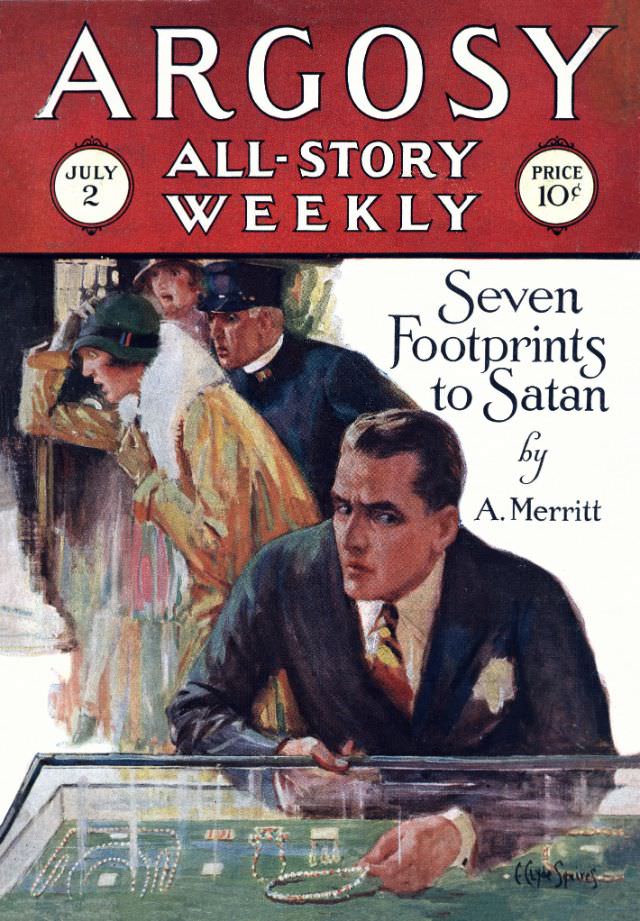
#25 Argosy cover, July 2, 1927
Bold red masthead lettering announces “ARGOSY” as an “All-Story Weekly,” with the issue marked July 2 and priced at 10¢—a quick snapshot of how pulp magazines sold thrills at a newsstand-friendly cost. The design balances clean, authoritative typography with a dramatic illustration, inviting readers into the promise of serialized adventure and suspense. Even before the…
-
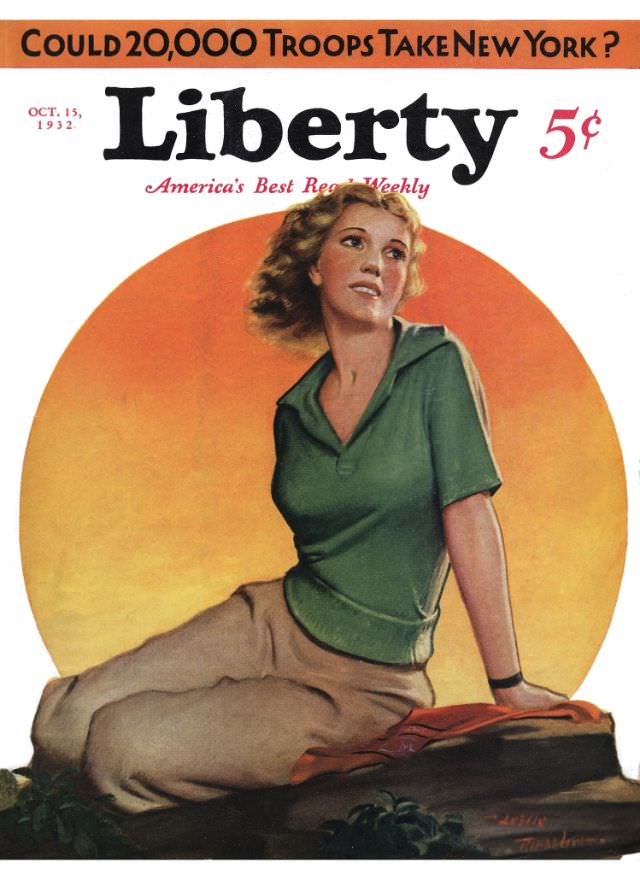
#6 Liberty cover, October 15, 1932
Bold typography and a provocative teaser headline frame the Liberty magazine cover dated October 15, 1932, priced at 5 cents and billed as “America’s Best Read Weekly.” The question splashed across the top—“Could 20,000 Troops Take New York?”—signals how mass-market periodicals hooked readers with high-stakes scenarios, mixing current anxieties with a sense of spectacle. Even…
-
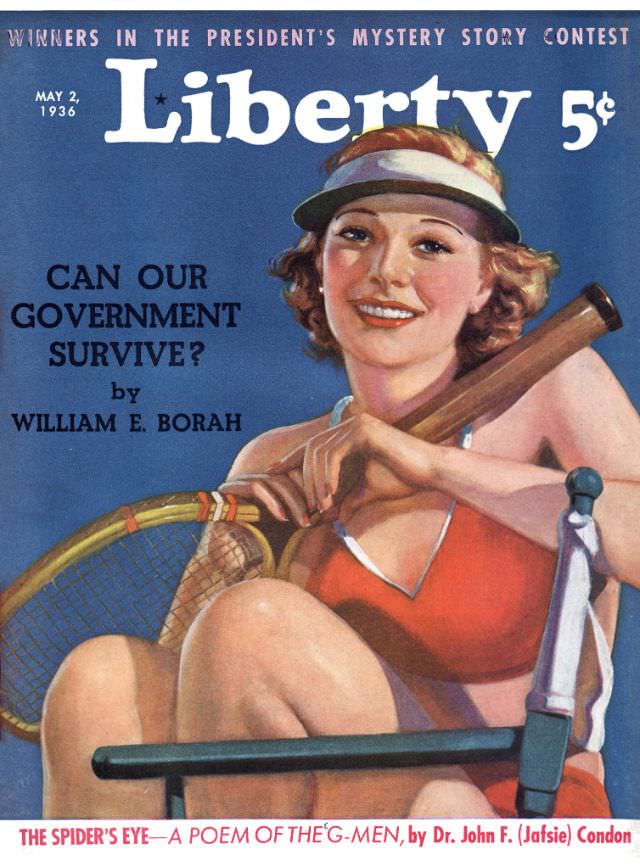
#22 Liberty cover, May 2, 1936
Bold lettering and bright illustration pull the eye straight to the Liberty cover dated May 2, 1936, where a smiling athlete in a red suit poses with a tennis racket and a wooden bat slung over her shoulder. The clean blue background, crisp highlights, and confident posture give the artwork an upbeat, modern tempo—exactly the…
-
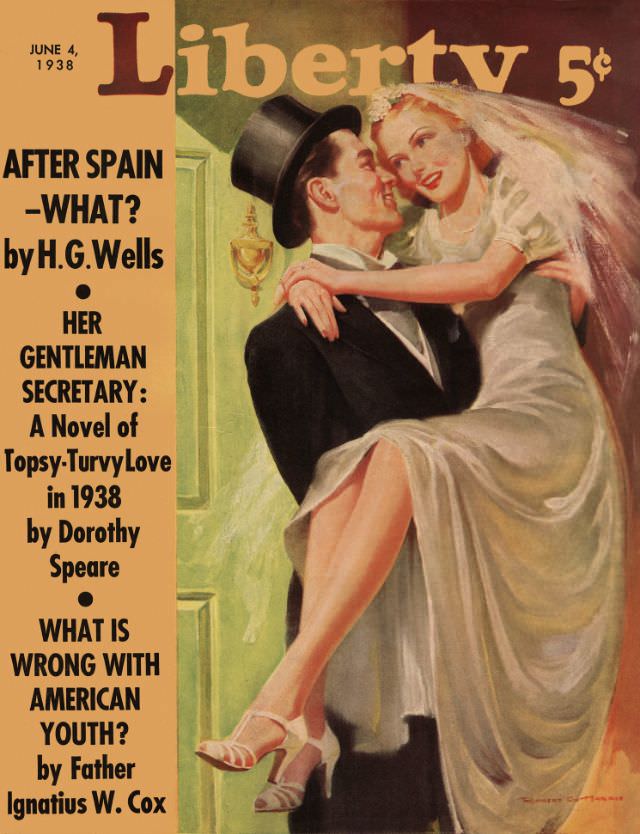
#38 Liberty cover, June 4, 1938
Bold lettering and warm, painterly color announce a classic Liberty magazine cover dated June 4, 1938, priced at 5¢. The composition leans into glamour: a tuxedoed man in a top hat holds a smiling bride in a flowing veil, her white dress rendered with soft highlights that make the scene feel theatrical and immediate. Behind…
-
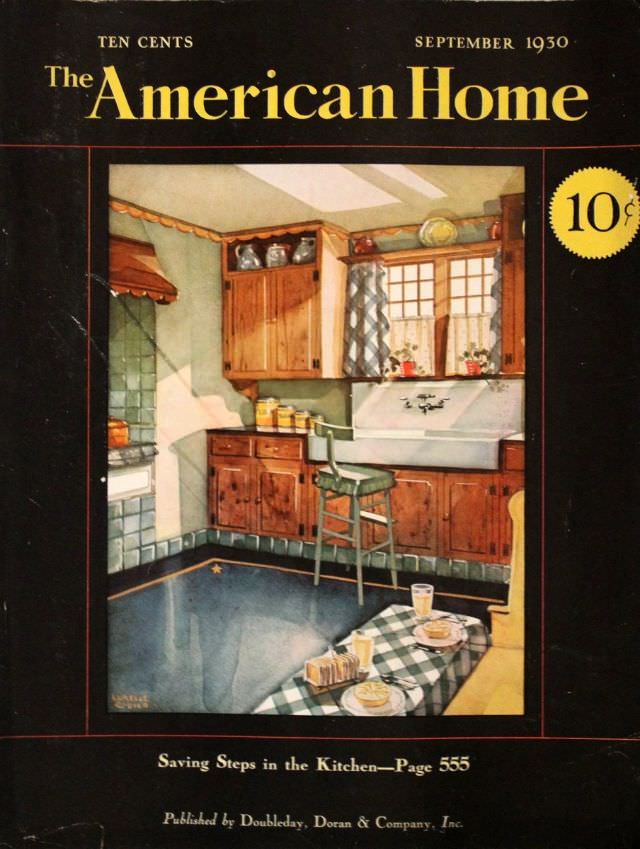
#7 The American Home cover, September 1930
September 1930 arrives on the cover of *The American Home* with a confident promise of comfort and order, priced at ten cents and framed in bold, magazine-stand typography. The design draws the eye inward to a warmly rendered domestic scene, a painterly invitation to imagine everyday life made smoother through smart planning and tasteful décor.…
-
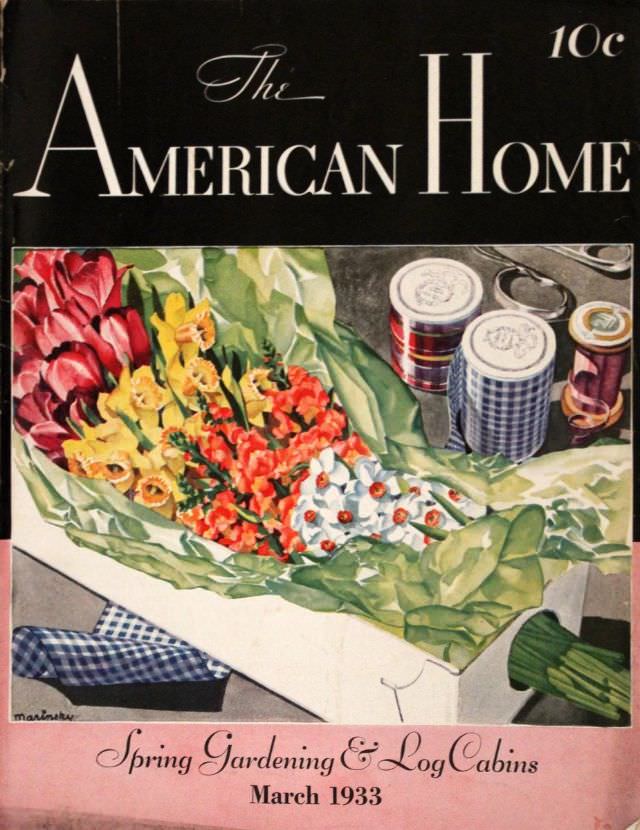
#23 The American Home cover, March 1933
Bold typography crowns the March 1933 cover of *The American Home*, priced at 10 cents, immediately setting a confident, modern tone for a domestic magazine aimed at everyday readers. Beneath the title, the artwork shifts into a still-life of practical beauty: a wrapped bouquet spilling red, yellow, and orange blossoms across a tabletop, their paper…
-
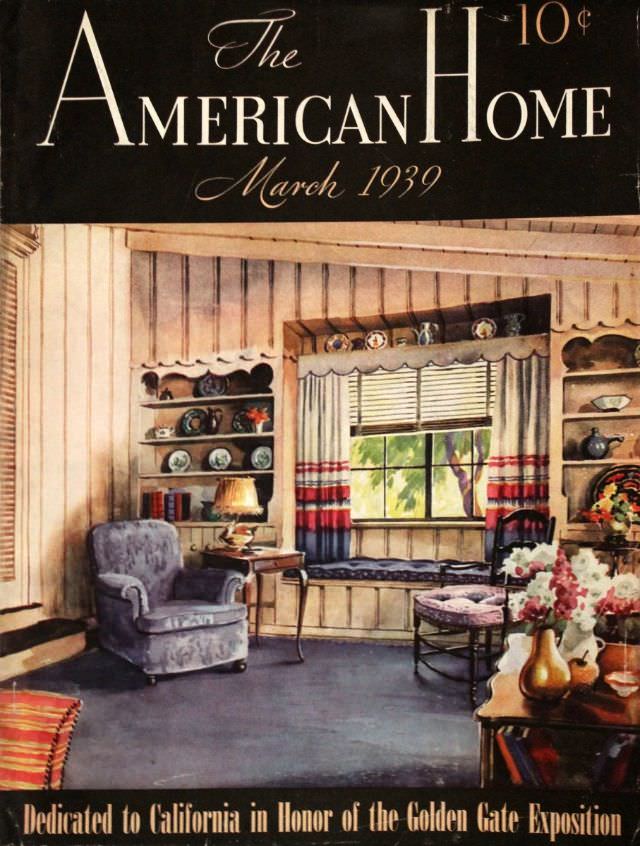
#39 The American Home cover, March 1939
Warm typography and a bold 10¢ price frame the March 1939 cover of *The American Home*, inviting readers into an idealized living room where comfort is carefully staged. A deep upholstered armchair anchors the left side, while built-in shelves display ceramics and small objects meant to signal taste, tidiness, and domestic pride. The scene reads…