Category: Cover Art
Dive into a gallery of vintage cover art from books, magazines, and albums. Discover how graphic design and illustration reflected the moods of their times.
These covers capture the essence of cultural evolution — from bold propaganda to elegant minimalism.
-
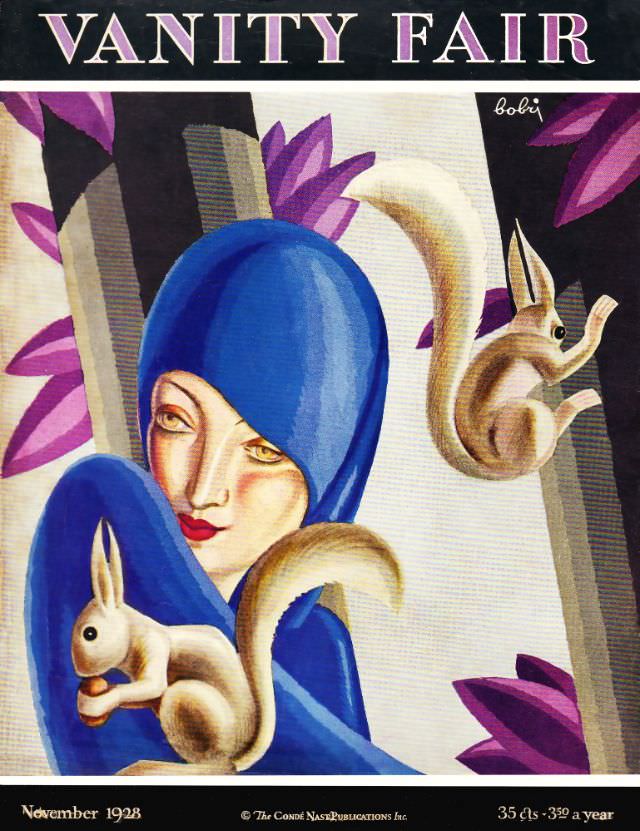
#17 Vanity Fair cover, November 1928
Bold “VANITY FAIR” lettering crowns this November 1928 cover, immediately setting a confident, modern tone. A stylized woman in a saturated cobalt hood dominates the composition, her pale face and red lips rendered with the cool elegance associated with late-1920s fashion illustration. Angular architectural forms and prismatic, purple leaf shapes frame her like a stage…
-

#33 Vanity Fair cover, February 1934
Bold color and playful exaggeration define the February 1934 Vanity Fair cover, where a grinning cowboy in a white shirt and red scarf rides a bucking green horse against a bright yellow field. The oversized black “VANITY FAIR” masthead anchors the design, while the rider’s raised hand, star-tipped cuff, and theatrical profile turn the scene…
-
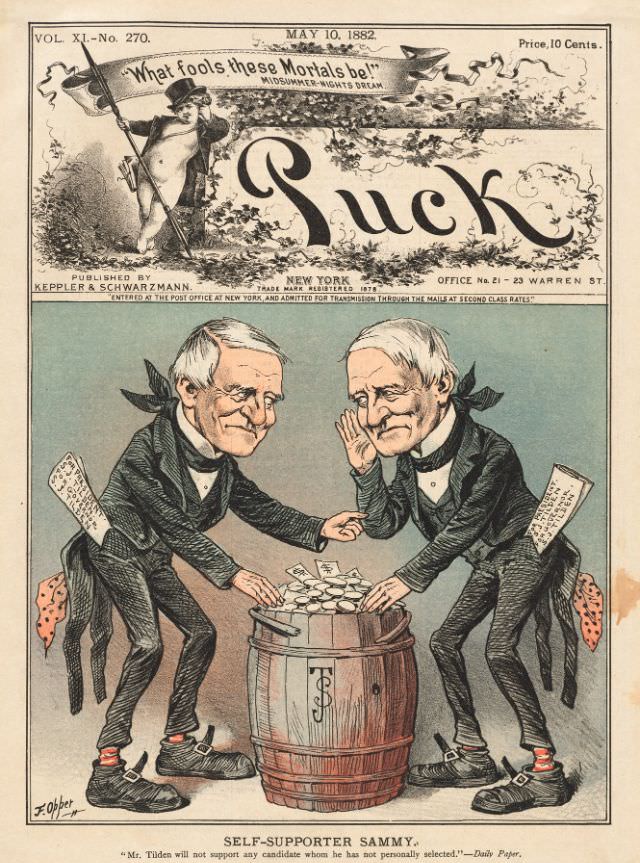
#9 Puck magazine cover, May 10, 1882
Across the top of Puck’s May 10, 1882 cover, the magazine’s ornate masthead unfurls beneath a theatrical banner quoting “What fools these mortals be!”—a knowing wink that signals satire before the main scene even begins. The page balances bold typography, decorative flourishes, and crisp print-shop details, including the issue numbering and cover price, all of…
-
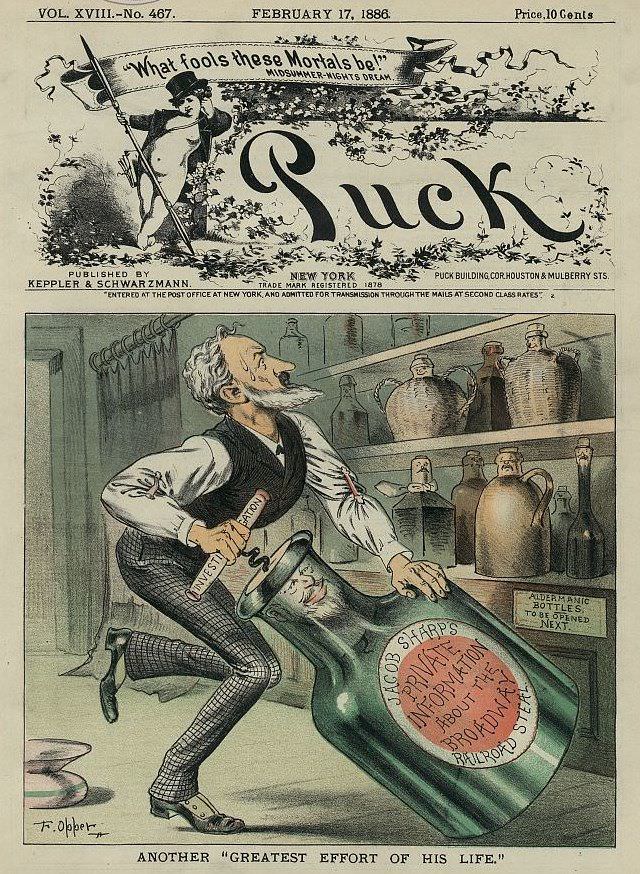
#25 Puck magazine cover, February 17, 1886
February 17, 1886 appears boldly at the top of this Puck magazine cover, surrounded by the publication’s familiar ornamental header and the mischievous sprite of “Puck” perched above the large, looping title. A ribbon-like motto—“What fools these mortals be!”—adds a theatrical wink, hinting that the real drama is about to unfold below in the main…
-
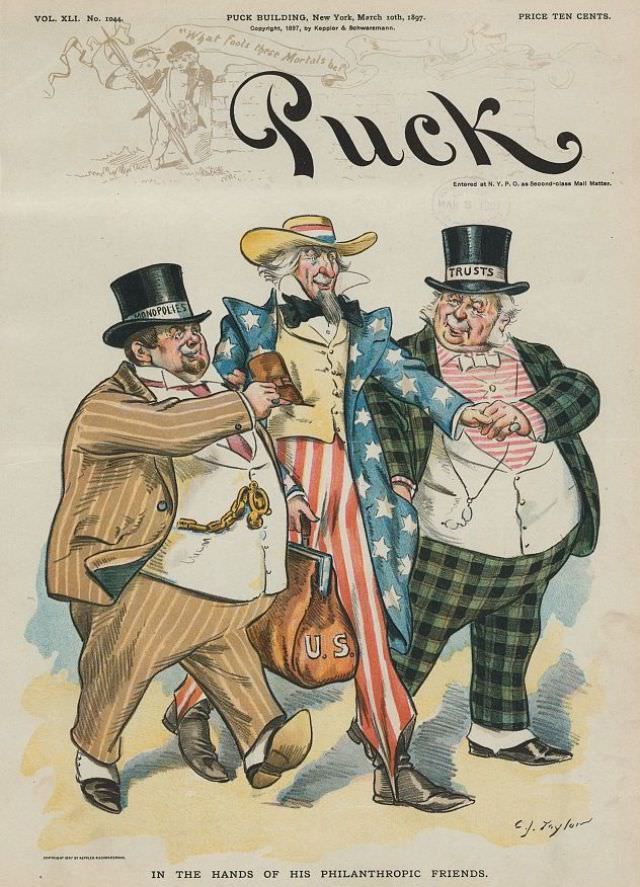
#41 Puck magazine cover, March 10, 1897
Bold lettering spells out “Puck” above a sharply drawn cartoon that leans into Gilded Age satire, dated on the cover to March 10, 1897. At the center stands an Uncle Sam figure in a star-spangled coat and striped trousers, his posture suggesting uneasy confidence as he’s escorted on both sides. The illustration’s polished color printing…
-
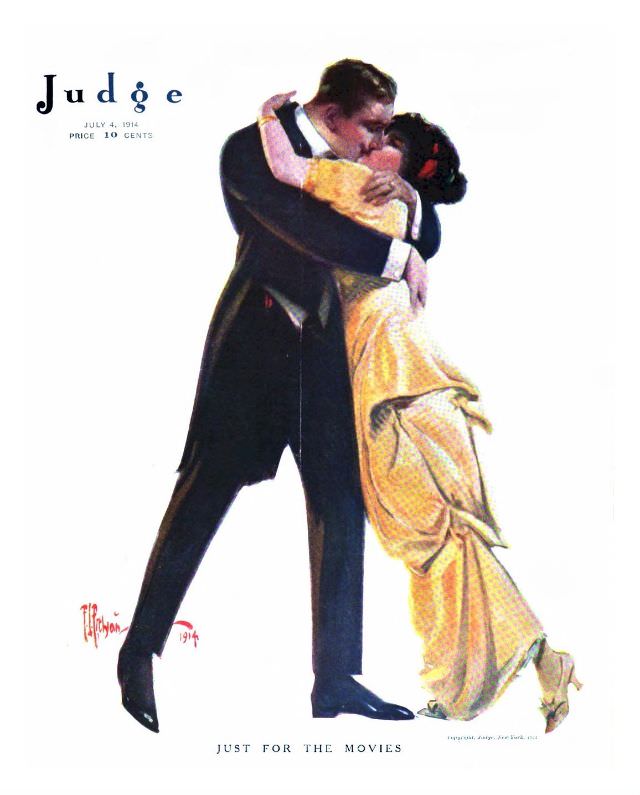
#13 Judge magazine, July 4, 1914
Boldly minimal against a wide white field, the July 4, 1914 cover of *Judge* magazine centers on an elegant couple locked in a dramatic embrace, their faces close as if caught mid-kiss. His dark formalwear and her shimmering pale gown create a striking contrast, while the exaggerated lean and clasped arms lend the illustration a…
-
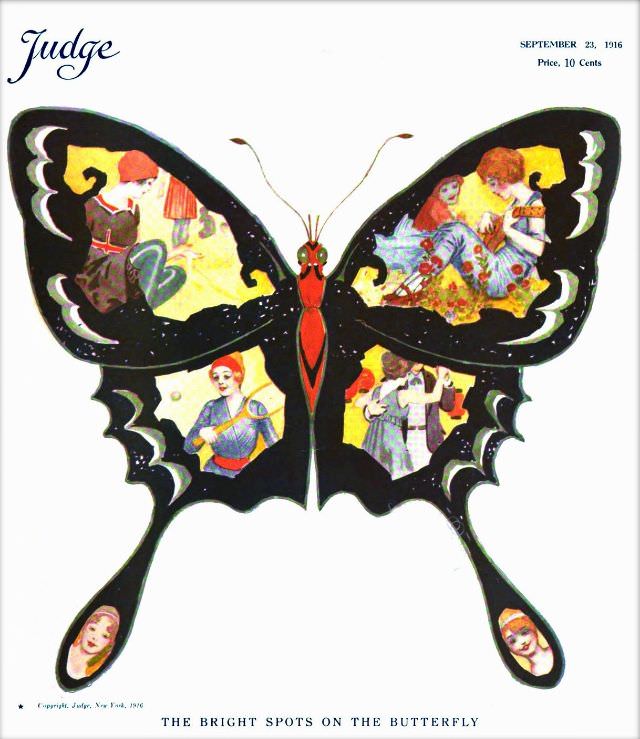
#29 Judge magazine, September 23, 1916
A bold butterfly dominates the cover of *Judge* magazine dated September 23, 1916, its dark wings turning the white page into a stage for color and commentary. The masthead sits in the upper left, while the issue’s date and “Price, 10 Cents” anchor the opposite corner, framing the illustration like a poster in a shop…
-
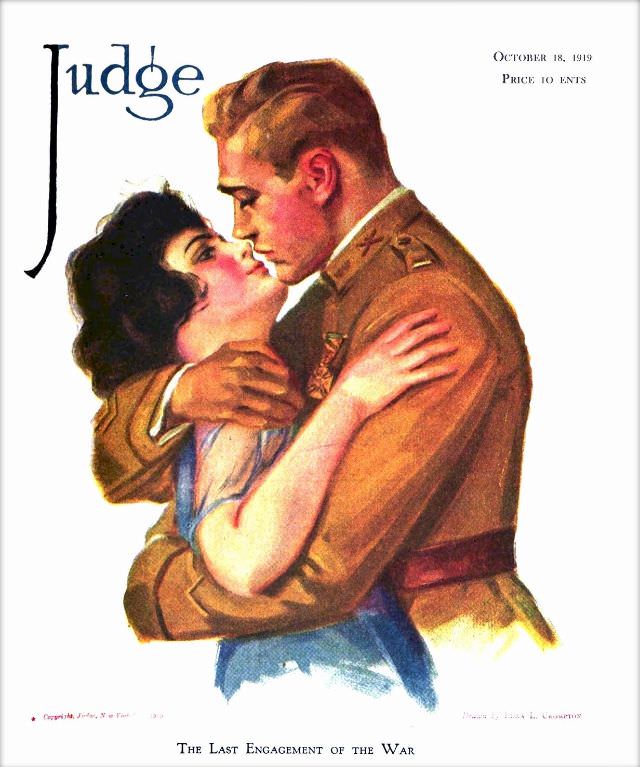
#45 Judge magazine, October 18, 1919
Boldly lettered “Judge” crowns this October 18, 1919 cover, while a tender embrace takes over the page: a uniformed man holds a young woman close as they lean in, caught in a moment that feels both romantic and uneasy. The artist’s soft shading, flushed cheeks, and carefully rendered fabric folds give the couple a stage-lit…
-
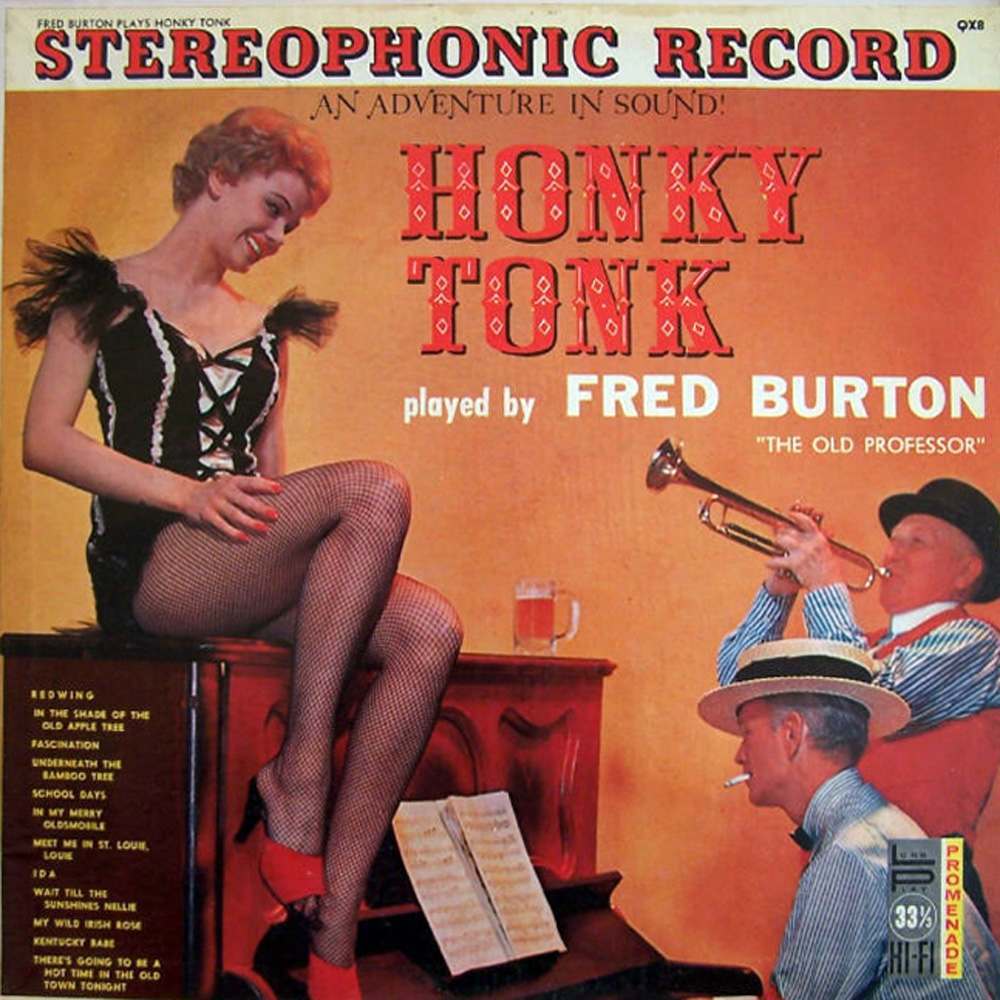
#4 Pianos, Pin-Ups, and Party Tunes: Exploring the Wild World of Honky-Tonk Records #4 Cover Art
Bold lettering shouts “STEREOPHONIC RECORD” and “HONKY TONK,” setting a loud, playful tone before the eye even lands on the scene: a smiling pin-up perched atop an upright piano, fishnet stockings and stage-ready confidence turned into pure advertising. The warm, poster-like color palette and theatrical pose sell not just music, but an after-hours mood—part burlesque…
-
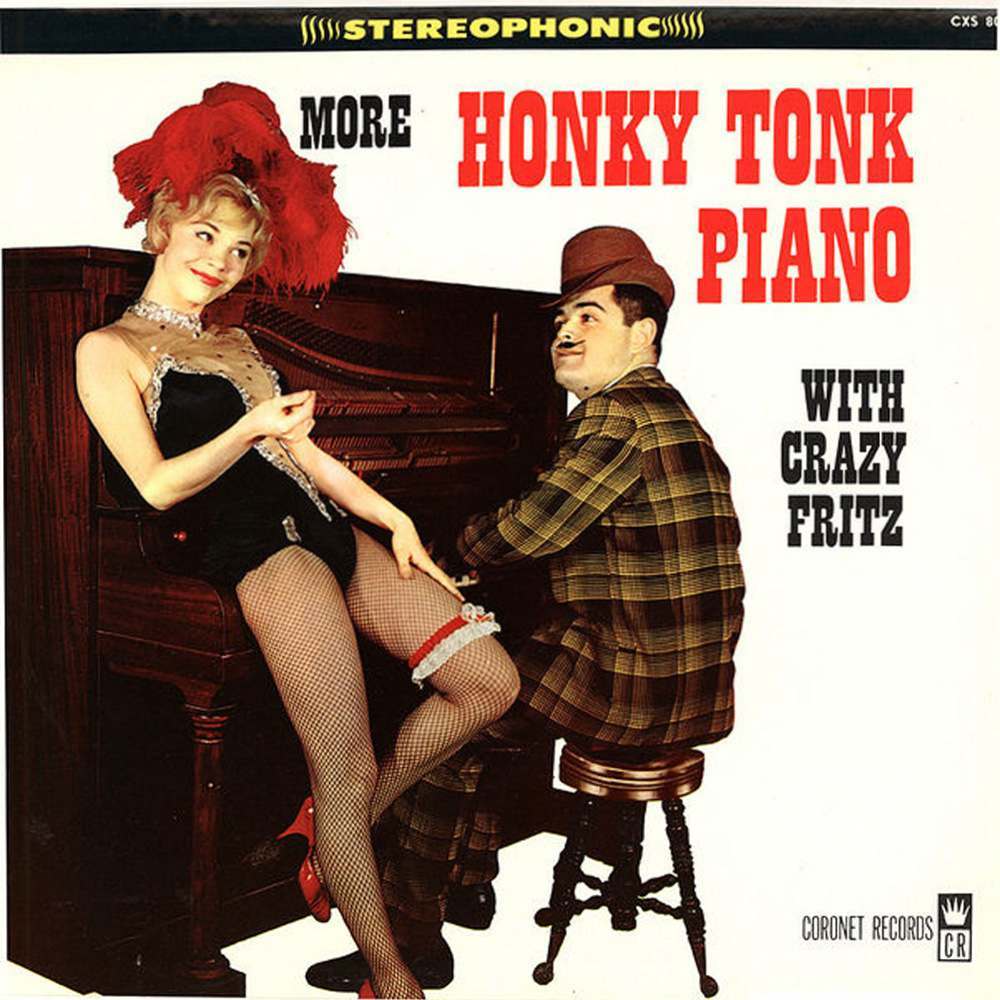
#20 Pianos, Pin-Ups, and Party Tunes: Exploring the Wild World of Honky-Tonk Records #20 Cover Art
Loud lettering, cheeky staging, and a piano pushed right to the foreground—honky-tonk record cover art sold a whole night out before the needle ever touched the groove. Here, the promise is spelled in bold: “More Honky Tonk Piano,” with “Stereophonic” crowning the top like a marquee. The scene leans into cabaret swagger, pairing the upright…