Category: Cover Art
Dive into a gallery of vintage cover art from books, magazines, and albums. Discover how graphic design and illustration reflected the moods of their times.
These covers capture the essence of cultural evolution — from bold propaganda to elegant minimalism.
-
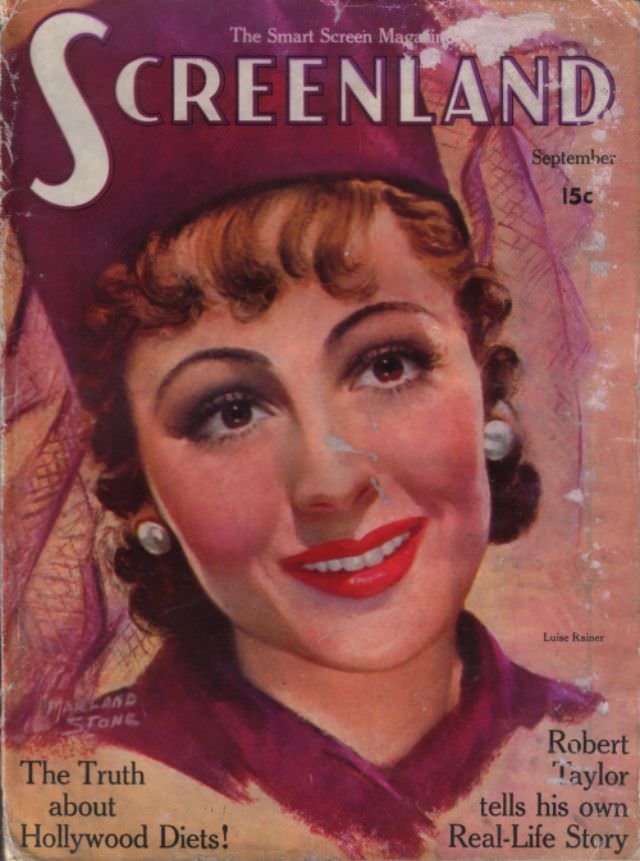
#32 Screenland magazine cover, September 1937
September 1937 arrives in bold color on the cover of Screenland, a classic piece of movie-magazine ephemera that wears its era proudly. The oversized masthead and the small tagline “The Smart Screen Magazine” frame a glamor portrait rendered with soft, painterly shading—rouged cheeks, carefully waved hair, bright lipstick, and pearl-like earrings that signal old-Hollywood polish.…
-

#13 The Ugly Truth About Yugoslavian Album Art in the 1970s and 1980s #13 Cover Art
Glaring typography and a fantasy “harem” tableau collide on this Yugoslav record sleeve, where the name LJUBA ALIČIĆ dominates the top edge and the title NEMA VIŠE HAREMA sprawls along the bottom. The composition leans into soft-focus glamour: a lounging central figure framed by three stylized women, ornate textiles, and props that gesture toward an…
-
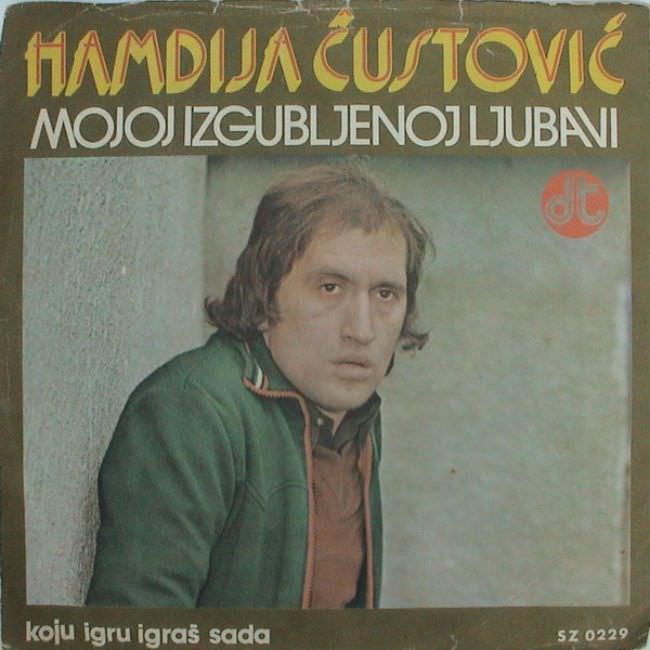
#29 The Ugly Truth About Yugoslavian Album Art in the 1970s and 1980s #29 Cover Art
Bold lettering crowds the top of the sleeve—“Hamidja Čustović” over “Mojoj izgubljenoj ljubavni”—while the portrait below feels caught between sincerity and awkward staging. The singer leans against a rough wall, wearing a green jacket and a steady, almost weary expression, framed in muted tones that look slightly faded with age. Even before you hear a…
-

#5 Weird Tales cover, August 1926
Weird Tales screams across the top in bold, theatrical lettering, immediately setting the tone for one of pulp fiction’s most recognizable magazines. Beneath the masthead, the cover spotlights “The Woman of the Wood” by A. Merritt, using a dramatic circular callout to pull the eye into the story’s promise of eerie wonder. Even before you…
-
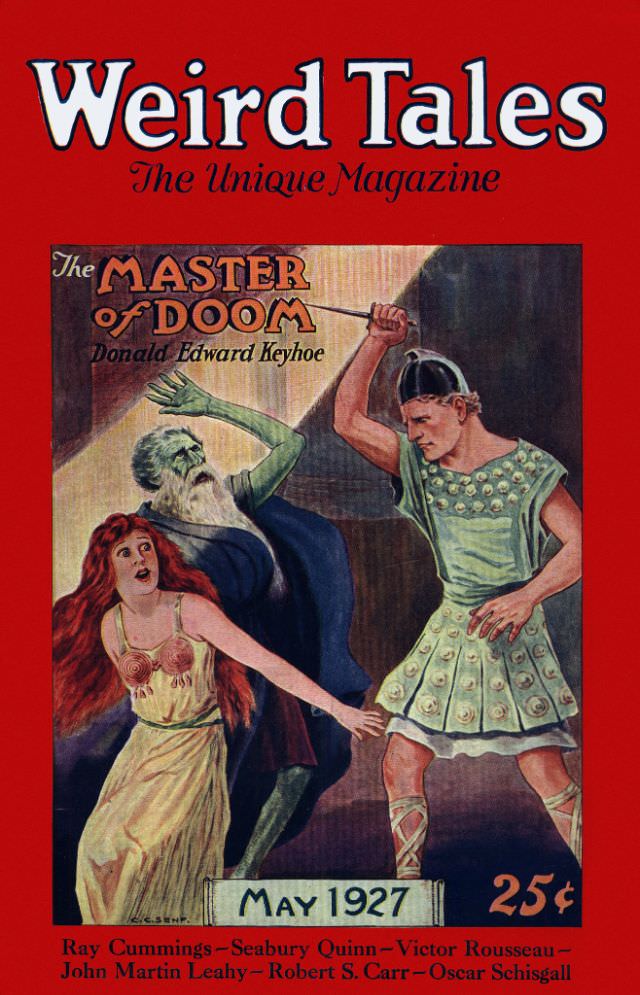
#21 Weird Tales cover, May 1927
Bold red lettering shouts “Weird Tales” across the top of this May 1927 cover, a perfect advertisement for pulp-era thrills and the magazine’s promise of “The Unique Magazine.” Below the masthead, the painted scene drops straight into melodrama: a terrified woman recoils, a cloaked, green-skinned figure looms behind her, and a young warrior in a…
-
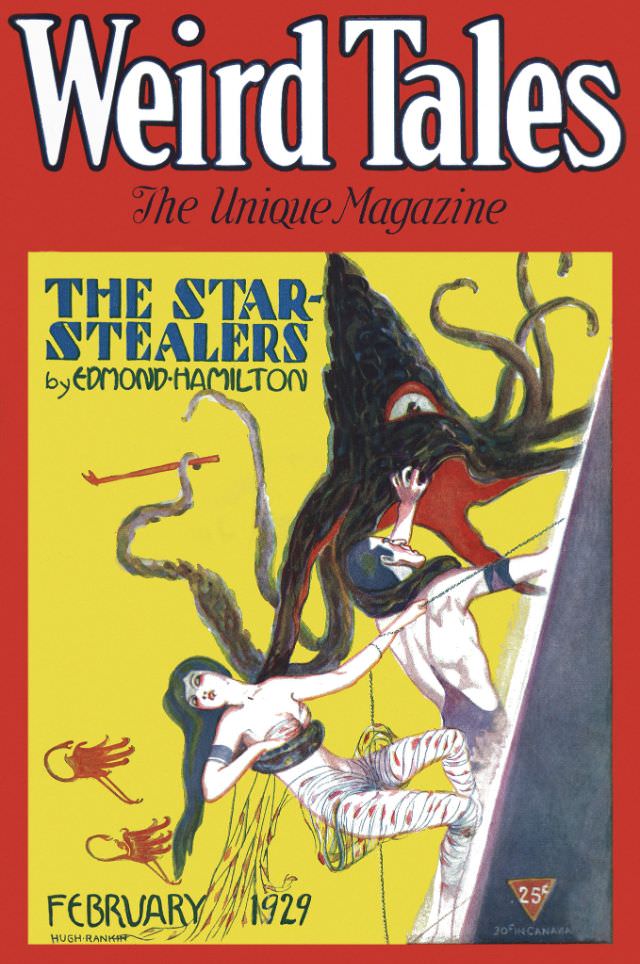
#37 Weird Tales cover, February 1929
Bold typography announces *Weird Tales* across a vivid red banner, with the tagline “The Unique Magazine” promising the uncanny before the eye even reaches the illustration. Beneath it, the February 1929 cover plunges into pulp-fantasy spectacle: a stark yellow field frames a dramatic struggle with a looming, tentacled creature and a woman pulled across the…
-
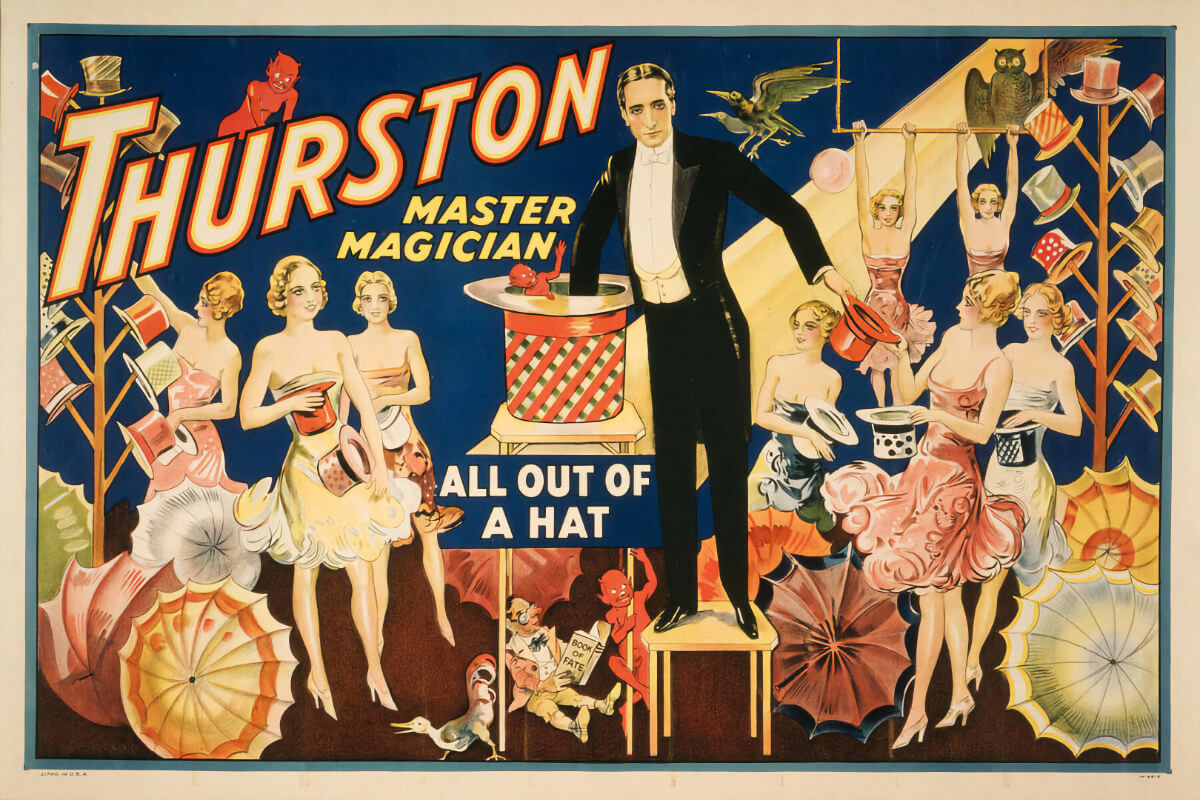
#8 Thurston, Master Magician all out of a Hat, 1910.
Bold lettering spells out “THURSTON” across a deep blue field, pulling the eye straight to a sharply dressed stage magician posed at center. Around him, a lively ring of performers and theatrical props turns the poster into a miniature spectacle: top hats held aloft, a striped hat on a pedestal, and playful creatures and birds…
-
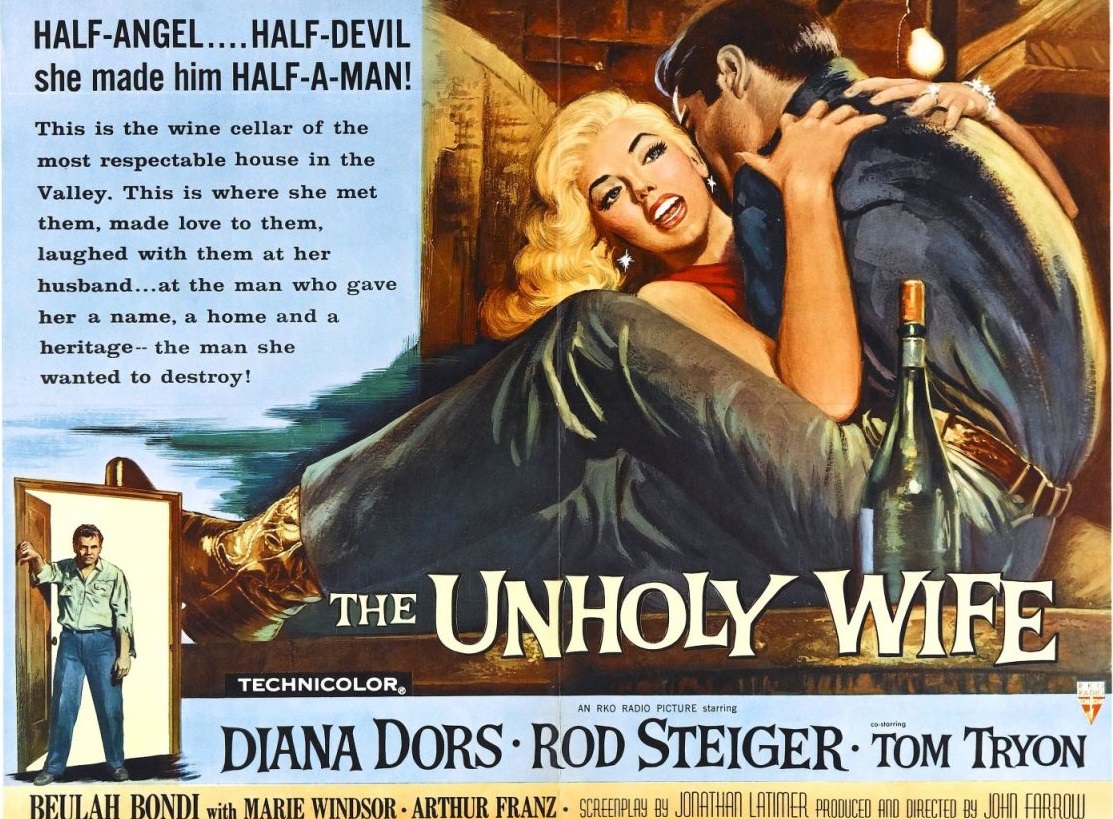
#11 The Unholy Wife (1957).
Technicolor melodrama sells itself loudly on the cover art for *The Unholy Wife (1957)*, where a glamorous blonde in a red neckline is caught in a tense embrace with a dark-suited man. The setting hints at a cellar or storeroom—wooden planks, shadowy corners, and a tall bottle in the foreground—turning domestic space into a stage…
-
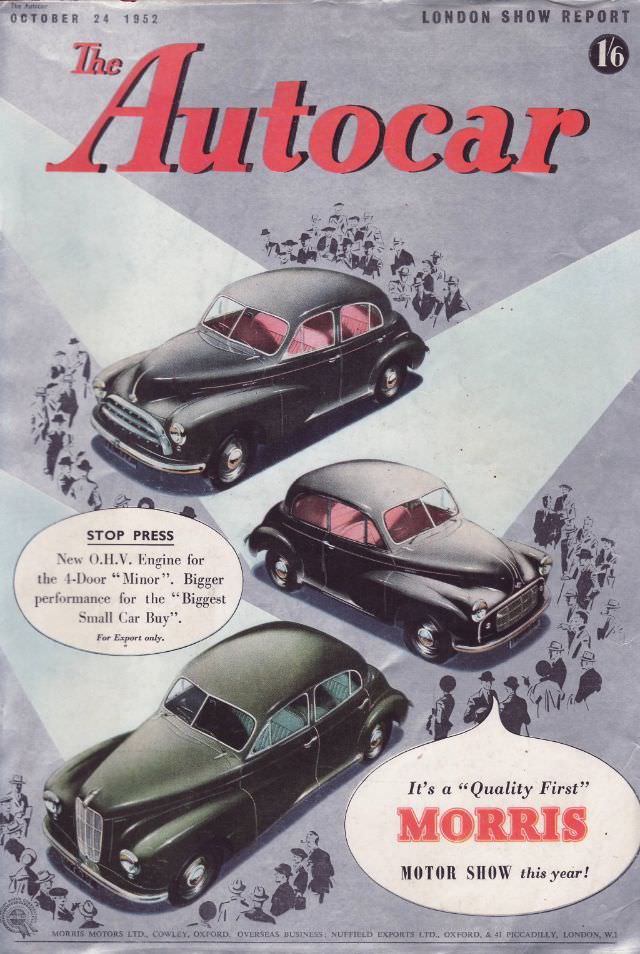
#7 The Autocar magazine cover, October 24, 1952
Bold, slanted lettering for “The Autocar” dominates the page, setting a confident tone for the October 24, 1952 issue and its “London Show Report.” A mid-century palette of grey-blue and red is broken by diagonal beams of light that guide the eye across the cover, while the price mark “1/6” anchors it firmly in its…
-
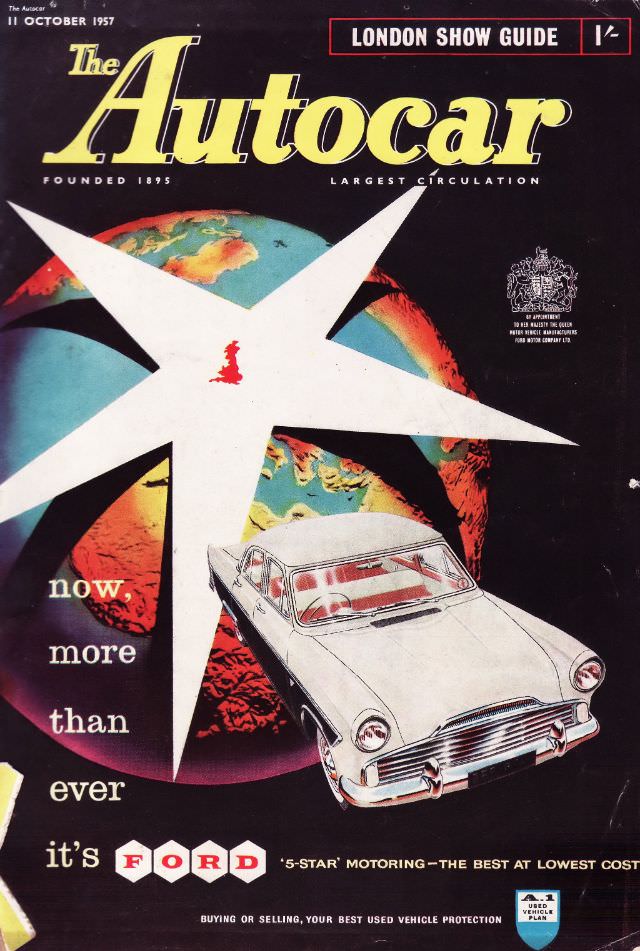
#23 The Autocar magazine cover, October 11, 1957
Bold, sweeping typography announces *The Autocar* across a deep, inky background, while a bright starburst slices over a stylized globe—an unmistakable mid-century promise of modernity and reach. The cover is dated “11 October 1957,” and it leans into graphic drama rather than documentary realism, using clean shapes and saturated color to sell the idea that…