Category: Cover Art
Dive into a gallery of vintage cover art from books, magazines, and albums. Discover how graphic design and illustration reflected the moods of their times.
These covers capture the essence of cultural evolution — from bold propaganda to elegant minimalism.
-

#9 The Autocar magazine cover, December 18, 1953
Bold yellow lettering for “The Autocar” crowns the December 18, 1953 cover, setting a confident tone before your eye drops to the racetrack below. A red single-seater surges toward the viewer on a sunlit straight, with rival cars strung out behind and grandstands, gantries, and trackside loudspeakers sketched along the margins. The painterly sky and…
-

#25 The Autocar magazine cover, October 25, 1957
Bold orange lettering across the top announces *The Autocar*, dated 25 October 1957, with the magazine’s long pedigree (“Founded 1895” and “Largest circulation”) tucked neatly into the masthead. A black banner at the upper right teases a “London Show Review” and even prints the cover price, anchoring the artwork in the brisk, newsstand world of…
-
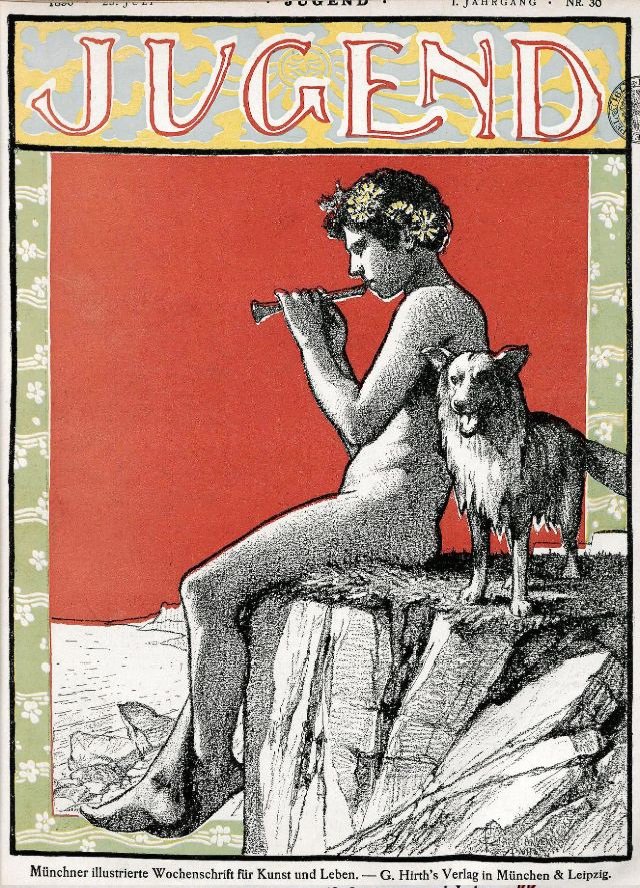
#4 Jugend, 1896
Jugend, the influential German art magazine whose very name became synonymous with Jugendstil, appears here in a striking 1896 cover design that blends graphic boldness with a dreamlike pastoral mood. The oversized, stylized “JUGEND” masthead anchors the composition, while the decorative border frames the artwork like a poster meant to be noticed from across the…
-
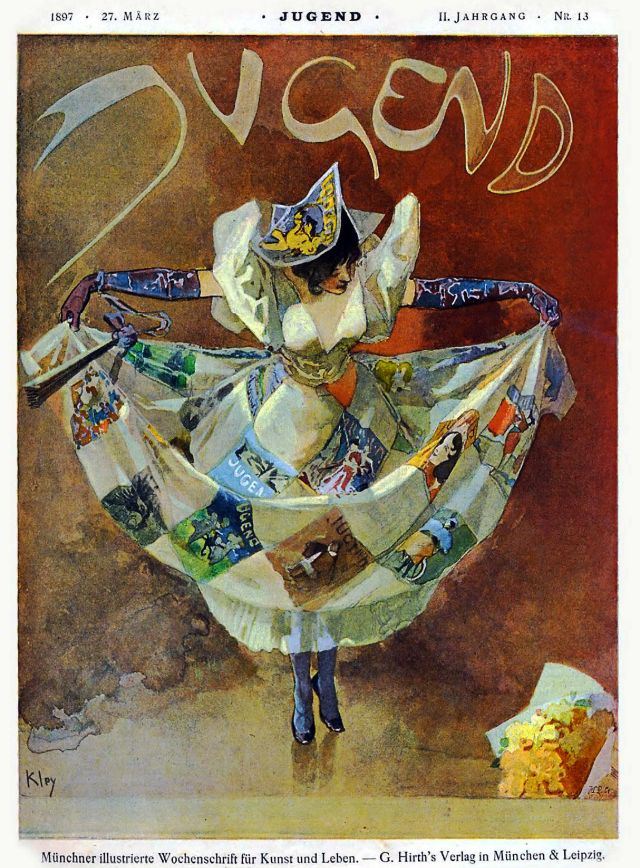
#20 Jugend, March 27, 1897
Across the top, the sweeping “JUGEND” lettering announces a magazine cover dated 27. März 1897, and the design immediately leans into theatrical motion. A stylish figure turns mid-step, arms stretched wide to display a billowing skirt that becomes a patchwork gallery of tiny printed scenes. Warm browns and muted reds in the background make the…
-

#36 Jugendr, March 4, 1899
Across the top, the bold, rounded lettering of “JUGEND” announces this as cover art from the celebrated German illustrated weekly, dated 4. März 1899. The composition is dominated by two figures rendered in a richly outlined, poster-like style: a solemn, crowned elder with a flowing beard and a winged child whose gaze meets the viewer.…
-
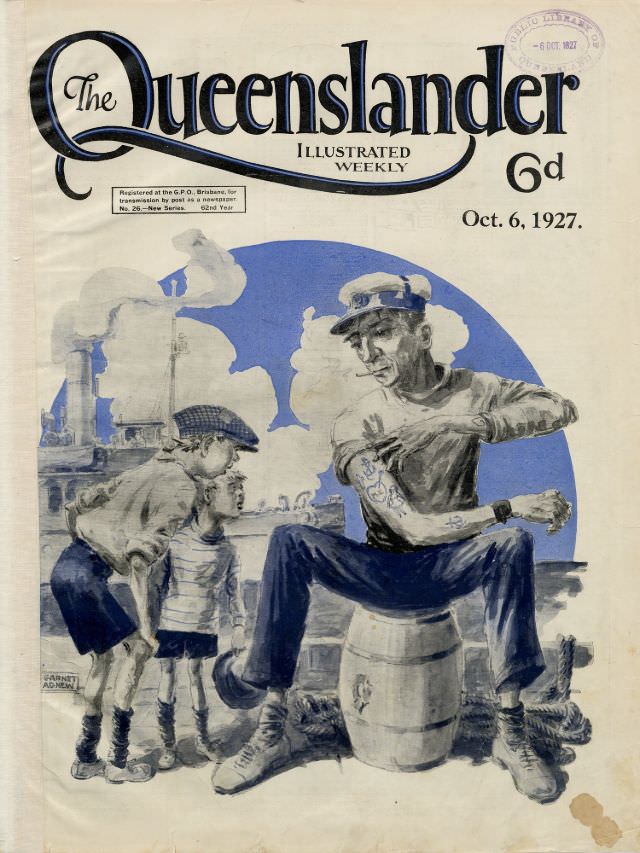
#16 Illustrated front cover from The Queenslander, October 6, 1927
Bold lettering announces *The Queenslander* as an “Illustrated Weekly,” priced at 6d, with the issue date printed clearly as Oct. 6, 1927. Even before the artwork takes over, the design feels like a shopfront window for the magazine itself—confident typography, wide spacing, and a composition meant to catch the eye on a stand. A small…
-
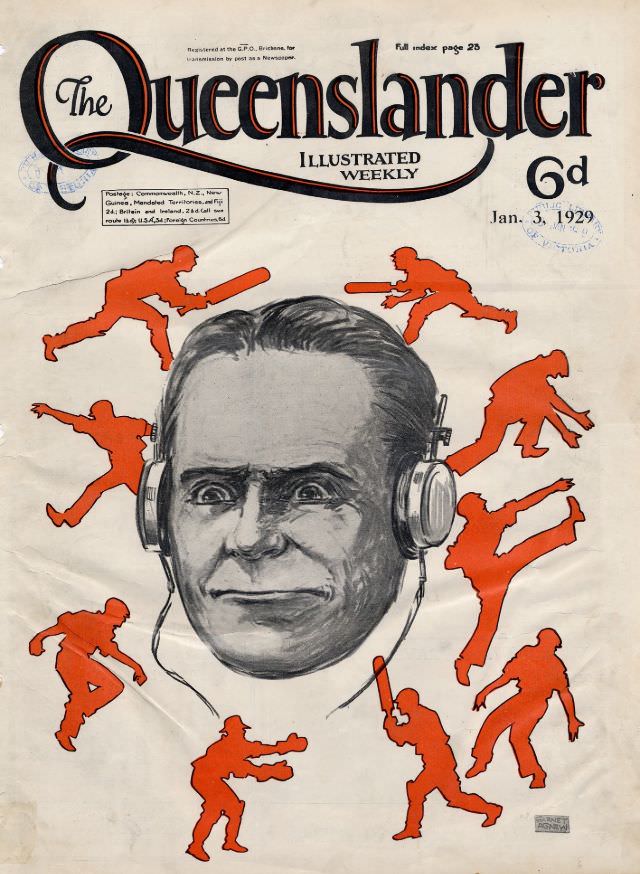
#32 Illustrated front cover from The Queenslander, January 3, 1929
Bold lettering sweeps across the top of this Illustrated Weekly front cover for *The Queenslander*, dated January 3, 1929, with the price marked “6d” and a note directing readers to the full index on page 28. The design immediately signals a publication that wanted to feel modern and energetic, balancing crisp typography with a playful,…
-
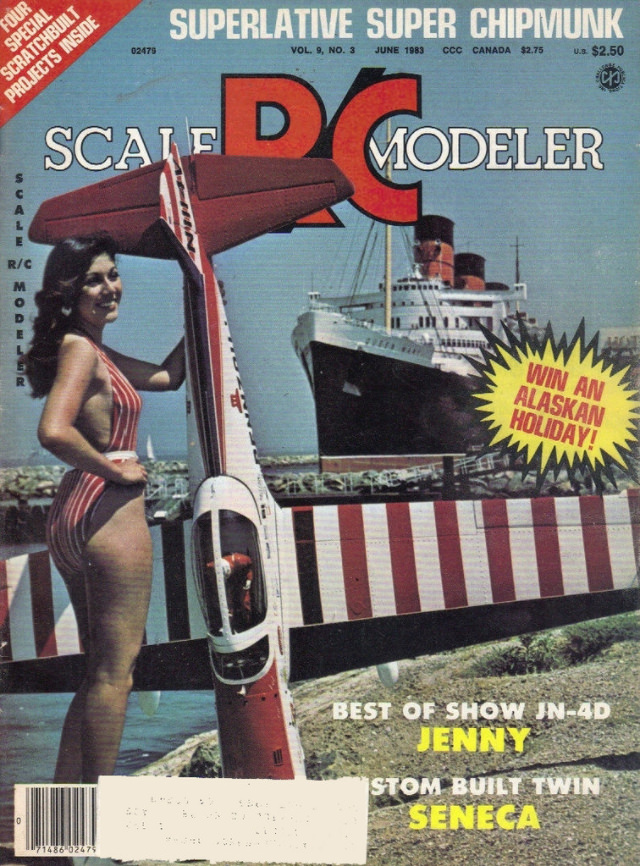
#8 Sensual Cover Photos of Radio Control Modeler Magazines that featured beautiful women from the 1970s and 1980s
Bold, oversized lettering shouts “RC Modeler” across a sunlit cover where glamour and hobby craftsmanship share the frame. A smiling woman in a striped swimsuit poses beside a sleek radio-control aircraft model, its wing rising like a stage prop against a blue sky and waterfront backdrop. The composition is pure late-20th-century magazine energy—bright color, confident…
-

#24 Sensual Cover Photos of Radio Control Modeler Magazines that featured beautiful women from the 1970s and 1980s
Bright, sunwashed color and bold masthead typography set the tone on this RC Modeler magazine cover from August 1972, priced at 75¢. Against a rugged, rocky backdrop, a smiling model poses beside a large radio-controlled airplane, its wings angled dramatically across the frame. The scene blends outdoor adventure with glossy editorial styling, a hallmark of…
-

#10 Stevie Wonder, January 22-February 4, 1971
Bold yellow lettering shouting “BLUES & SOUL” frames a striking slice of early-1970s music journalism, with Stevie Wonder pictured in profile, sunglasses on, harmonica raised to his mouth. The cover’s saturated color and tight crop turn a quiet moment of concentration into a headline image, letting the artist’s posture and instrument do the talking. For…