Category: Cover Art
Dive into a gallery of vintage cover art from books, magazines, and albums. Discover how graphic design and illustration reflected the moods of their times.
These covers capture the essence of cultural evolution — from bold propaganda to elegant minimalism.
-
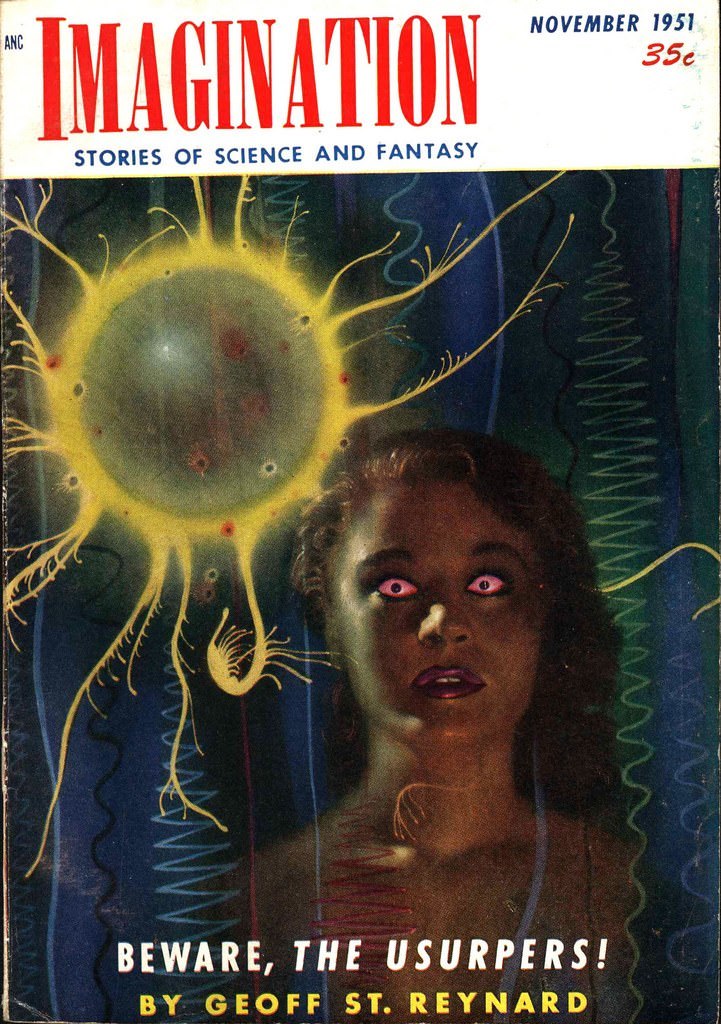
#18 Imagination, 1951
Bold scarlet lettering announces *IMAGINATION* across the top, with “Stories of Science and Fantasy” beneath it and the small print “November 1951” and “35¢” tucked into the corner. The cover art plunges immediately into a pulpy, otherworldly mood: a shadowed background crisscrossed with wavering lines, like radio waves or nervous scribbles, frames the scene in…
-
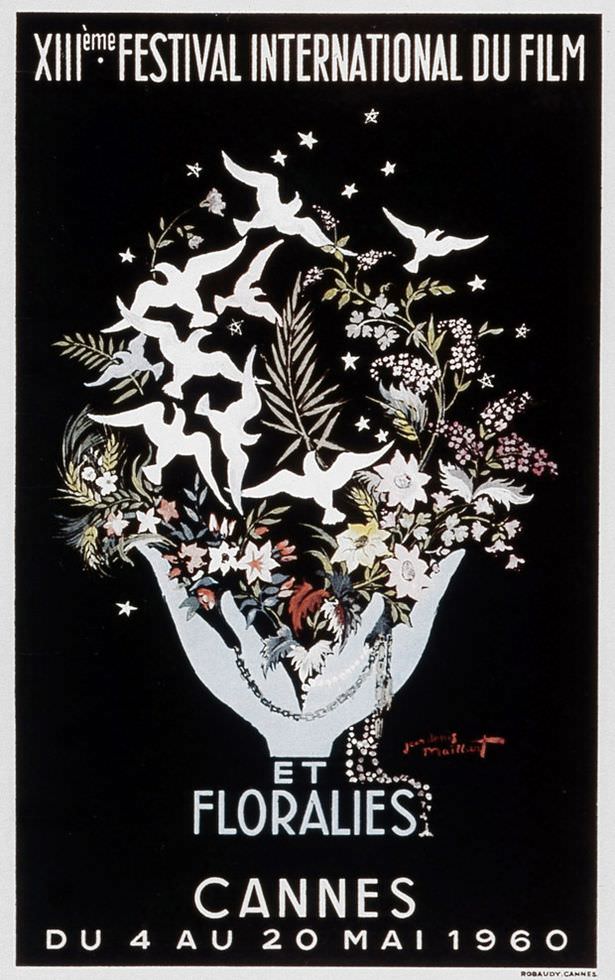
#14 1960: This looks like the book cover for a new Twilight sequel.
Midnight-black space sets the stage for a burst of white doves rising like sparks, their flight spilling out of an overflowing bouquet held in a pale, sculptural hand. Delicate flowers and leafy fronds crowd the composition, with tiny stars scattered above, giving the whole design a dreamy, supernatural glow that fits the “Twilight sequel” joke…
-
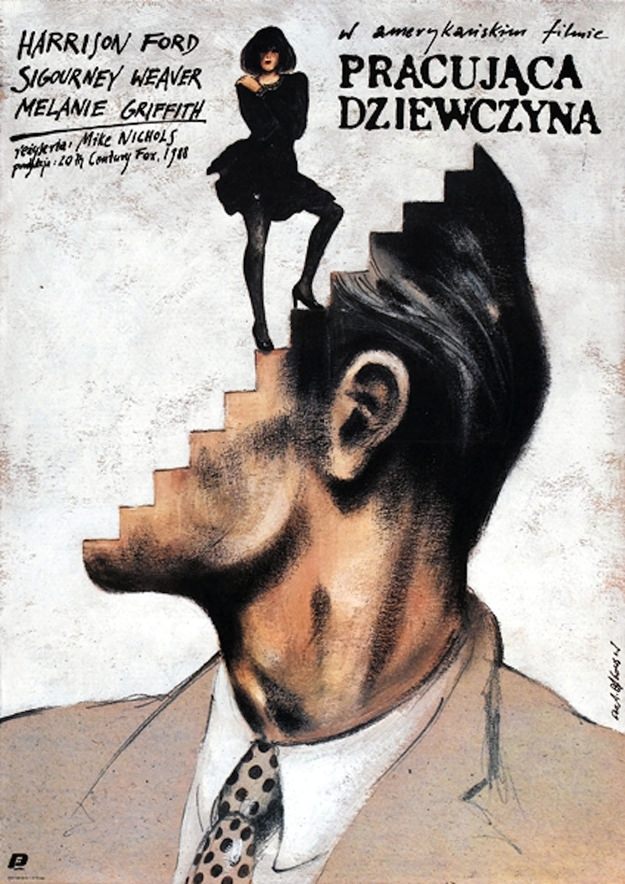
#6 Working Girl. Artist: Andrzej Pagowski. Year: 1990
Andrzej Pągowski’s 1990 poster for “Working Girl” (“Pracująca dziewczyna”) turns ambition into a visual puzzle: a sharply dressed man’s head is carved into a staircase, each step rising toward the top edge where a small, confident figure in black stands poised in heels. The contrast of scale is the point—the climber is tiny, yet she…
-
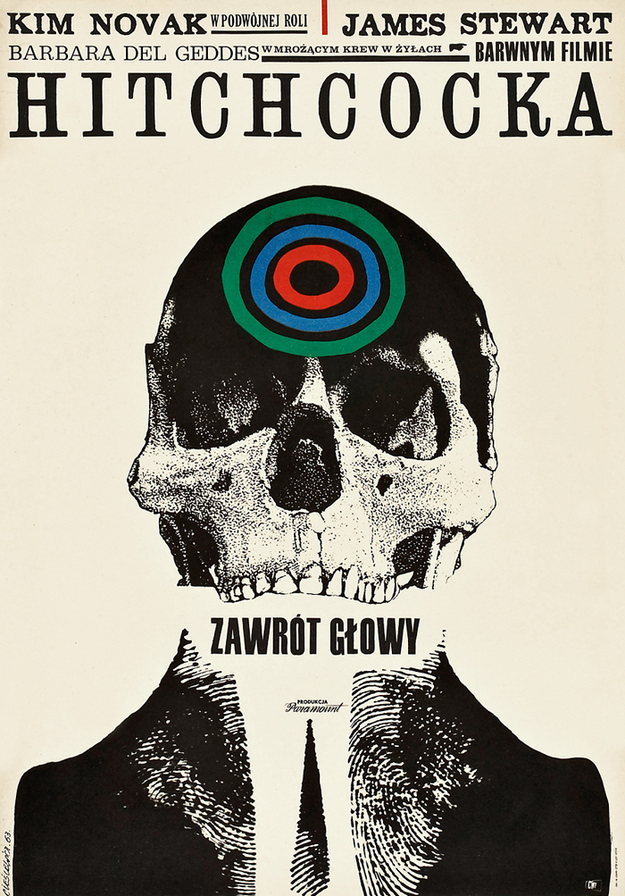
#22 Vertigo. Artist: Roman Cieslewicz. Year: 1963
Roman Cieslewicz’s 1963 cover art for “Vertigo” strikes like a warning sign: a stark skull rendered in gritty black ink, topped with concentric rings that pull the eye inward. The background stays spare and pale, making the central motif feel even more abrupt and clinical, as if the design is diagnosing fear rather than merely…
-
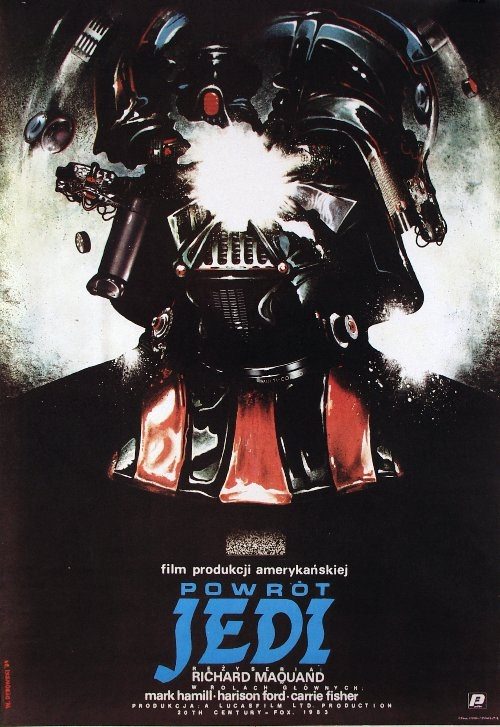
#38 Return of the Jedi. Artist: Witold Dybowski. Year: 1984
Polish poster art from 1984 often pushed film marketing into the realm of bold graphic design, and Witold Dybowski’s cover art for “Return of the Jedi” leans hard into that tradition. Rather than narrating a scene, it distills the story into a single, imposing emblem: a glossy black helmet rendered with sharp highlights and a…
-
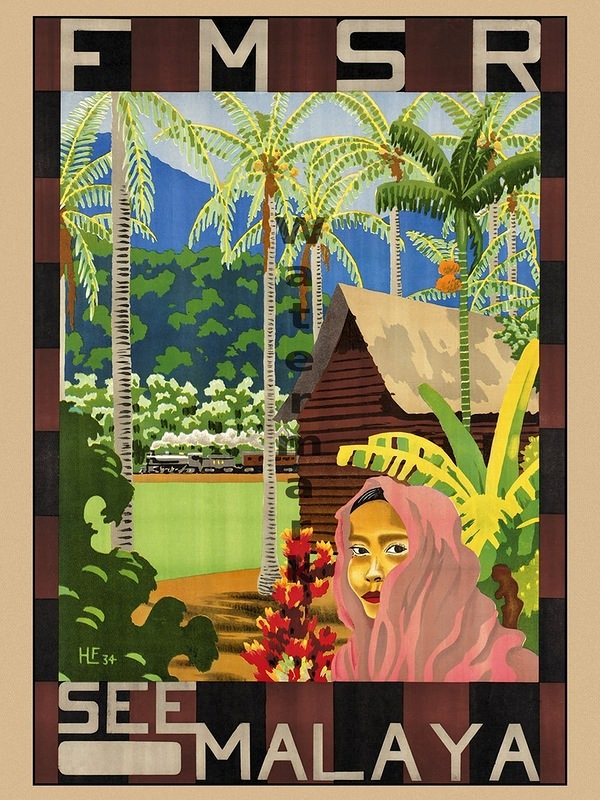
#9 Around the World in Posters: A Look at Vintage Travel Advertising #9 Cover Art
Bold lettering frames a lush tropical scene, where palms sway above dense greenery and a steep-roofed hut sits near the edge of a calm shoreline. In the foreground, a stylized figure in a pink head covering faces the viewer, while bright red blossoms punctuate the warm earth tones. The composition leans into flat, graphic color…
-
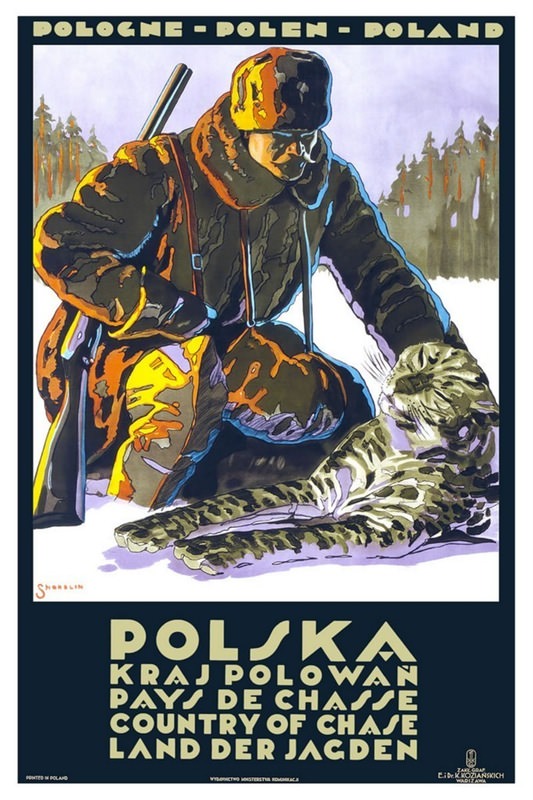
#25 Around the World in Posters: A Look at Vintage Travel Advertising #25 Cover Art
Bold lettering across the top reads “POLOGNE – POLEN – POLAND,” setting the tone for a striking piece of vintage travel advertising cover art. In the foreground, an outfitted hunter kneels in winter gear, rendered in sharp, graphic shapes and saturated browns, while a big cat lies at his side—an image designed to sell not…
-
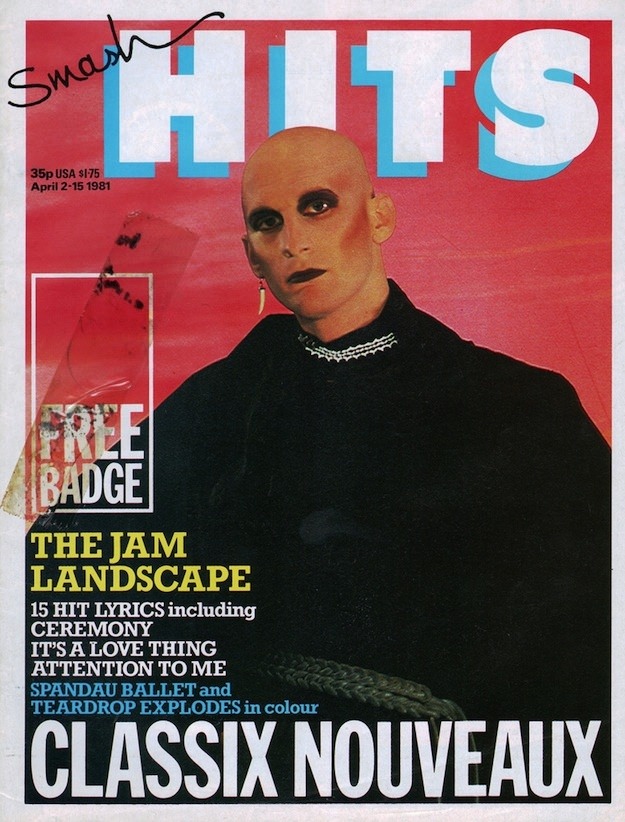
#14 Inside Smash Hits: The Iconic Magazine Covers of the 1980s #14 Cover Art
Bold blocks of colour and oversized lettering announce the unmistakable look of Smash Hits, a pop magazine that turned the newsstand into a stage. Against a hot pink backdrop, the masthead looms in chunky type while a starkly styled portrait dominates the frame, topped off with inky makeup and a cool, confrontational gaze. Even before…
-
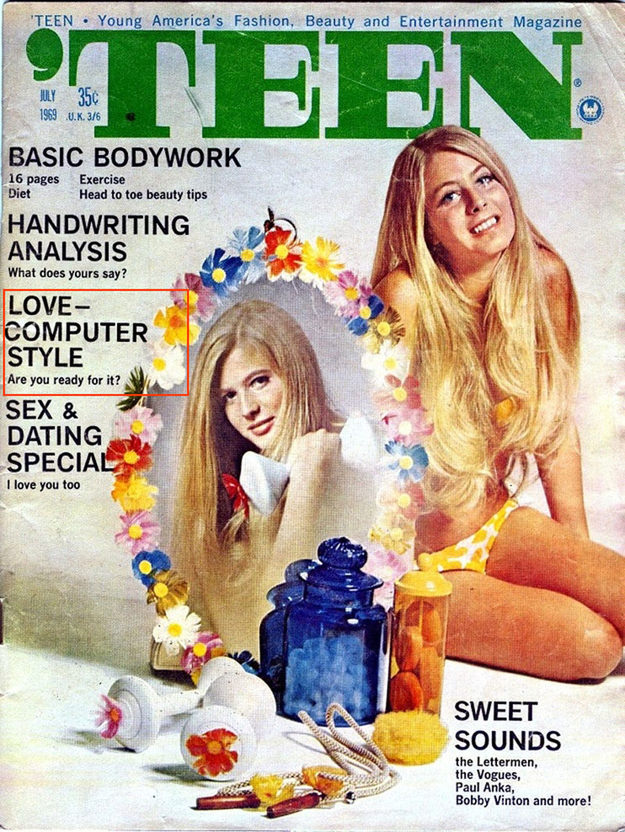
#7 A Blast from the Past: Exploring the World of Vintage Teen Magazine Covers #7 Cover Art
Bright, oversized “TEEN” lettering crowns this vintage teen magazine cover, with cover lines that instantly place it in the late-1960s world of youth culture and glossy aspirations. The page promises “Young America’s Fashion, Beauty and Entertainment,” then pivots to a grab bag of self-improvement and curiosity—“Basic Bodywork,” “Handwriting Analysis,” and a “Sex & Dating Special”—all…
-
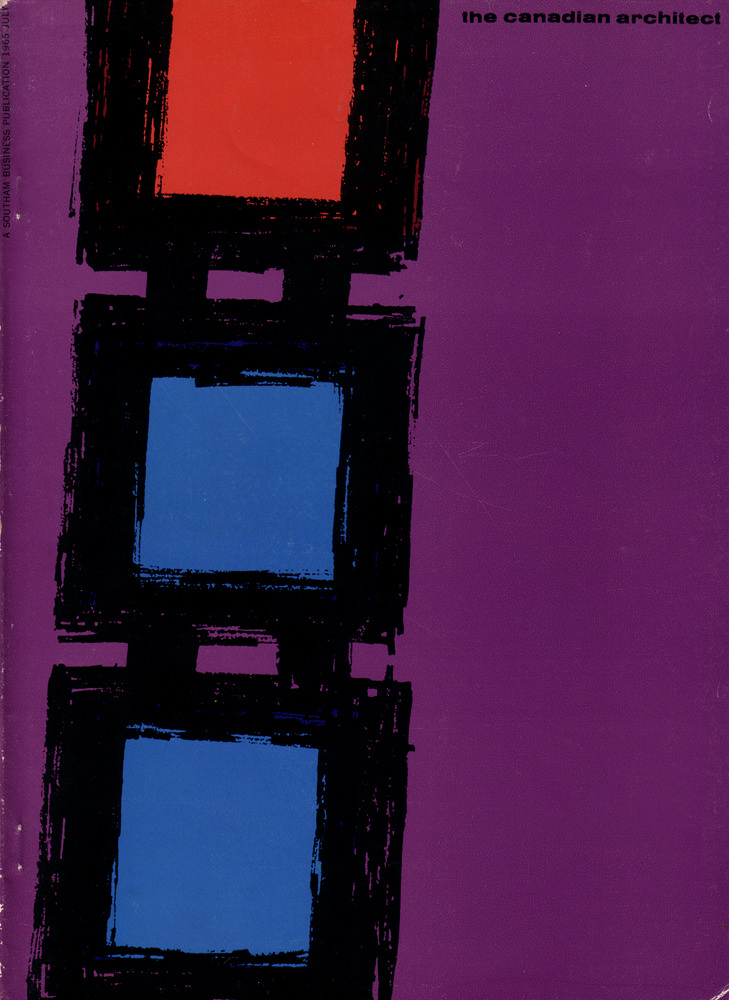
#12 The Canadian architect – July 1965
Bold color and spare geometry define the cover art for *The Canadian Architect* from July 1965, where three stacked rectangles—red above, two blue below—sit inside rough black frames against a saturated purple field. The brushy, almost calligraphic edges keep the composition from feeling mechanical, suggesting movement and texture rather than hard precision. Small type at…