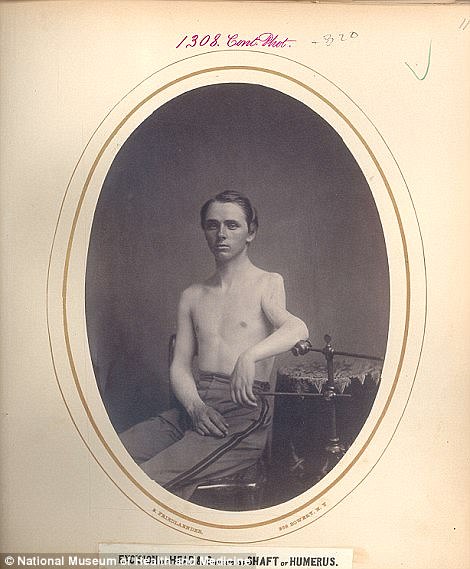
Sergeant Hector Sears of the Ohio Volunteers appears in a stark studio setting, posed with a bare torso and an injured arm arranged to make the damage unmistakable. The oval matte and careful lighting draw the eye to his shoulder and upper arm, where the aftermath of battlefield trauma is implied more by posture and absence than by gore. A small stand beside him, typical of formal portrait props, heightens the contrast between genteel presentation and the brutal reality behind the sitter’s calm expression.
The title’s detail—six inches of the humerus removed—places this portrait within the grim medical history of the Civil War era, when surgeons often chose resection to save a life that amputation might otherwise claim. Photographs like this were not only personal records for families; they also served as evidence in the developing world of military medicine, documenting outcomes with clinical frankness. Even without a visible hospital ward, the image reads like a case study in endurance, surgery, and the limits of nineteenth-century care.
Readers searching for Civil War wounds, Union Army veterans, or historical medical photography will recognize why such portraits remain compelling primary sources. They invite questions about pain, recovery, disability, and the long aftermath of service—subjects often sidelined by battlefield narratives. Preserved and presented today, this likeness of Sergeant Sears offers a sober window into how war reshaped bodies and lives, and how photography helped record that transformation for posterity.