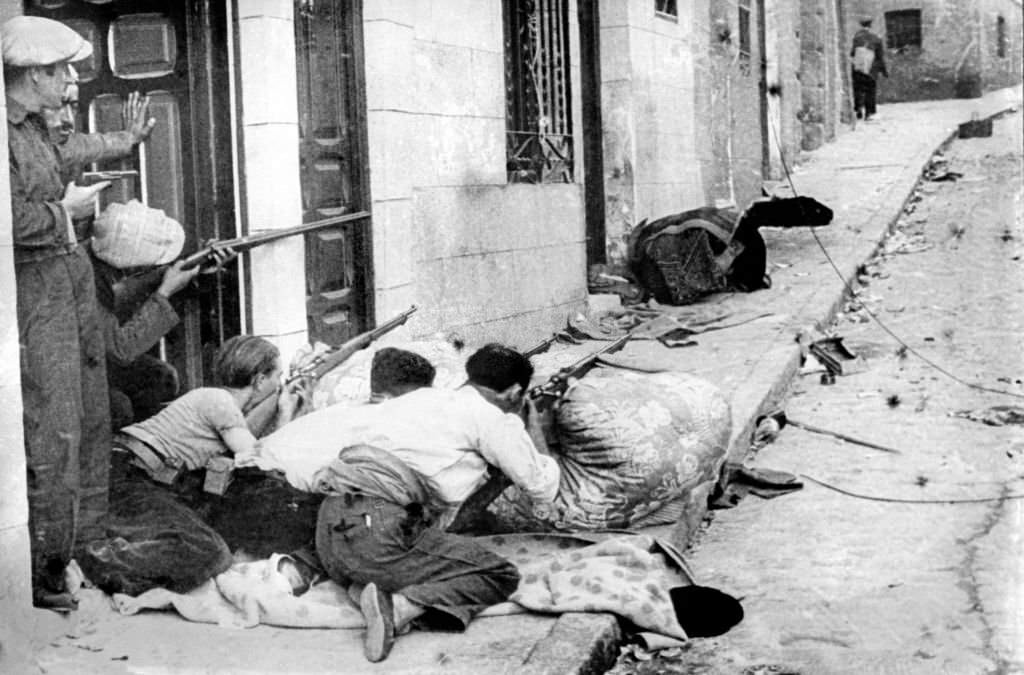
Pressed flat against the curb, a cluster of Republican fighters aim their rifles down a narrow village street, using doorways, blankets, and bundled bedding as improvised cover. The stone façades and shuttered openings turn everyday architecture into a battlefield, while scattered debris and dark impact marks on the roadway hint at sustained gunfire. One figure farther up the lane keeps to the wall, underscoring how quickly a quiet settlement can become a corridor of danger.
Small details carry the weight of civil war: rolled cloths for padding, mismatched clothing, and the tense choreography of bodies crouched low to avoid a line of fire. The camera angle pulls the viewer into the fight from just behind the defenders, emphasizing the immediacy of street combat and the vulnerability of men pinned in place. With no flags or clear signage to identify the village, the scene speaks for countless unnamed streets where control was fought house by house.
Titled “Republicans fighting in a street of an unidentified village, 1936,” the photograph belongs to the earliest, most chaotic phase of the Spanish Civil War, when local terrain and quick improvisation often mattered as much as formal training. Its anonymity is part of its power: without a precise location, the image becomes a universal document of urban warfare and civilian landscapes transformed by conflict. For readers exploring Civil Wars history, it offers a stark, SEO-relevant window into Republican resistance, street fighting tactics, and the human experience of combat in 1936.