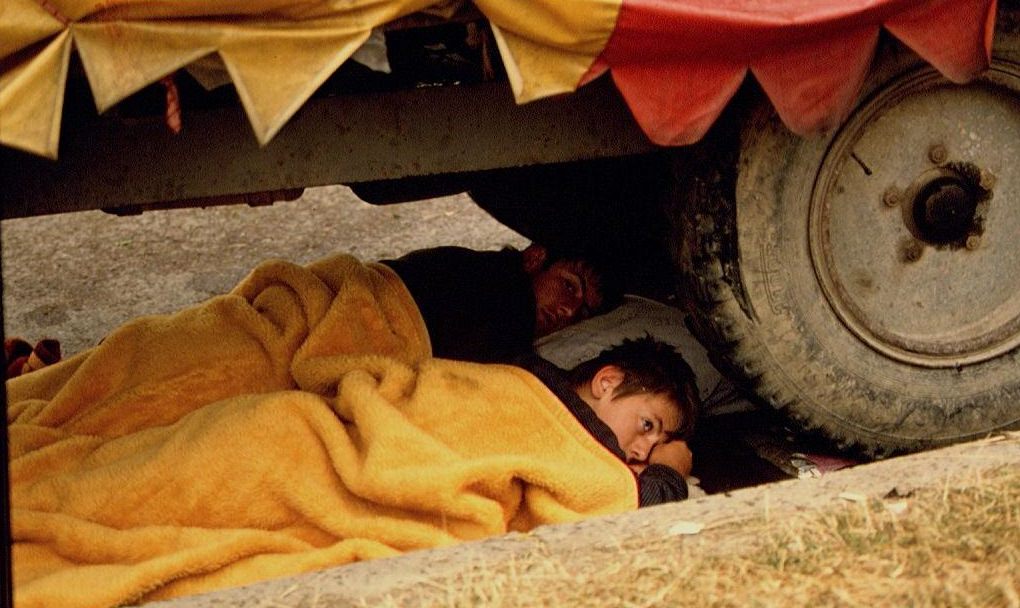
Under the edge of a large vehicle, two exhausted travelers lie close to the ground, wrapped in heavy blankets that turn the roadside into a makeshift shelter. The frame is tight and intimate: the rough tire, the low clearance, and the strip of grass at the margin all emphasize how little space safety seems to occupy. One face is partly visible, eyes open and watchful, suggesting a night spent listening as much as resting.
The post title points to refugees waiting for permission to enter Croatia, and the image echoes that limbo with quiet force. Civil wars do not only break cities and front lines; they collapse ordinary routines, pushing families into queues, border crossings, and temporary camps where sleep happens wherever it can. Here, the underside of a truck becomes protection from weather and visibility, hinting at fear, uncertainty, and the fragile strategies people adopt while they wait.
For readers searching the history of Balkan displacement, migration, and border control, this photograph offers a grounded reminder that “refugee crisis” is made of individual bodies and small decisions. Blankets, asphalt, and the shadow of machinery replace the comforts of home, turning a pause in transit into the central event of the day. The scene invites reflection on how borders shape human movement—and how survival often looks like simply enduring the hours until a gate opens.