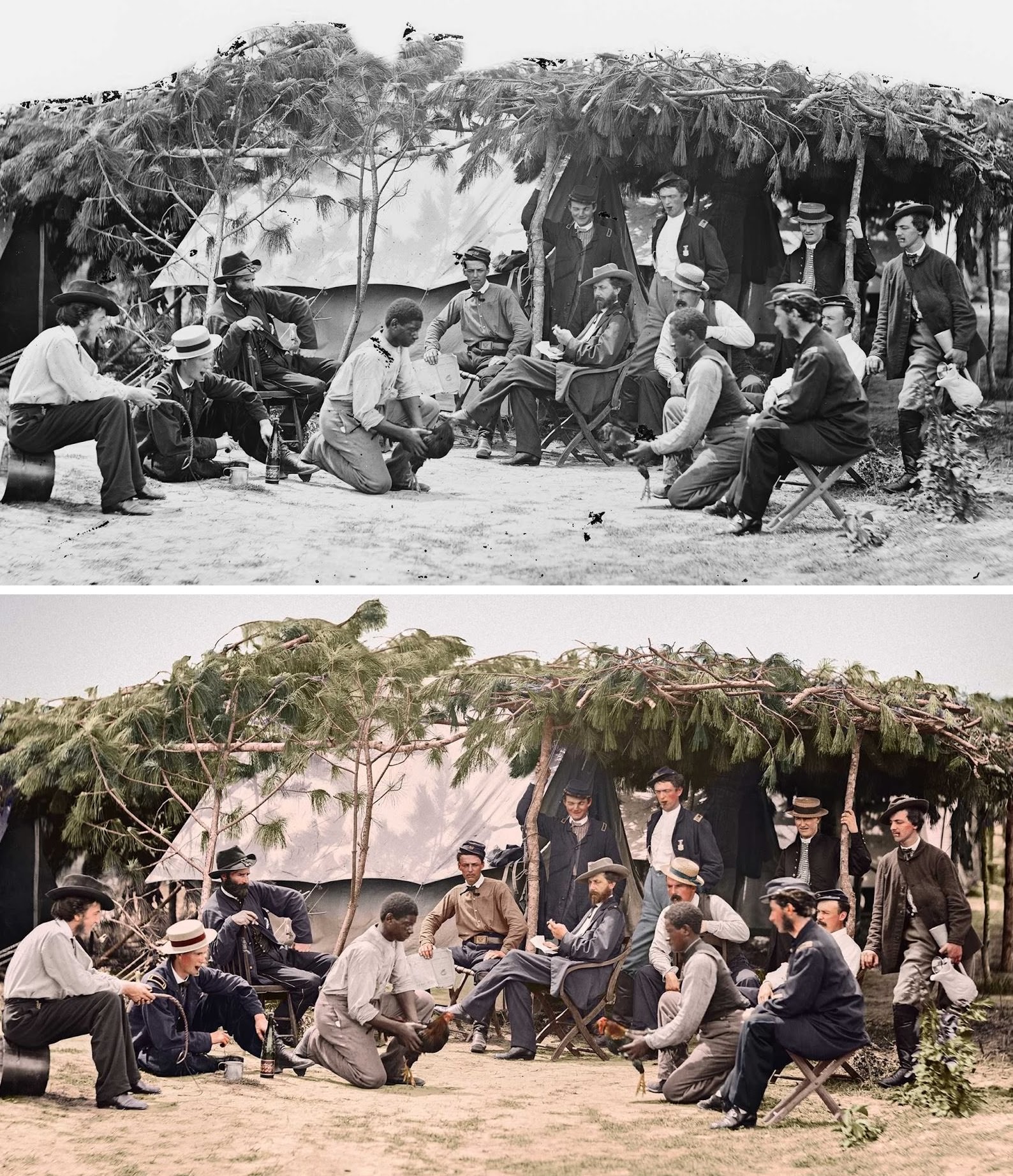
Under a rough shelter of pine boughs and canvas, a small crowd gathers at headquarters outside Petersburg, Virginia, in 1864, turning a patch of ground into a makeshift arena. Men lounge on camp stools and the bare earth, hats tilted against the sun, their attention drawn toward the center where two roosters are being handled and readied. The scene feels informal and domestic despite the military setting—boots, jackets, and a few personal effects scattered within easy reach.
At the heart of the photograph is the contrast between leisure and war: soldiers and staff pausing from the grind of the Civil War to watch a rooster fight, an entertainment with deep roots in nineteenth-century culture. Faces lean in with curiosity while others keep a practiced calm, as if refusing to reveal emotion in front of comrades. The headquarters backdrop—temporary, improvised, and shaded for comfort—quietly reminds viewers that even moments of diversion took place within an active campaign.
For readers exploring Civil War history, Petersburg, or the daily life of Union army camps, this image offers a vivid glimpse of how boredom, stress, and camaraderie were managed far from home. It also raises uncomfortable questions about period amusements and the blurred line between sport and cruelty, all framed within the pressures of 1864. In one frozen moment at Gen. Orlando B. Willcox’s headquarters, the routines of command and the cravings for distraction sit side by side.