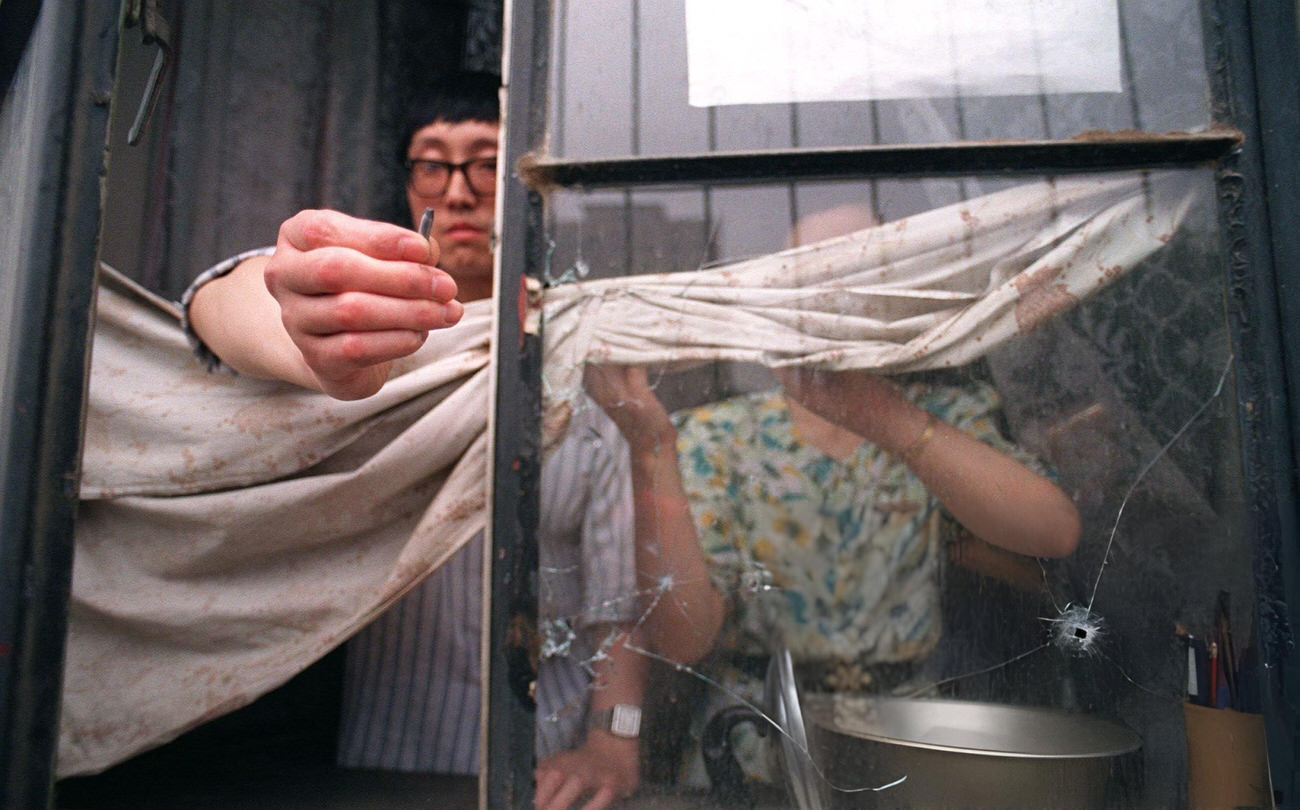
A hand reaches out from behind a makeshift curtain, holding up a small, metallic slug as if it were courtroom evidence. Behind the gesture, the resident’s face is partially framed by a damaged window, its glass spidered with cracks and punctured by a neat, brutal hole. The scene is intimate and immediate, turning an everyday interior into a witness stand in Beijing, 1989.
What makes the moment so arresting is the contrast between scale and consequence: a tiny projectile becomes proof of automatic rifle fire, and the home’s improvised fabric barrier suggests both privacy and protection, neither fully possible. The shattered pane speaks of force entering domestic space, while the careful way the slug is presented implies a desire to document, to be believed, and to insist that the violence was real. In the background, another figure and a cluttered room hint at ordinary life interrupted by conflict.
For readers seeking historical context on Beijing 1989, civil unrest, and the human aftermath of military action, this photograph offers a visceral fragment rather than a sweeping panorama. It underscores how political crises are recorded not only in public squares and headlines, but also in the small artifacts people salvage afterward—glass splinters, torn cloth, and a single piece of metal held between fingers. The image endures as a stark reminder of how quickly state power can imprint itself on private lives.