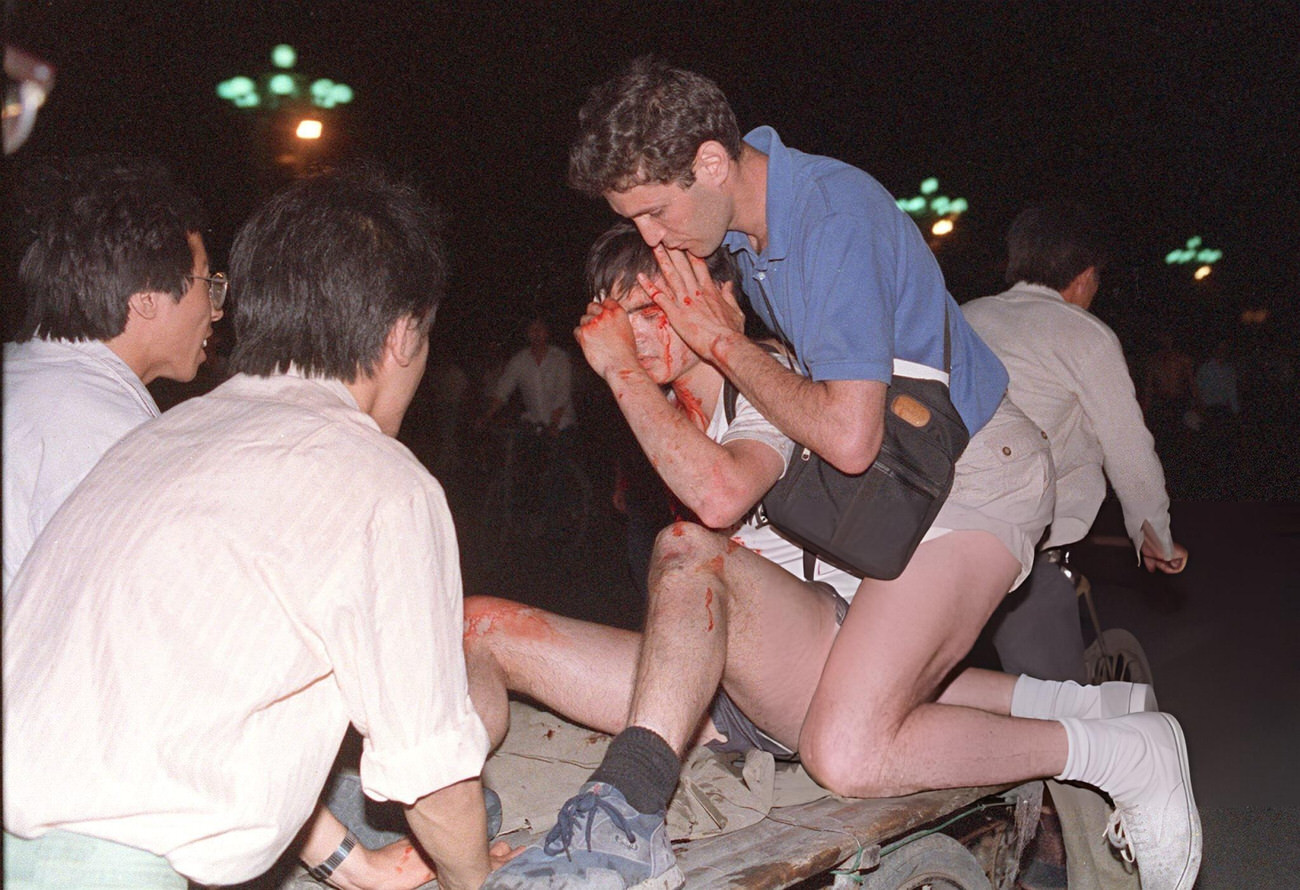
Under harsh streetlights in the tense year of 1989, an injured foreign journalist is hauled away from a confrontation between the army and student demonstrators. Blood streaks down his face and hands as he shields his eyes, while hurried helpers crowd in close, their expressions fixed on the immediate task of getting him to safety. The night setting and the tight, urgent grouping of bodies turn the scene into a raw snapshot of chaos, vulnerability, and human instinct.
The photograph’s power lies in its physical details: the improvised stretcher, the awkward balance of limbs, and the bag still slung over a shoulder as if work might resume the moment the danger passes. There is no triumphant pose here, only the blunt reality of someone caught in the spillover of civil unrest while trying to witness it. Even without a visible backdrop of troops or banners, the strain in faces and the smear of fresh wounds speak loudly about how quickly a public clash becomes a private emergency.
As a historical document, this image points to the risks borne by journalists covering political violence and student-led movements, especially when lines between observers and participants collapse. It also highlights the often-uncredited role of bystanders who step in during crises, transforming a street corner into a corridor of rescue. For readers searching the history of 1989 protests, army–student clashes, and the lived experience of civil wars and unrest, the scene offers an unvarnished reminder that the cost of conflict is measured in bodies, not headlines.