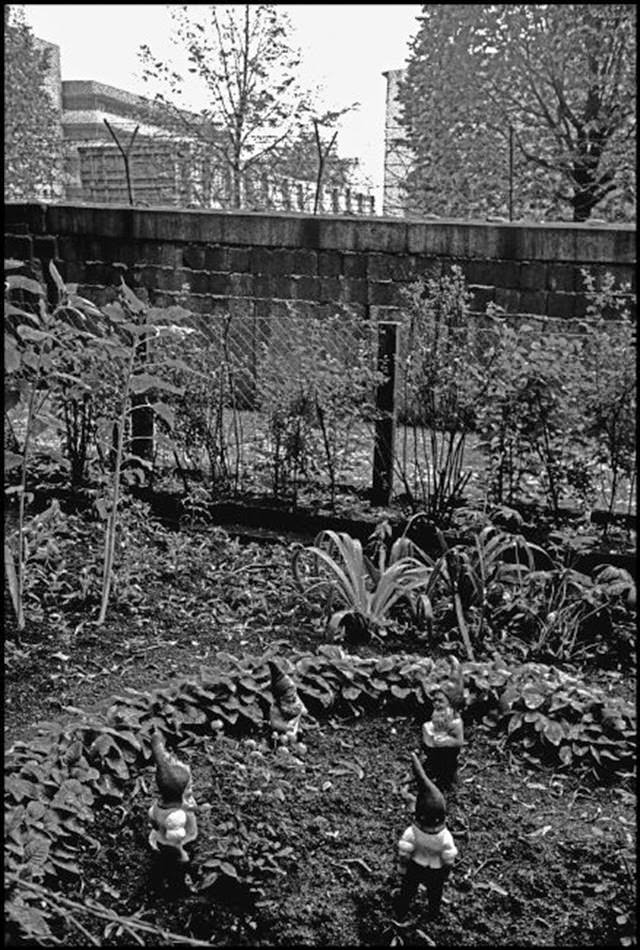
Low in the frame, a small garden bed becomes a stage: three gnomes stand among turned soil, leafy borders, and the first messiness of spring growth. Their bright, toy-like presence feels almost defiant against the rough masonry rising behind them, a domestic corner carefully tended in a place better known for concrete and control. The contrast between miniature whimsy and heavy architecture gives the scene its quiet punch.
Behind the plants runs the Berlin Wall, its blockwork and barrier line cutting across the background while trees and distant buildings peek above it. In Berlin Wedding, where everyday life pressed up close to the border, such improvised gardens were more than decoration—they were a way to claim normal routines in the shadow of division. The camera lingers on textures: damp earth, tangled stems, and the wall’s hard edge, letting the viewer feel how near the boundary sat to ordinary chores.
For readers searching Berlin Wall history, Cold War Berlin photography, or Berlin Wedding border life, this image offers an intimate angle that official narratives often miss. It speaks to how people negotiated separation not only with politics and protests, but also with small acts of care—planting, weeding, arranging a few figures to watch over the beds. Even without a crowd or a checkpoint in sight, the Wall’s presence is unmistakable, and the garden gnomes make that presence human-scale.