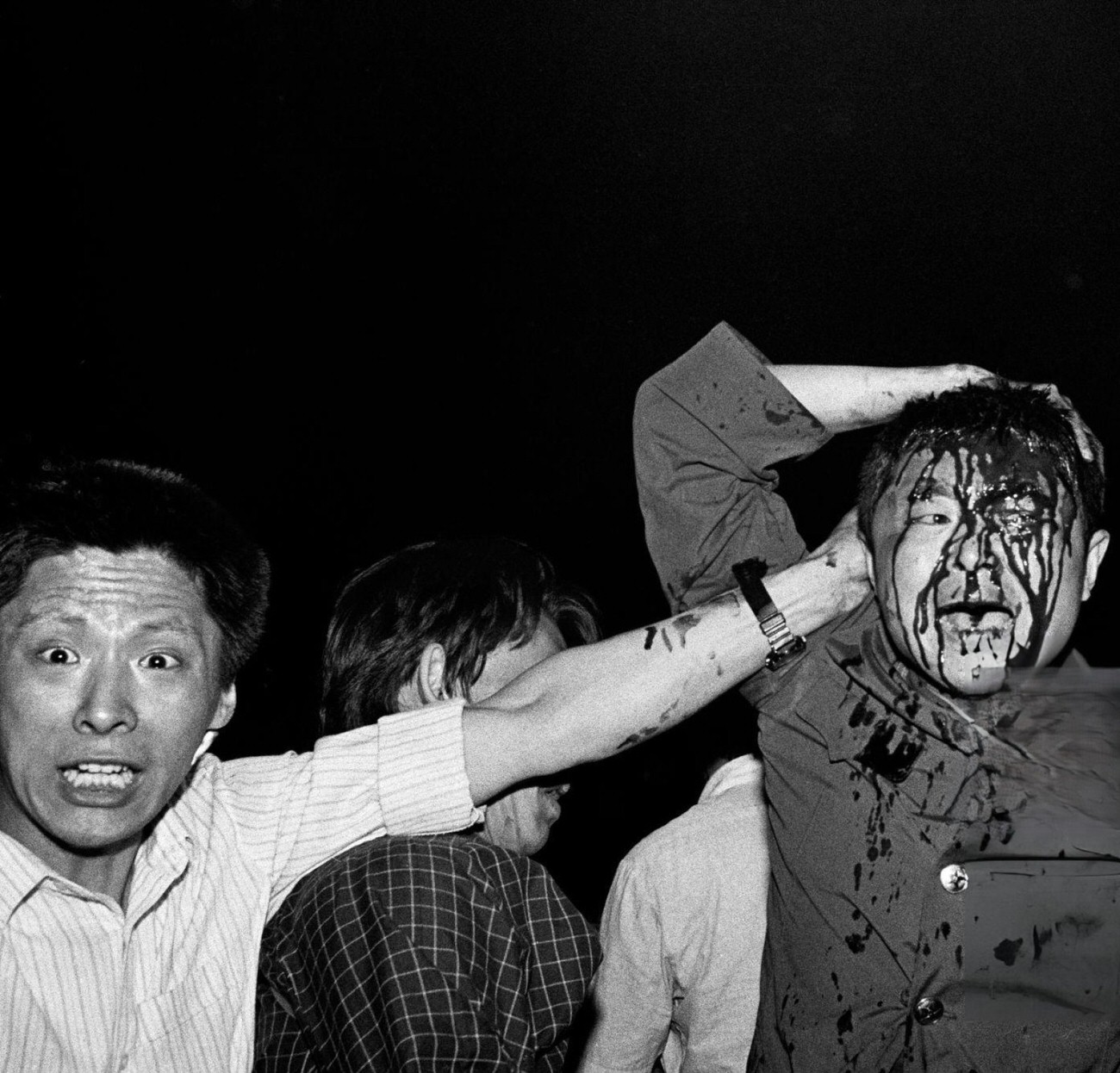
Panic and resolve share the frame as a student grips the head and neck of a wounded Chinese soldier, guiding him through the darkness. Blood streaks the man’s face and uniform, turning the stark flash into a harsh spotlight on injury and shock. Another figure presses close at the shoulder, suggesting an improvised stretcher or a hurried attempt to keep the soldier upright.
Drawn from the turbulent year of 1989, the photograph speaks to the confusion of civil unrest, where ordinary young people suddenly became first responders. The student’s wide-eyed expression and tense arm hint at urgency, fear, and the instinct to protect life even when sides are blurred. In its tight composition and clipped background, the scene feels claustrophobic—an instant of crisis isolated from the wider street.
For readers searching for historical photos of 1989 China, student activism, and the human cost of political confrontation, this image offers a sobering point of entry. It does not explain what happened before or after, yet it records what matters in a single beat: injury, assistance, and the fragile bond between civilians and soldiers. Such moments, preserved in photojournalism, linger because they refuse easy narratives and instead insist on empathy amid disorder.