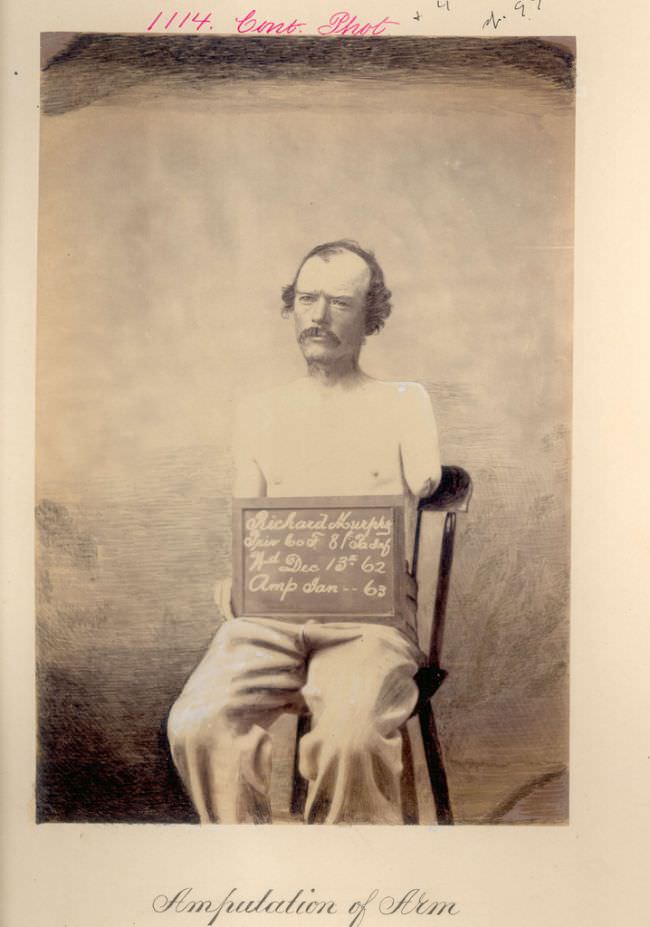
Seated against a plain studio backdrop, Pennsylvania infantryman Richard Murphy faces the camera with a steady, unsentimental gaze, his bare torso emphasizing the physical cost of Civil War service. One sleeve ends abruptly where his arm once was, a detail made even more striking by the quiet formality of his posture and the chair’s rigid lines. The composition feels clinical and intimate at once, inviting viewers to look past uniforms and battle flags to the wounded body that remained after the fighting.
Across his lap, Murphy holds a handwritten board that identifies him and records the hard facts of his injury and subsequent amputation, turning the portrait into a document as much as a likeness. Such images belonged to an era when medical photography and soldier portraits overlapped, created to show surgeons, officials, and families the reality of wartime trauma. The careful lighting and sparse setting keep attention fixed on the man and the evidence he presents—both the missing limb and the written testimony.
For readers exploring Civil War history, this photograph is a stark entry point into the world of battlefield wounds, emergency surgery, and long recovery in military hospitals. It speaks to the thousands of amputations performed during the conflict and to the survivors who carried those losses into civilian life. Murphy’s portrait endures as both a personal record and a broader reminder that the war’s aftermath was measured not only in victories and defeats, but in altered bodies and enduring resilience.