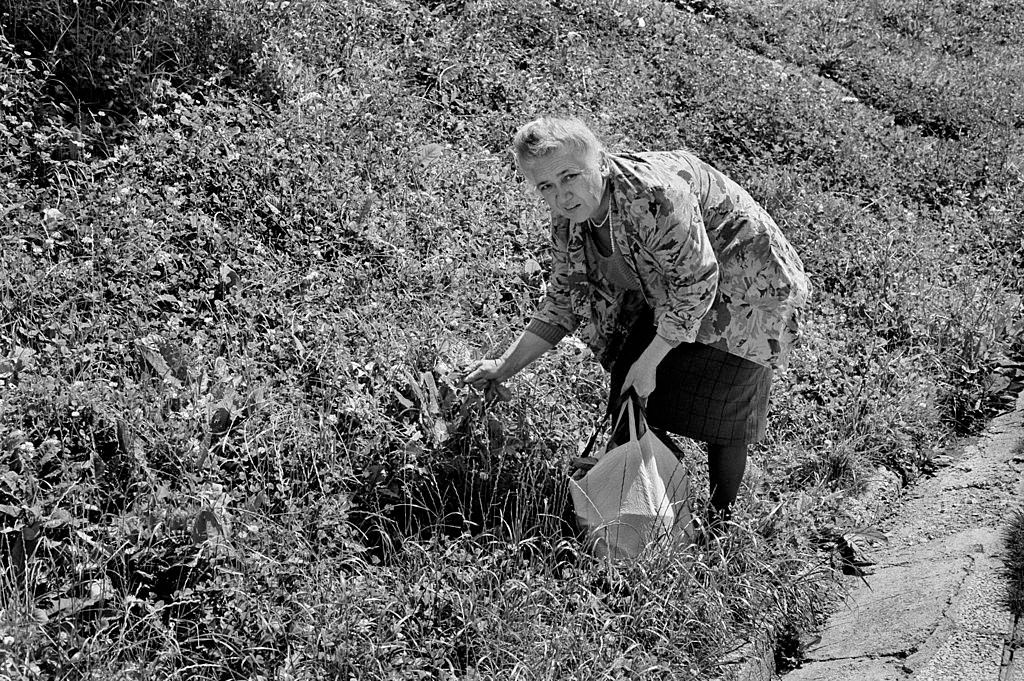
Pearls at the throat and a patterned jacket on her shoulders, a well dressed woman bends into the roadside growth, pulling tender stems and leaves with practiced care. She holds a shopping bag open at her feet, turning an ordinary accessory of city life into a tool for survival. Her glance toward the camera is steady, caught between courtesy and the hard focus of someone measuring what can be eaten.
The title’s Sarajevo setting and the note of civil wars frame this simple act as a record of scarcity, where the boundary between “wild” and “food” collapses. Along the embankment, weeds, grasses, and low plants become a pantry, gathered one handful at a time when markets fail and kitchens must improvise. Everyday foraging—normally a choice—reads here as a quiet necessity shaped by siege conditions and disrupted supply lines.
What lingers is the contrast: dignity in dress beside the grit of making do, refinement meeting the raw edge of hunger. The photograph offers a ground-level view of wartime civilian life in Sarajevo, emphasizing resilience rather than spectacle, and reminding readers how quickly routines can be rewritten by conflict. For anyone searching for historical photos of Sarajevo during the civil war era, this scene speaks powerfully about adaptation, endurance, and the private labor of feeding a household when food becomes scarce.