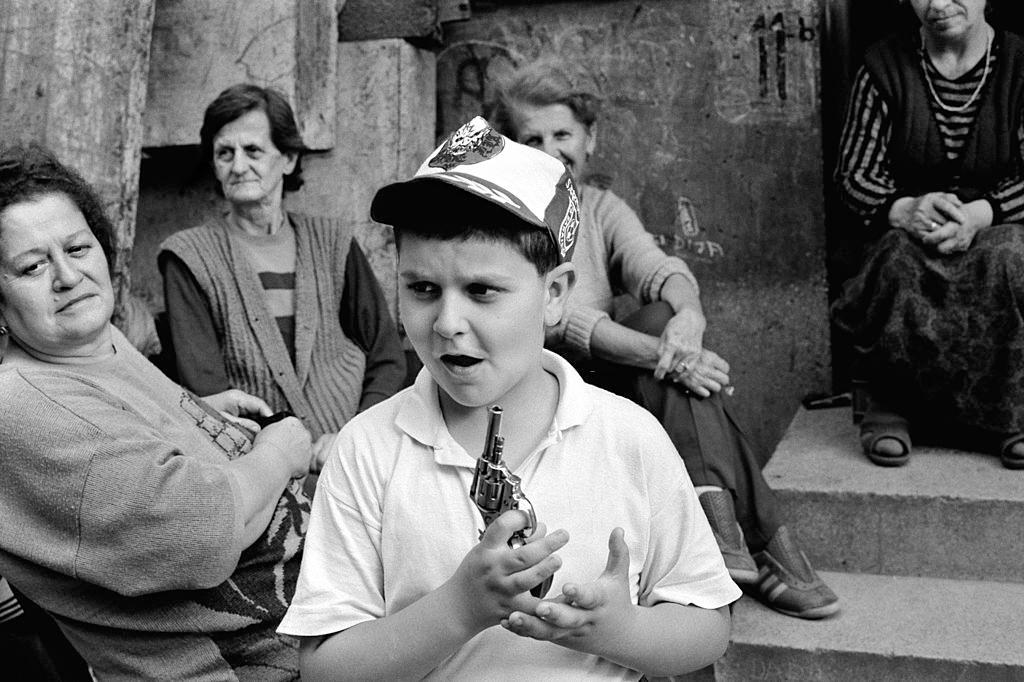
On a worn stairwell outside a battered apartment block, a small group of mothers settles into a brief, precious pause. Their postures suggest familiarity with this threshold—half shelter, half meeting place—where conversation can resume the moment the shelling stops. Behind them, scuffed walls and rough doors carry the quiet evidence of hardship, turning an ordinary entrance into a frontline of domestic endurance.
In the foreground, a child grips a toy gun, its metallic shine stark against his plain shirt and the solemn faces nearby. The contrast is unsettling and revealing: play has been reshaped by civil war, and imitation of danger becomes part of childhood routine. His open mouth and animated hands hint at a story being told or a game being directed, while the adults watch with the tired attention of people listening for sounds beyond the frame.
Between the women’s steady presence and the boy’s make-believe weapon, the photograph captures how communities persist during conflict—talking, waiting, and parenting in the margins between blasts. For readers searching for civil wars, wartime daily life, and civilians under shelling, this scene offers a grounded, intimate perspective that statistics can’t provide. It’s a reminder that history often unfolds on doorsteps, where resilience is practiced in small conversations and children learn the world as it is, not as it should be.