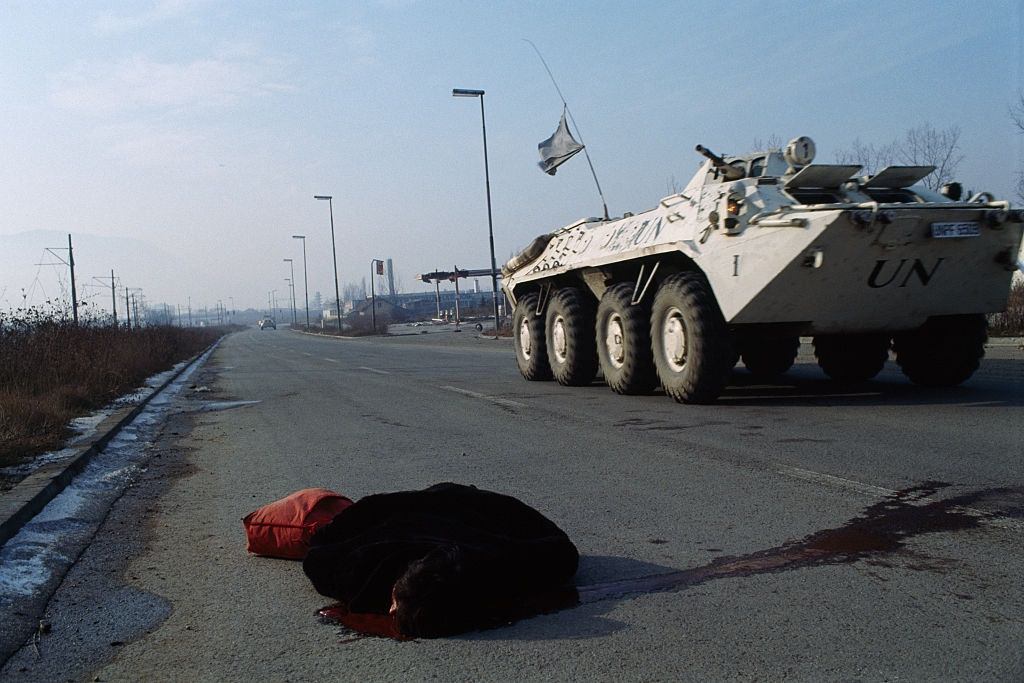
A broad, empty roadway stretches into the distance, its winter light and long shadows lending a chilling stillness to the scene. In the foreground lies the body of a woman, curled on the asphalt beside a red bag, with a dark stain marking the violence that has intruded on an otherwise ordinary piece of infrastructure. Farther up the lane, a white armored vehicle bearing the large “UN” letters looms into view, its presence both protective and painfully insufficient.
The title points to a United Nations medical vehicle, and the image underlines the harsh realities of civil wars where humanitarian convoys and peacekeeping forces operate amid insecurity. Roadside lamp posts, sparse brush, and the open horizon emphasize exposure—there is nowhere to hide, and help, even when close, arrives into a landscape already shaped by loss. The contrast between official markings and the anonymous victim encapsulates the grim arithmetic of conflict: institutions move, but individual lives are extinguished in moments.
For readers searching for historical war photography, UN peacekeeping imagery, or documentation of civilian casualties during internal conflict, this photograph is an unflinching record. It invites reflection on the limits of intervention, the vulnerability of noncombatants, and the way everyday roads become front lines when societies fracture. Above all, it asks that the viewer linger on what war leaves behind, even in the wake of vehicles meant to save lives.