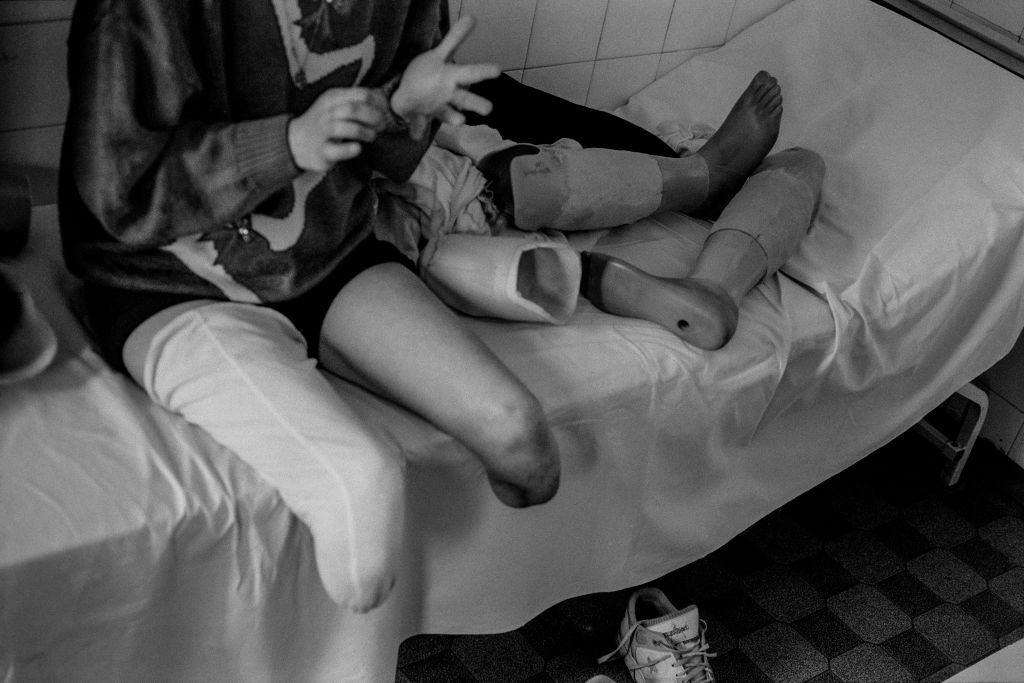
In a stark hospital room, a young boy sits on the edge of a bed, his hands caught mid-gesture as if he’s explaining something to an unseen visitor. The sheets are rumpled, the tiled floor is bare and cold, and the camera’s tight framing keeps the focus on his body—bandaged stumps where both legs once were, and the careful way he balances himself in the aftermath of catastrophic injury. A lone shoe on the floor feels like a quiet punctuation mark, an everyday object suddenly turned into a symbol of what has been taken.
Civil wars leave their deepest scars far from the front lines, and children often carry the consequences long after the headlines move on. Hospital photographs like this one are difficult to look at, yet they matter: they document survival, medical triage, and the human cost of conflict in a way that statistics cannot. The boy’s posture suggests both vulnerability and endurance, capturing a moment of recovery that is neither heroic spectacle nor anonymous tragedy, but something painfully real.
For readers searching for civil war history, wartime hospitals, or the lived experience of amputees, this image offers an unvarnished entry point into the subject. It also invites reflection on the systems surrounding him—surgeons and nurses, improvised wards, and families reshaped by violence—without pretending to know details that the photograph does not reveal. The story here is written in bandages and bedding: a child’s interrupted life, and the long, uncertain road that follows.