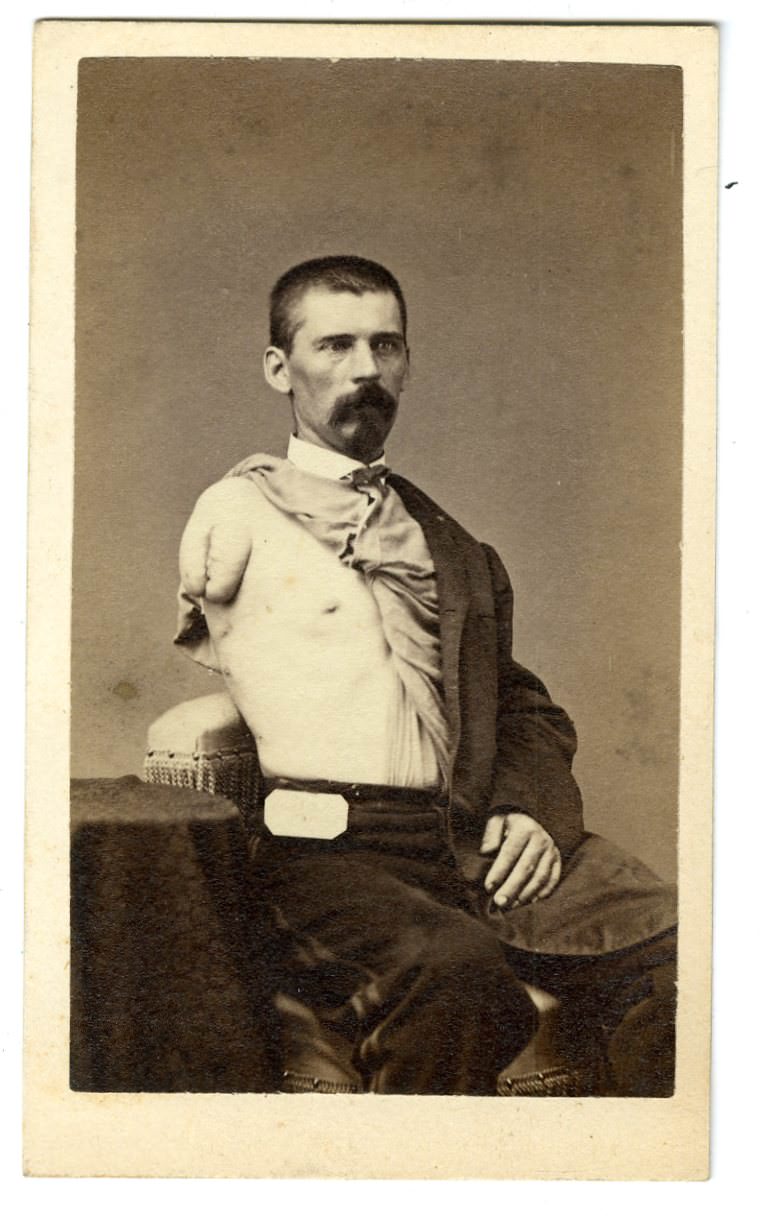
A seated soldier faces the camera with a steady, unsmiling gaze, his jacket draped loosely so the aftermath of surgery is plain to see. One arm ends above the elbow, the stump carefully positioned on a chair arm, while his other hand rests in his lap as if to hold himself together for the long exposure. The studio setting is spare and quiet, turning a private wound into a public record.
Such portraits were often made during the Civil Wars era to document injury, survival, and the brutal arithmetic of battlefield medicine. Amputation, frequently performed to prevent infection, left men to recover far from the noise of combat, learning to live with altered bodies and uncertain futures. The photograph’s formal pose—upright posture, composed clothing, direct eye contact—suggests a determination to be seen as more than a casualty.
For modern readers, this image offers a stark entry point into the history of wartime surgery, rehabilitation, and disability. It also serves as an invaluable primary source: a reminder that behind statistics and campaigns were individual lives measured in pain, endurance, and adaptation. Posted here under “Soldier recovering from surgery after being amputated,” it invites closer looking and careful remembering.