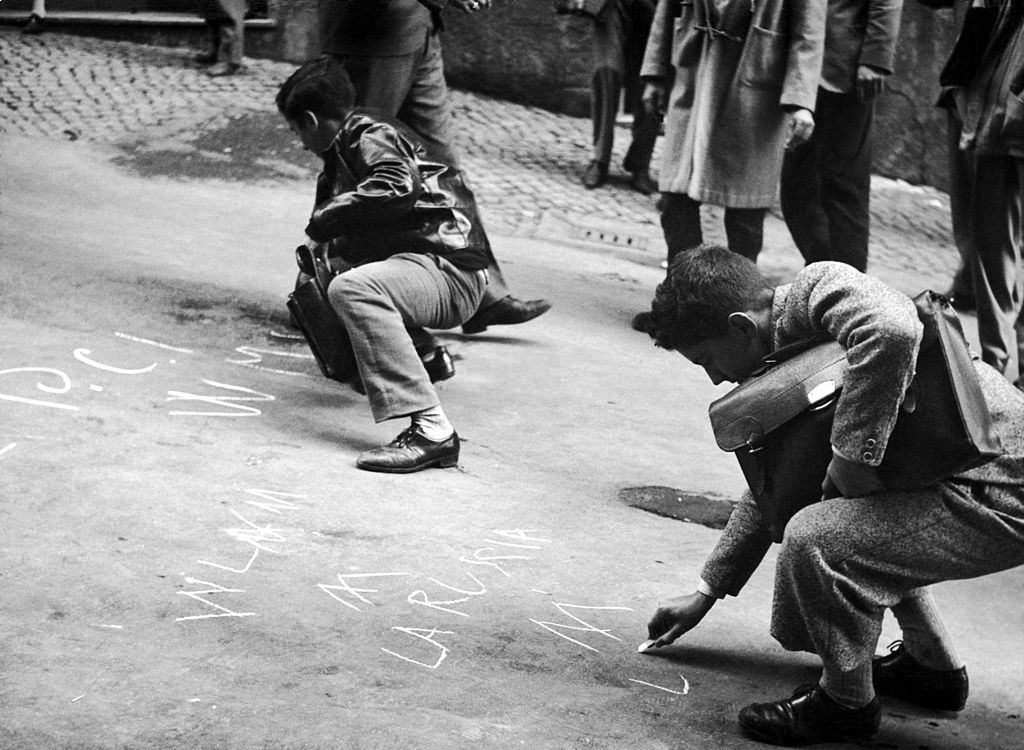
Bent low over the pavement, two young men in jackets and school trousers press pieces of chalk to the street, turning an ordinary roadway into a makeshift bulletin board. Their satchels hang from their shoulders, suggesting they have stepped out of classrooms and lectures into a moment that demanded public witness. Around them, the legs of onlookers frame the scene, as if the crowd itself is keeping watch while the words take shape.
The title anchors the moment in 1956, when news of the Hungarian uprising and its brutal suppression by Soviet tanks reverberated far beyond Hungary’s borders. What’s striking here is the scale of the response: no banners, no loudspeakers, just quick, hand-written solidarity messages laid down where anyone passing by must read them. Street writing is fragile—easily erased—yet in times of political crisis it can spread faster than printed leaflets and carry a charge of immediacy that official channels cannot match.
For readers interested in Cold War history, student activism, and the visual culture of protest, this photograph offers a quiet but potent record of how international solidarity was performed in everyday public space. The chalk lines on the ground embody a fleeting act of resistance to silence, preserving the idea that even when repression seems decisive, empathy and dissent continue to surface wherever people gather. As a historical photo, it invites a closer look at the small gestures that connect “civil wars” and revolutions to the broader public who watched, worried, and spoke out in whatever ways they could.