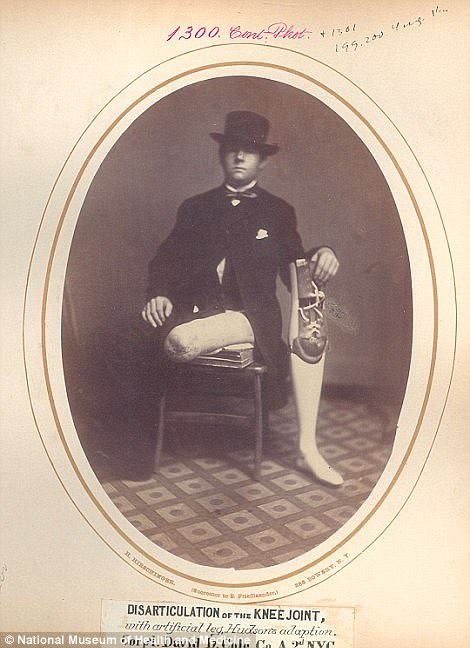
Seated in a studio setting, Captain David D. Cole faces the camera with a steady, unsmiling composure that speaks to both injury and endurance. His damaged limb is deliberately positioned for view, the amputated stump presented without theatrics, while a tailored coat, hat, and formal posture insist on dignity. The careful arrangement—chair, patterned floor, and oval mount—reflects how Civil War-era portrait photography could turn private suffering into public testimony.
The title’s reference to the Battle of Amelia Courthouse frames the scene as more than a medical curiosity: it is evidence of battlefield trauma carried into the aftermath. A complete separation of the knee joint and the resulting amputation point to the brutal mechanics of wartime wounds and the hard choices of surgeons working with limited options. Details of the prosthetic and the way Cole balances his body draw the eye to the realities of early artificial limbs and the daily negotiations required of disabled veterans.
For readers searching Civil War history, amputations, and military medicine, this photograph offers a direct window into the human cost behind campaign names and casualty figures. It also hints at the period’s evolving relationship with disability—how injured officers could be documented, scrutinized, and still portrayed with authority. In one composed moment, Cole’s portrait bridges combat, surgery, and survival, inviting a closer look at what recovery meant in the nineteenth century.