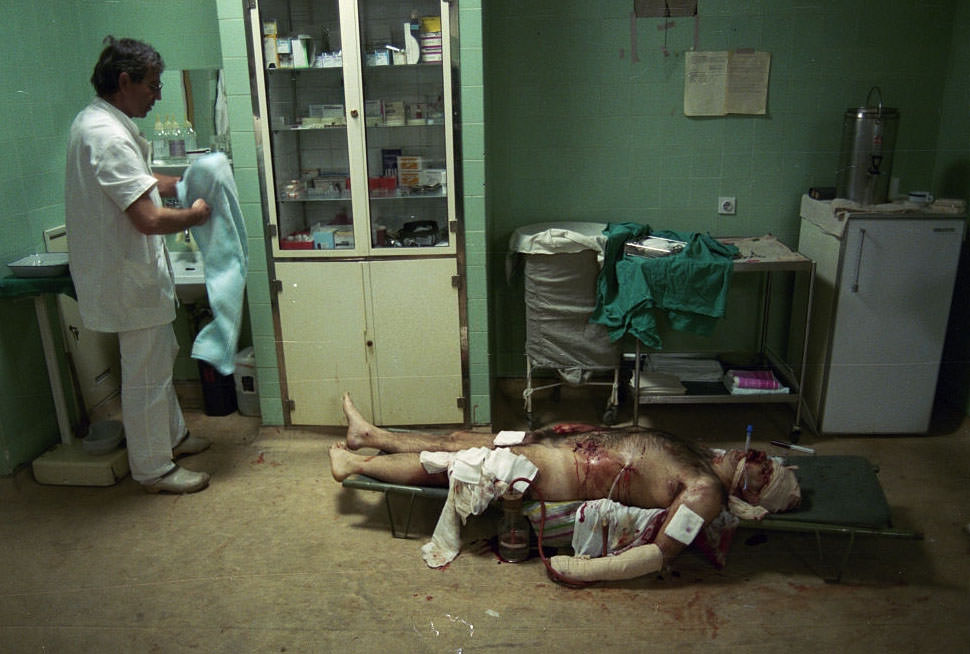
Under harsh fluorescent light, a military hospital room becomes the quiet aftermath of violence: green-tiled walls, a cluttered medicine cabinet, and a stretcher set low to the floor. The wounded civilian lies motionless, wrapped in makeshift bandages and stained cloth, while dried blood marks the body and the sheet beneath. At the edge of the frame a medical worker, dressed in white, prepares linens with the practiced urgency of someone who has repeated the same routine too many times.
The title’s cruel contradiction—bombing on the first day of a cease-fire in central Sarajevo—hangs over every detail. Instead of the promised pause in shelling, the photograph delivers the reality of civil wars: agreements on paper and casualties in hospital corridors. There is no spectacle here, only the plain infrastructure of survival—metal shelves, basic equipment, and a staff forced to treat catastrophic injuries with whatever resources remain.
For readers searching Sarajevo siege history, Balkan conflict photography, or the human cost of cease-fire violations, this image is a stark record of what “civil war” means at ground level. It pulls attention away from front lines and negotiations and into the intimate space where consequences arrive first and explanations come later. The scene asks for witness rather than interpretation, preserving a moment when a city’s promised respite failed, and one person’s life depended on the strained steadiness of wartime medicine.