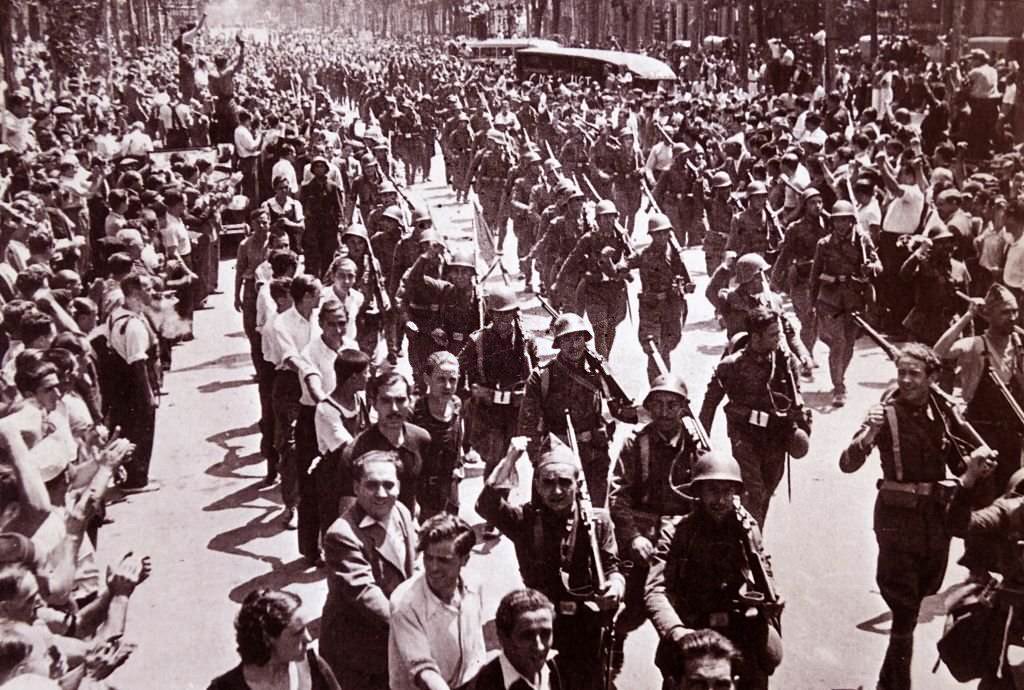
Barcelona’s streets swell with movement as anti-fascist troops march forward in disciplined ranks, rifles slung over shoulders and helmets catching the light. On both sides, dense crowds press in close, applauding and craning for a clearer view, turning the roadway into a living corridor of sound and expectation. The composition pulls the eye down the parade route, where the column seems to extend far into the city’s urban backdrop.
Uniformed fighters and civilian onlookers share the same frame, revealing how quickly daily life and war blended during the Spanish Civil War. Faces in the crowd register a mix of pride, urgency, and strain—an emotional cross-section of a city rallying around its defenders while the conflict’s dangers loomed beyond the boulevard. Even without banners readable at this distance, the scene communicates solidarity and mobilization, a public display meant to inspire confidence and unity.
Moments like this help explain why photographs from 1936 remain so powerful: they preserve the atmosphere of mass politics, street-level organization, and contested futures. For readers exploring the Spanish Civil War, anti-fascist resistance, and Barcelona’s role in the struggle, this parade image offers a vivid entry point into the era’s tension and hope. It stands as a reminder that civil wars are not fought only on front lines, but also in city avenues filled with people watching history pass by.