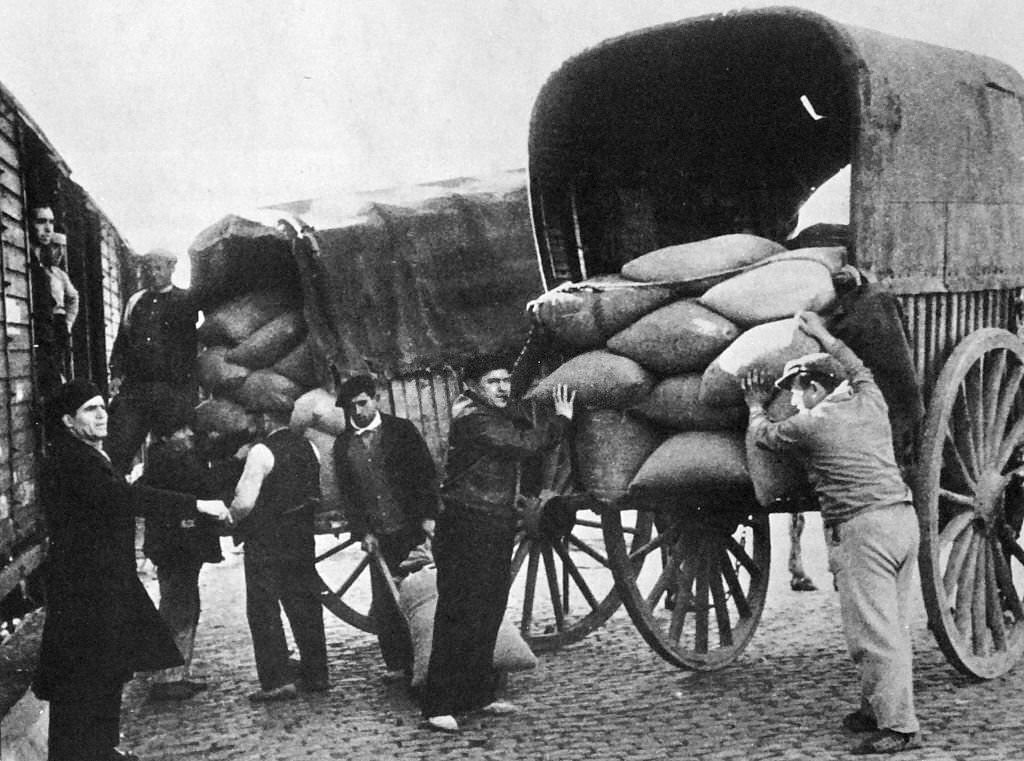
At the edge of a rail line, men cluster around a high-sided cart piled with bulging sacks of grain, working shoulder to shoulder as a rail truck waits to take the load onward. The cobbled ground, the heavy wooden wheels, and the covered wagon frame a scene of urgency and routine at once—an everyday transfer of food made extraordinary by the pressures of the Spanish Civil War in 1936.
Grain was more than a commodity in wartime Spain; it was endurance measured in rations, bread lines, and the ability to keep communities functioning under strain. The photograph’s focus on manual labor—hands braced against canvas, bodies positioned to lift and shift weight—highlights the human effort behind wartime logistics, when supply chains depended on muscle as much as machines.
Rail transport sits quietly in the background, yet it is the key to the story: trains offered the speed and reach needed to distribute supplies beyond the immediate countryside. Scenes like this hint at the broader struggle over infrastructure and provisioning during the civil conflict, reminding us that battles were fought not only at the front, but also in stations, depots, and loading yards where food had to keep moving.