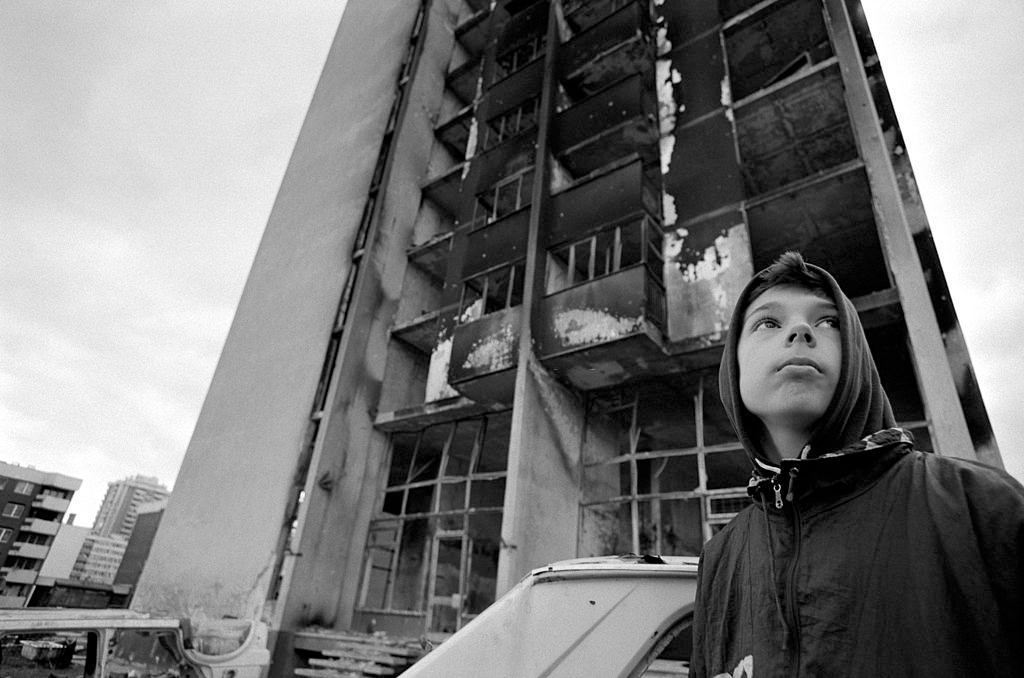
Under the scarred face of a high-rise, a boy stands with his hood up, eyes lifted beyond the frame as if listening for the next sound that might matter. Behind him, balconies and windows look gutted and dark, their edges flaked and blasted into rough geometry. The setting matches the title’s grim nickname—Heroes Square—an area defined less by monuments than by the daily courage demanded of those who stayed.
The camera’s low angle makes the building loom like a witness, towering over the small figure in the foreground and turning ordinary architecture into a record of war. A vehicle’s curved roof and the littered ground hint at interrupted routines—commutes, errands, schooldays—compressed into a landscape where safety is never assumed. In stories of civil wars, these are the details that linger: not battle lines, but the ruined apartment block where families once watched the street from their balconies.
What gives the photograph its force is the boy’s expression—quiet, guarded, and unexpectedly calm amid visible destruction. “Heroes” here doesn’t mean celebrated soldiers; it means civilians enduring extreme danger, the kind that makes childhood feel older than it should. For readers searching for historical wartime photos, civil war imagery, or the human cost of urban conflict, this scene offers a stark, intimate entry point into the lived reality behind the headlines.