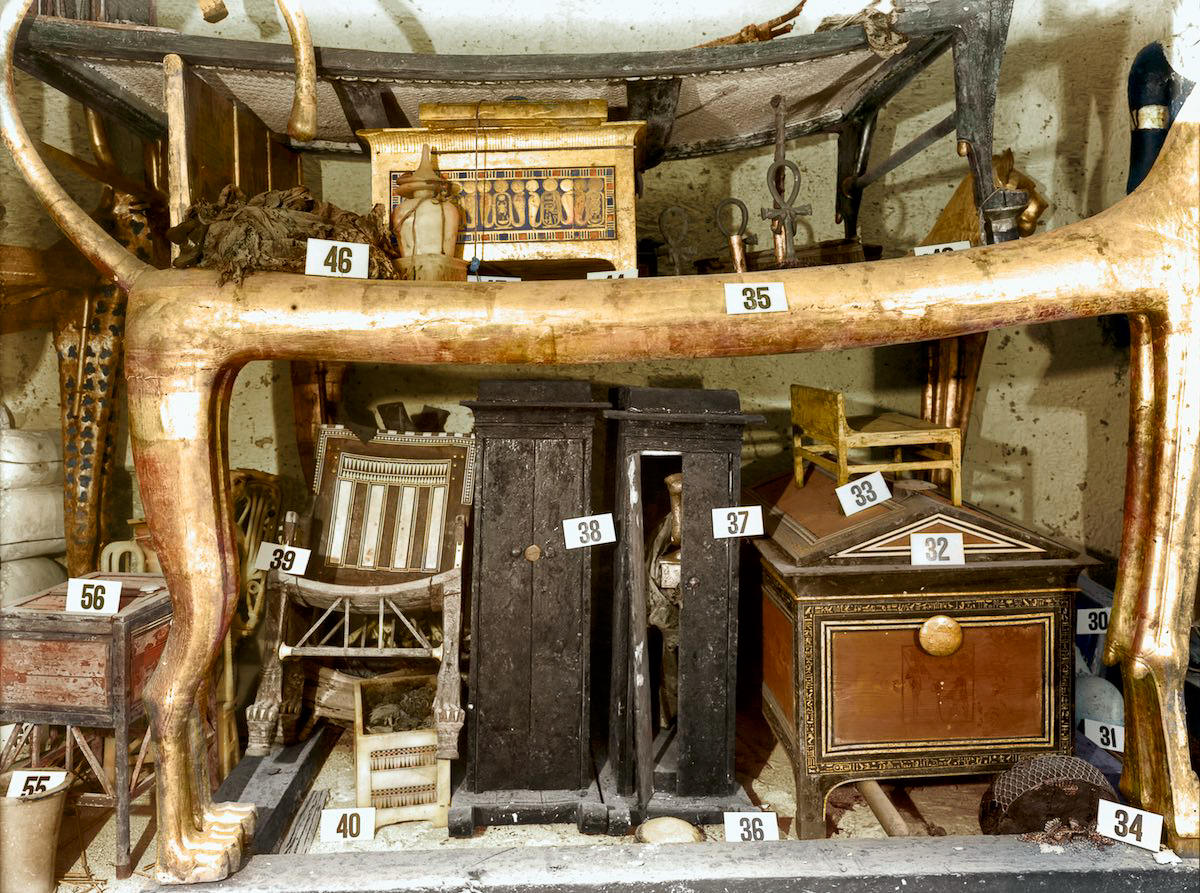
Beneath the sweeping frame of the lion couch, the Antechamber’s west wall becomes a kind of archaeological cupboard, packed tight with furniture, boxes, and ritual implements pressed into every usable inch. Small numbered tags—Carter’s careful cataloguing system—punctuate the scene, turning what looks like clutter into an ordered inventory of a royal burial. Colorization draws the eye to the warm tones of gilding and wood, suggesting how vivid these objects may have appeared when first uncovered.
Leaning panels, nested chests, and narrow cabinet-like cases are stacked face-to-face, their edges and knobs catching the light in ways that hint at frequent handling during excavation. A low stool and other portable furnishings sit wedged among larger pieces, while bundles and containers fill the gaps, all arranged not for comfort but for passage into the next world. The lion couch above acts as both shelter and frame, emphasizing how the tomb’s contents were layered and protected within a confined chamber.
December 1925 places this moment deep into the methodical work of sorting, recording, and preserving Tutankhamun’s Tomb, when the thrill of discovery had to give way to documentation. The numbered labels visible here embody that discipline, inviting modern viewers to read the room as a map of objects rather than a single treasure. For anyone searching for a detailed look at Tutankhamun Antechamber artifacts, Howard Carter’s cataloguing, or the famous lion couch context, this view offers an intimate, ground-level glimpse into the practical realities of Egyptology at work.