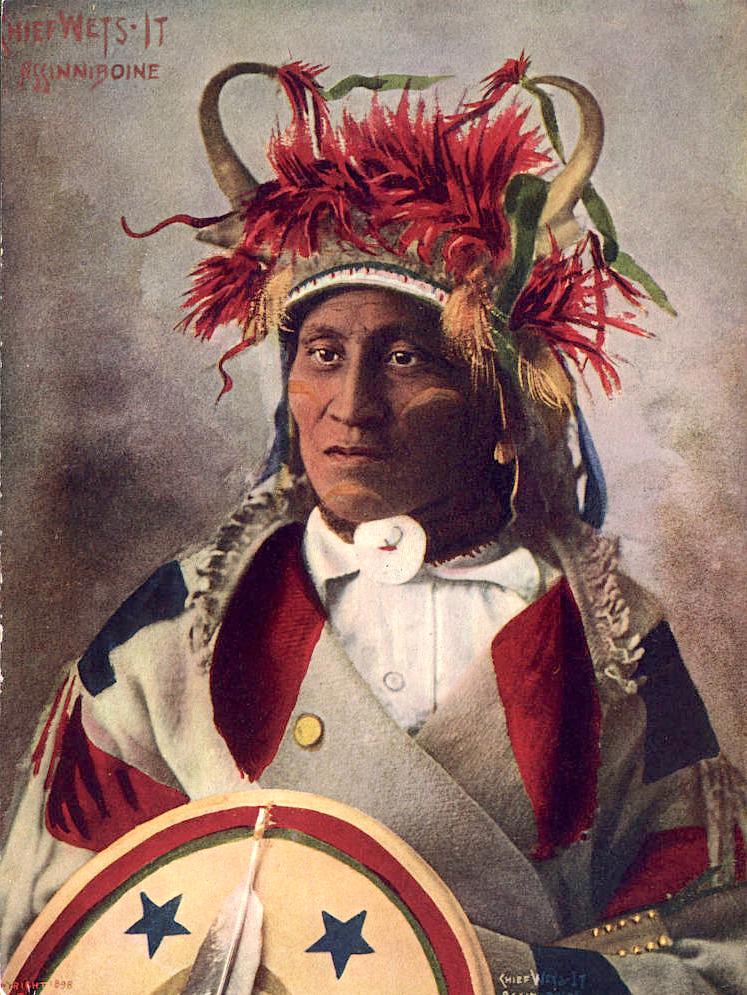
Chief Wets It appears in a composed studio portrait credited to F.A. Rinehart in 1898, with modern colorization bringing renewed immediacy to the scene. The chief’s gaze is steady and unsmiling, framed by a striking feathered headdress accented with curved horns and trailing ribbons. Subtle face paint and carefully arranged adornment read clearly against a plain backdrop, inviting close attention to expression and detail rather than surroundings.
Rich reds and soft neutrals dominate the color palette, emphasizing the layered textures of cloth, fur trim, and beadwork. A round shield with bold star-like motifs rests at the lower edge of the frame, adding symbolic weight and visual balance to the portrait. Even in a posed setting, the photograph conveys presence—an individual presented with dignity, authority, and ceremonial care.
As an Assiniboine historical photograph, this image sits at the crossroads of Indigenous representation and late-19th-century photography, shaped by both the sitter’s choices and the photographer’s lens. Colorization can never replace the original, yet it can help contemporary viewers notice materials, contrast, and craftsmanship that monochrome often compresses. For readers searching for Chief Wets It, Assiniboine history, or F.A. Rinehart’s Native American portraits, this post offers a vivid starting point for looking closely—and thinking critically—about how such portraits were made and remembered.