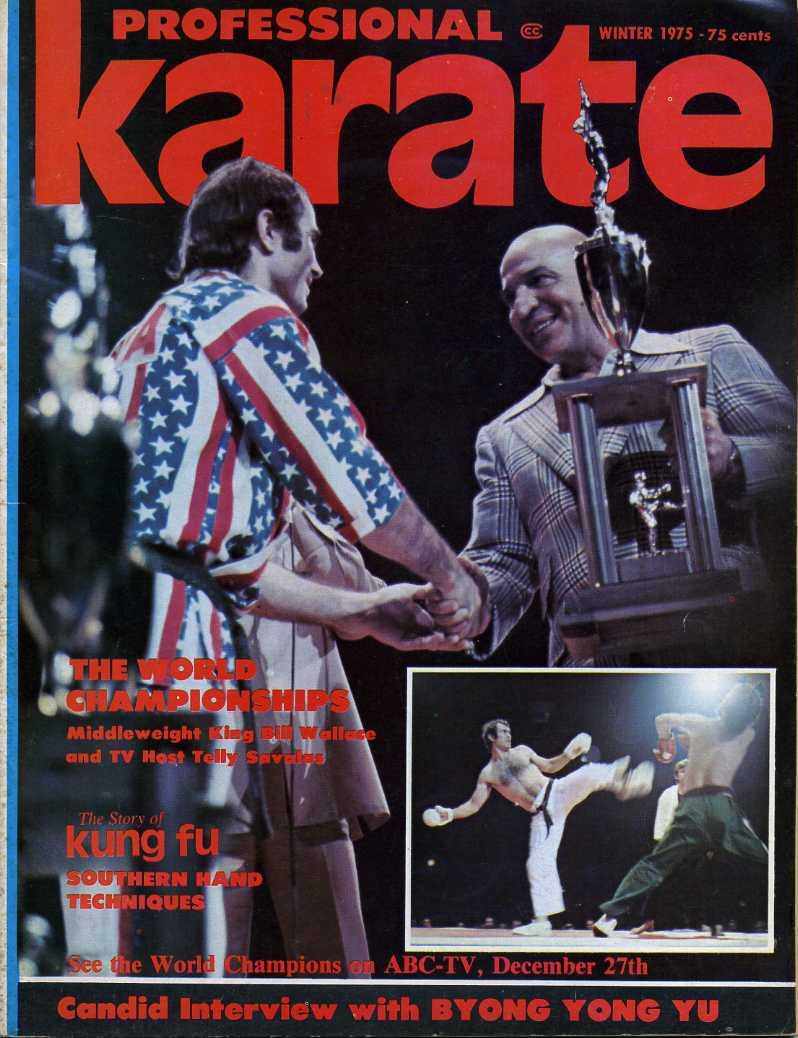
Bold red lettering shouts “Professional Karate” across a glossy cover dated Winter 1975, priced at 75 cents, immediately placing the reader in the magazine-rack battleground where martial arts culture fought for attention. At center stage, a competitor in a star-spangled uniform shakes hands with a smiling presenter clutching an oversized trophy, a tableau that blends sport, showmanship, and the era’s unmistakable visual bravado. The design leans into spectacle—spotlights, dramatic cropping, and the promise of champions—selling karate as both serious competition and pop entertainment.
Magazine covers like this were more than advertisements; they were portals into a rapidly expanding world of tournaments, training methods, and celebrity tie-ins. Headlines about “world championships,” kung fu stories, and “southern hand techniques” hint at the eclectic mix that defined martial arts magazines in the 1970s and 1980s, when readers wanted equal parts instruction, mythology, and ring-side drama. Even the small action inset—capturing a high kick mid-flight—serves as proof of authenticity, a frozen moment meant to inspire aspiring fighters and impress casual fans.
For anyone exploring the heyday of martial arts mags, this cover art is a time capsule of how karate and kung fu were packaged for a mainstream audience: confident, colorful, and eager to connect the dojo to television and big events. The typography, promotional blurbs, and trophy-pageantry speak to a period when printed pages helped shape identity, set trends, and build communities long before online forums and streaming clips. Viewed today, it offers rich SEO-worthy detail for collectors and historians alike—vintage martial arts magazine cover, 1970s karate culture, tournament glamour, and the media machine that helped “everybody” feel like they were kung fu fighting.