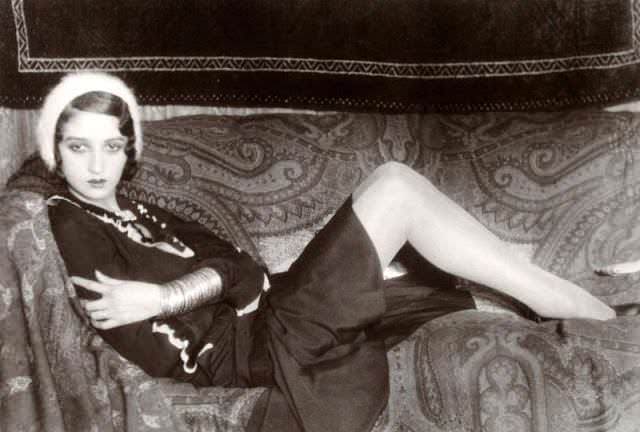
Reclining across a richly patterned sofa, the model meets the lens with a steady, unguarded gaze that feels both intimate and self-possessed. A light headband frames her dark, carefully waved hair, while a dark dress edged in pale trim draws the eye along the clean lines of her silhouette. Stacked bangles catch the light at her wrist, small details that turn a quiet interior moment into a study of fashion and attitude.
What lingers is the balance between softness and control: relaxed legs stretched along the upholstery, arms folded in a pose that reads like a private pause rather than a staged spectacle. The ornate textile backdrop and the close, low angle create a sense of closeness, as if the viewer has stepped into a personal sitting room rather than a formal studio. In the context of Renée Perle’s story as a Romanian fashion model, the photograph suggests how modern style was often built from mood, posture, and presence as much as from garments.
Intimate photos like this have become essential to fashion and culture history because they reveal how glamour operated off the runway—through everyday interiors, expressive accessories, and a look that refuses to be merely decorative. The image’s sensuality remains restrained, anchored by confident eye contact and the graphic simplicity of the outfit against lavish upholstery. For readers searching Renée Perle, Romanian model photography, or early fashion portraiture, this scene offers a vivid window into an era when elegance was performed in whispers rather than shouts.