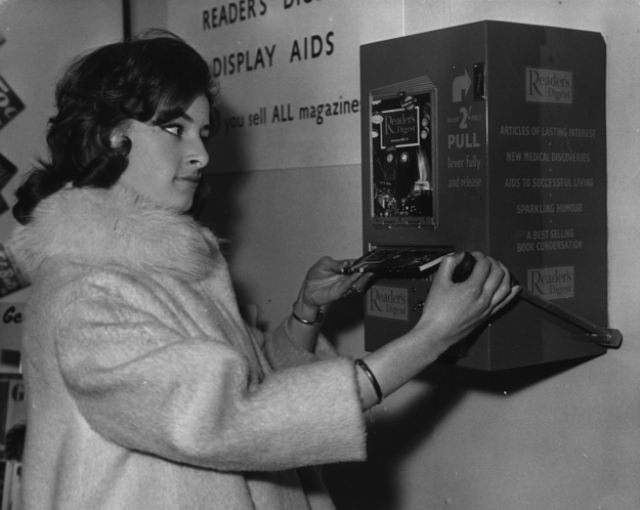
A wall-mounted vending-style device labeled “Reader’s Digest” invites a curious customer to try what amounts to an “instant book” experience. With a pull handle, a visible display window, and a tray poised to catch the purchase, the machine turns reading material into something you can buy as quickly as a snack—no counter, no clerk, just a simple mechanical transaction.
The scene feels like a small chapter in the wider story of inventions that reshaped everyday shopping and media. Marketing text on the cabinet promises “articles of lasting interest” and “adds to successful living,” echoing mid-century confidence that technology and convenience could improve daily life. Even the bold typography and compact design suggest a moment when print culture competed with speed, novelty, and new forms of distribution.
For anyone searching the history of book vending machines, Reader’s Digest ephemera, or the evolution of self-service retail, this photo offers a rich glimpse of how reading was packaged for the modern consumer. It captures the shift from browsing shelves to grabbing a curated selection on demand, foreshadowing later “instant” habits—quick access, portable content, and the idea that information should be available wherever people happen to be.