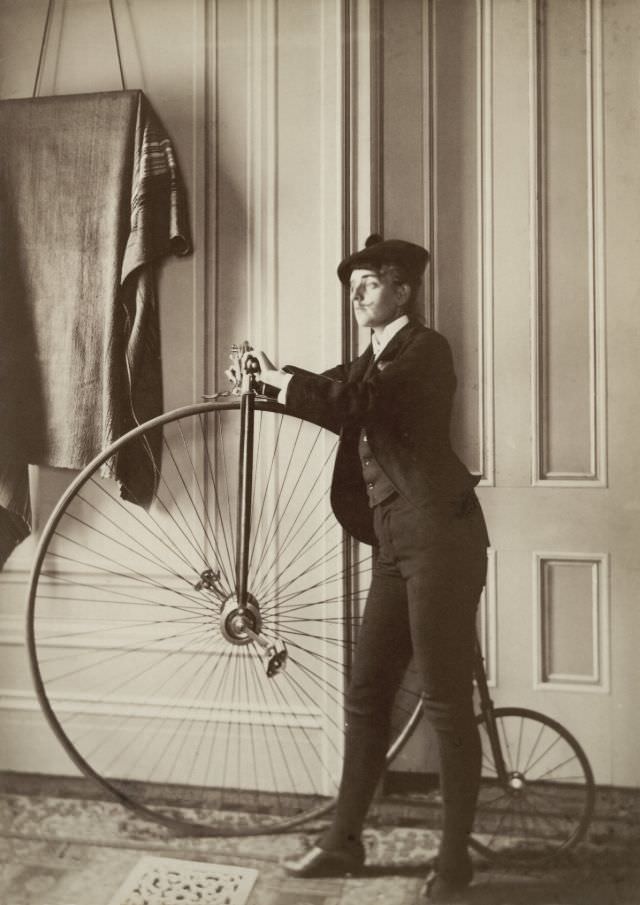
Leaning with quiet confidence against a towering penny-farthing, a sharply dressed rider turns the machine into a statement piece as much as a vehicle. The enormous front wheel dominates the frame, its fine spokes and small pedal crank hinting at the clever simplicity that made early cycling both thrilling and precarious. Indoors, against paneled doors and a patterned carpet, the scene feels staged like a studio portrait—part personal pride, part advertisement for modern ingenuity.
What makes photographs from the penny-farthing era so compelling is how clearly they reveal invention in everyday life. The high-wheel design promised speed through sheer circumference, yet demanded balance, strength, and a willingness to climb high above the ground before every ride. Clothing, posture, and the careful hand on the handlebar all speak to a moment when cycling culture was still forming, and the bicycle itself was evolving from novelty into a symbol of progress.
For readers drawn to vintage cycling photographs and the history of early bicycles, this image offers a close look at the craftsmanship and social theater surrounding the “ordinary” high-wheeler. It’s an invitation to notice details—metal fittings, wheel geometry, and the way the rider presents himself—while imagining the streets and spectators that awaited outside the frame. In a single timeless pose, the penny-farthing becomes both invention and icon, capturing the daring optimism of early personal transport.