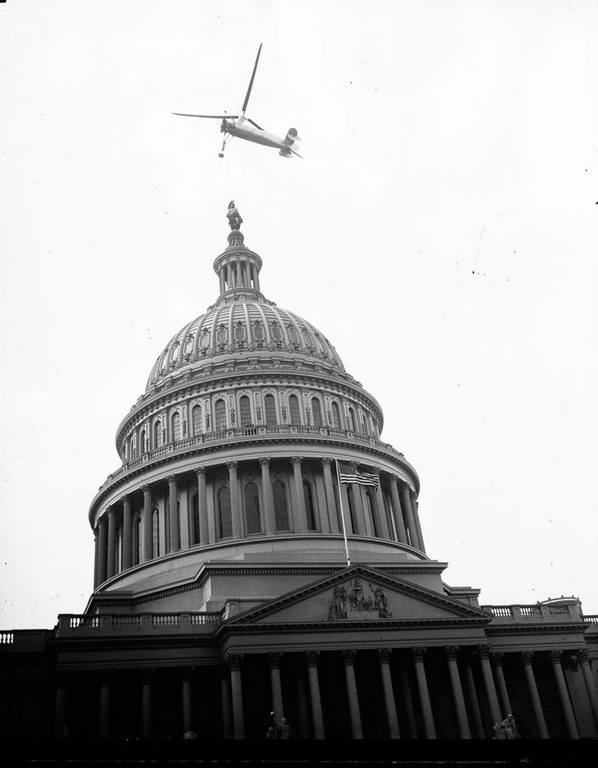
High above a familiar domed skyline, a compact autogyro hangs in the pale sky, its rotor disc angled as it passes over the statue-topped cupola. The photographer’s low viewpoint makes the aircraft feel daringly close, a tiny machine set against monumental architecture and open space. That contrast—modern engineering skimming the heavens over a grand civic landmark—gives the scene its drama.
Autogyros occupied a fascinating middle ground in early aviation history, blending airplane forward thrust with a freely turning rotor that could keep the craft stable at lower speeds than many fixed‑wing designs. In the mid‑1930s, such machines drew crowds and headlines as symbols of innovation, suggesting new possibilities for short takeoffs, urban flying, and practical aerial observation. The crisp silhouette of the craft here, with its rotor clearly visible, underlines the experimental confidence of the era.
As a historical photo labeled “Autogyro, 1936,” this image reads like a meeting point between invention and institution: bold technology crossing the air above a building long associated with governance and permanence. The empty sky amplifies the sense of height, while the dome’s repeating columns and ribs anchor the composition in time. For readers interested in aviation history, early rotorcraft, and the visual culture of modernity, it’s a striking reminder of how quickly flight became part of the public imagination.