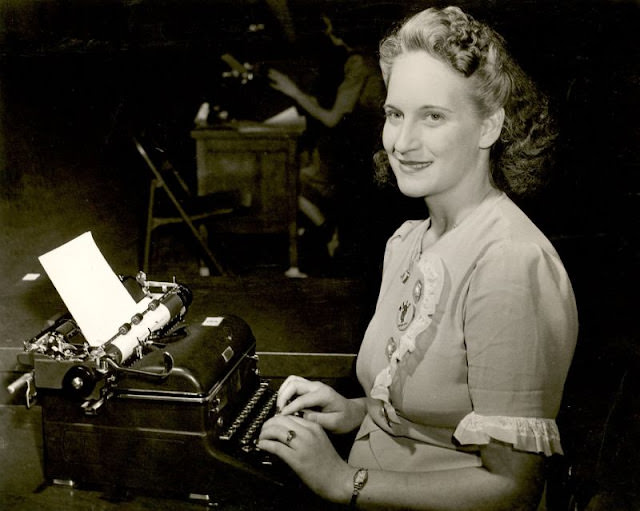
Poised at her desk, a young woman turns toward the camera with a quiet confidence, hands still resting on the keys of a sturdy manual typewriter. The machine’s paper is already threaded through the roller, hinting at a letter, a report, or perhaps a page of dictated notes—everyday writing made possible by one of the most transformative past inventions. Details like her carefully styled hair, the ruffled sleeves of her dress, and the smooth metal housing of the typewriter evoke an era when office work carried its own distinctive look and rhythm.
In the softly blurred background, another figure appears near a desk, suggesting a shared workplace where typing was both skill and livelihood. Scenes like this speak to the growth of clerical jobs and the expanding presence of women in professional settings, with the typewriter acting as a gateway to new roles in business, administration, and publishing. The contrast between the sharply focused typist and the shadowed room behind her adds a cinematic depth, reminding us how much of history is preserved in atmosphere as well as action.
Readers drawn to historical photos of ladies using typewriters will recognize more than nostalgia here; they’ll find a snapshot of changing work culture and the technology that shaped it. Before laptops and smartphones, each line required deliberate pressure, mechanical precision, and patience, turning written communication into a tactile craft. As part of a broader story about inventions, this image celebrates the human side of innovation—how a machine on a desktop could reshape daily life, opportunity, and the written word.