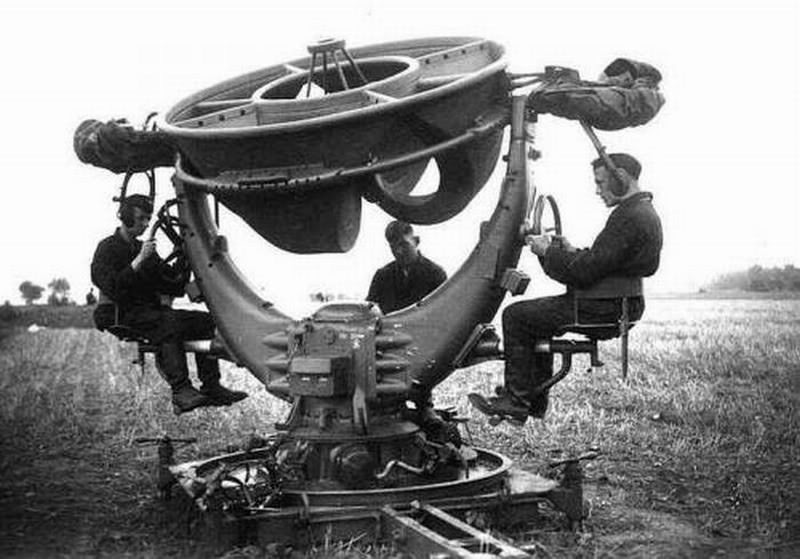
Long before radar screens and electronic warning networks became standard, air defenses leaned on sheer mechanical ingenuity—like the enormous acoustic horns pictured here. Set on a heavy rotating mount in an open field, the device resembles a clustered set of funnels aimed at the sky, built to gather and concentrate distant engine noise. Two uniformed operators sit on either side, positioned to steer and fine-tune the apparatus as they listen for approaching aircraft.
The logic was simple but demanding: amplify sound, isolate direction, and give crews precious minutes to react. By slowly sweeping the horns across the horizon and comparing what each listener heard, these early aircraft detection systems could suggest where an enemy plane might be coming from. It was a method shaped as much by patience and experience as by engineering, because wind, terrain, and background noise could all blur the signal.
Seen today, the scale of the contraption tells its own story about an era when “inventions” often meant oversized, rugged machines built to wrestle information from the environment. Posts like this trace the path from acoustic defense technology to the radar age, reminding us how militaries experimented with every available tool to gain an edge. For anyone interested in pre-radar aviation history, early warning systems, and unusual military engineering, these listening horns are a fascinating snapshot of innovation under pressure.