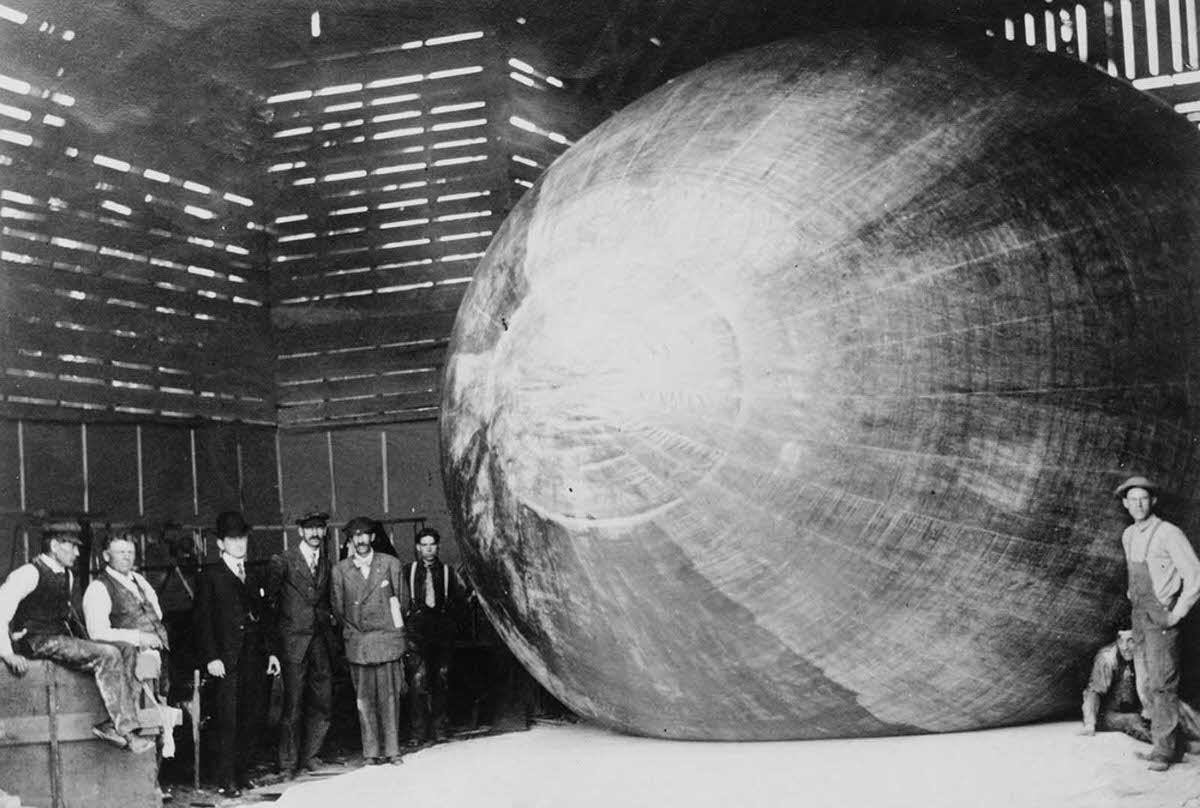
Inside a slatted wooden hangar at Hammondsport, New York, an enormous airship envelope dominates the scene, its rounded bulk pressing into the frame like a living thing at rest. A line of men in work clothes and suits stands along the wall for scale, their hats and stiff postures underscoring just how outsized the craft was compared with the people who built and handled it. Light spills through the gaps in the boards overhead, striping the interior and turning the airship’s surface into a patchwork of sheen and shadow.
Known from the title as the Baldwin airship in 1907, the photograph points to a transitional moment when American aviation still straddled workshop pragmatism and showman’s spectacle. Thomas Scott Baldwin, identified as second from left, appears among the group rather than apart from it, suggesting the hands-on culture of early aeronautics, where inventors, mechanics, and observers mingled in close quarters. The setting feels improvised yet purposeful—a barnlike structure sheltering a technology that promised controlled flight, reconnaissance, and new kinds of travel.
For readers exploring the history of inventions and early flight, this Hammondsport airship image offers more than a portrait of a machine; it hints at the logistics behind lighter-than-air experimentation—storage space, labor, materials, and the sheer physical presence of the envelope itself. Details like the rough floor covering, the crowding at the edges, and the careful staging beside the craft help convey how experimental aviation looked before standardized airfields and modern hangars. As a piece of aviation history in New York, it invites a closer look at the people and places that helped push flight from idea to reality.