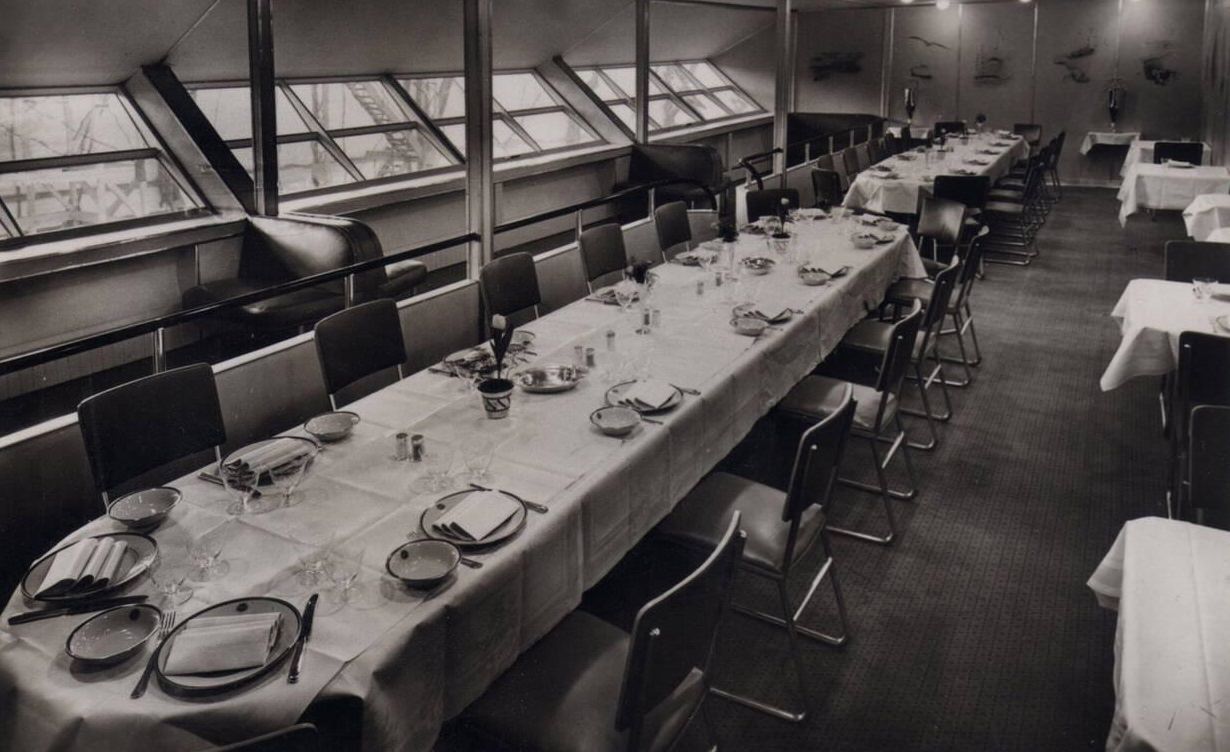
Long tables dressed in crisp white linens stretch through the dining saloon, set with plates, glasses, and neatly folded napkins as if service could begin at any moment. A row of angled windows runs the length of the room, flooding the space with light and giving passengers a continuous view beyond the hull. The orderly chairs, simple place settings, and restrained décor suggest a carefully planned blend of comfort and efficiency, made to feel like an ocean liner—only aloft.
Seen in the context of the 1930s, the Hindenburg represented a bold chapter in aviation history when airship travel was marketed as modern, glamorous, and surprisingly civilized. The photo’s calm interior emphasizes that innovation wasn’t only in engines and aerodynamics, but also in how designers imagined life in the sky: meals served at proper tables, conversation in a shared salon, and a sense of spaciousness created by light and geometry. Even without a crowd, the room hints at routines and rituals that transformed flight into an experience rather than a mere journey.
For readers interested in inventions and early air travel, this historical image offers a rare look at the human side of a famous zeppelin—where engineering met hospitality. It’s an SEO-friendly glimpse into Hindenburg interiors, 1930s passenger airships, and the golden age of dirigible travel, capturing the aspirations of an era that believed the future could be both fast and elegant. The silence of the empty tables adds its own drama, inviting us to imagine the conversations, menus, and anticipation that once filled this airborne dining room.