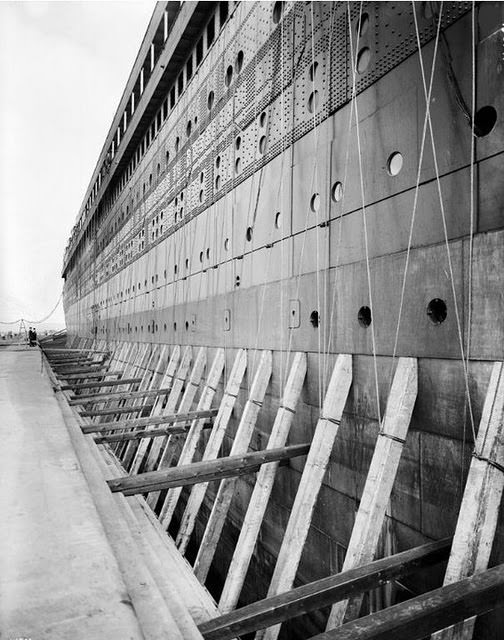
Riveted steel plates stretch into the distance along an immense hull, their seams and rows of portholes revealing the painstaking geometry behind early 20th‑century shipbuilding. Timber braces lean in disciplined ranks against the side, a temporary forest of supports that hints at the scale of the vessel taking shape. Even without a full view of the shipyard, the perspective makes the work feel monumental—part architecture, part industrial muscle.
During the Titanic’s construction, “unsinkable” confidence wasn’t just marketing bravado; it was tied to the era’s faith in engineering, new fabrication methods, and the disciplined routines of heavy industry. Photographs like this invite a closer look at the inventions and techniques that made giant ocean liners possible, from mass riveting to compartmentalized thinking in hull design. The surface details—fasteners, plating, and openings—quietly tell the story of innovation translated into metal.
Long before fame and tragedy turned the Titanic into a global symbol, the ship existed as an assemblage of materials, labor, and bold ideas in a dockside world of noise and grit. This post explores that rise to prominence through the lens of construction: what had to be invented, refined, and coordinated to build a leviathan meant to command the Atlantic. For readers searching Titanic construction photos, shipyard history, or the technology of ocean liners, this image anchors the narrative in the tangible realities of how the “unsinkable” was made.