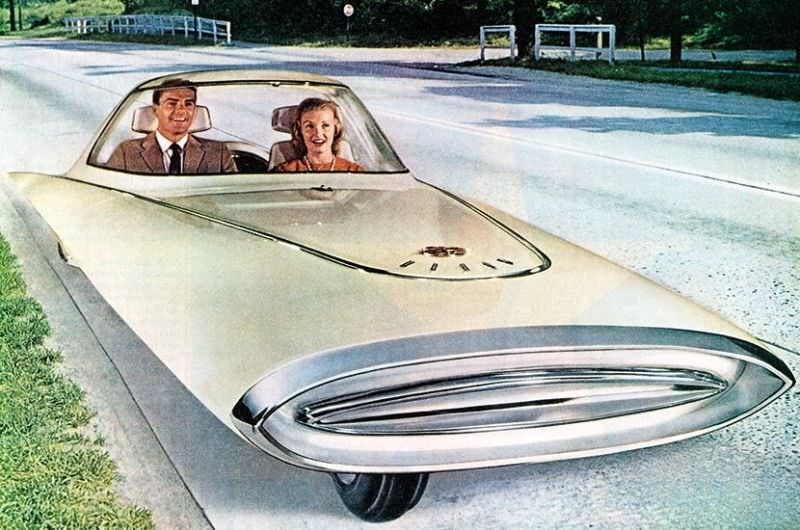
A sleek, torpedo-like body glides along a quiet roadway, its nose shaped like a jet intake and its cabin wrapped in a low, panoramic windshield. Inside, two well-dressed riders sit side by side, smiling with the calm confidence of an era that expected tomorrow to arrive on schedule. With only a single wheel visible beneath the body and the rest tucked away, the 1961 Ford Gyron looks less like a conventional car and more like a rolling concept sketch made real.
The Gyron belongs to that fascinating class of mid-century “gyrocar” ideas—two-wheeled vehicles imagined to stay upright through gyroscopic stabilization. Details like the ultra-clean sides, minimal protrusions, and aircraft-inspired front end point to research and marketing purpose inventions rather than a machine meant for mass production. Even without technical diagrams, the image reads like a promise: fewer wheels, less drag, and a streamlined future where automotive design borrows freely from aerospace.
Seen today, this historical photo works as both artifact and advertisement, capturing the optimism that powered concept-car culture in the early 1960s. The setting is deliberately ordinary—an everyday road and green verge—so the extraordinary shape feels close to becoming practical transportation. For anyone searching Ford concept cars, experimental vehicles, or the story of gyroscopic two-wheeled cars, the Ford Gyron remains an unforgettable symbol of how boldly designers once reimagined what a “car” could be.