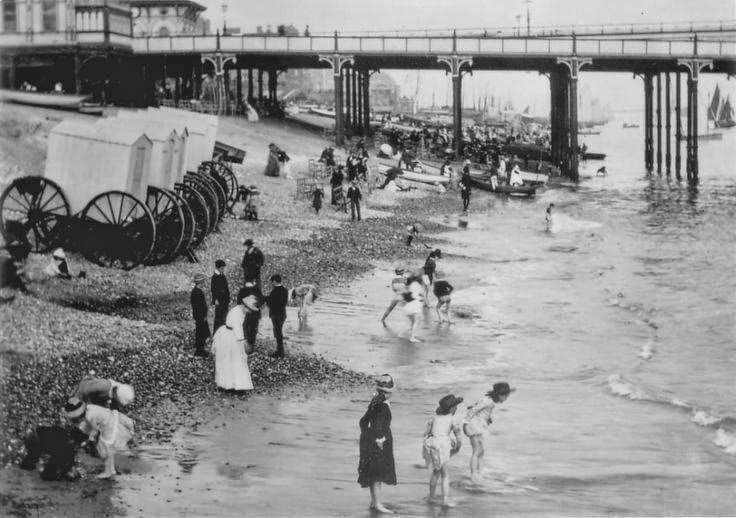
Along a pebbled shoreline beneath a long pier, a row of bathing machines sits like a strange fleet hauled onto land—boxy cabins on tall wheels, ready to be rolled toward the surf. On the beach, small groups linger at the water’s edge while others wade in cautiously, their swimwear and posture hinting at a time when seaside leisure still followed strict social rules. Boats and distant masts punctuate the background, placing this scene in a busy resort waterfront where recreation and commerce shared the horizon.
Brought to life in the Victorian era, bathing machines were part modesty screen, part changing room, and part transport—an invention designed to let bathers enter the sea without being seen undressing. The best-known versions could be pulled by horses or pushed by attendants until the door faced the water, turning a simple swim into a carefully managed ritual. In images like this, the contrast is striking: playful waves and open air on one side, and on the other, rolling wooden cabins that guarded propriety as fiercely as they promised refreshment.
Going Swimming On Wheels explores more than 50 historic photos of these ingenious contraptions, tracing how beach culture evolved from guarded etiquette to modern swimwear and public bathing. Each photograph offers details worth lingering over—pier architecture, shoreline crowds, and the practical engineering of the machines themselves—making this collection a rich visual tour for anyone interested in Victorian inventions and seaside history. For readers who love social history, old coastal resorts, and the oddities of everyday technology, bathing machines are a perfect reminder that even a day at the beach once came with wheels, rules, and a little theater.