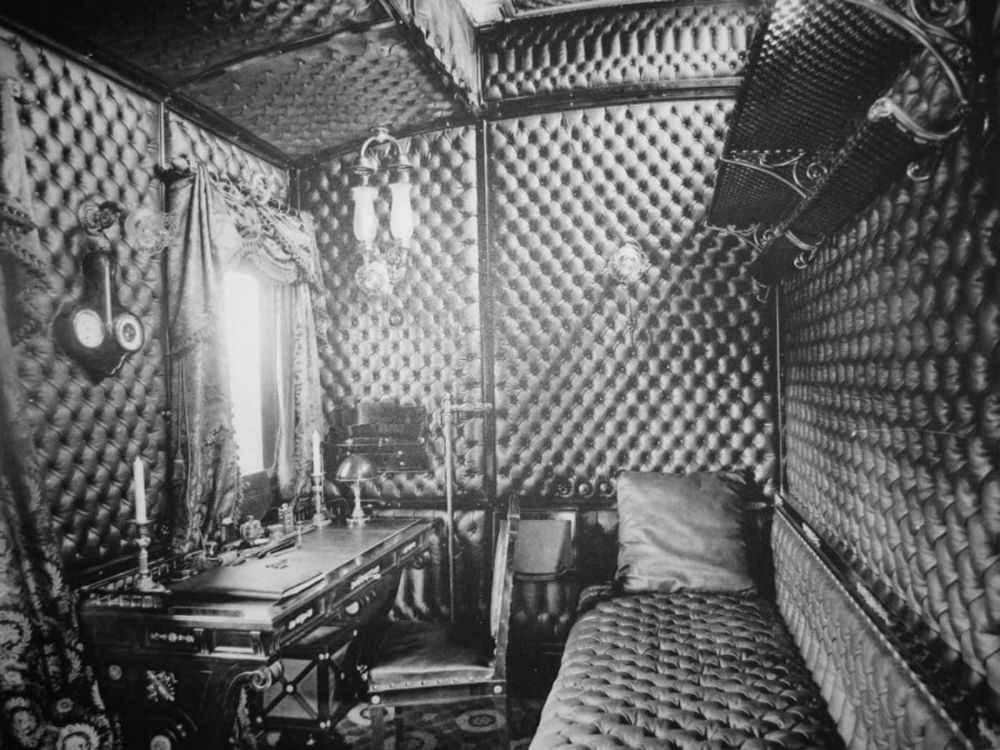
Tucked behind thick, button-tufted walls, the “Ladies suite” suggests a private retreat engineered as much for comfort as for display. Every surface appears upholstered or padded, turning the room into a soft, insulated chamber that feels distinctly modern in its concern for warmth and noise reduction. The effect is both intimate and theatrical, a space meant to be entered, admired, and then used away from the public eye.
Along the left side, a vanity-like desk sits beneath a curtained window, its mirror catching light while candlesticks and small personal objects cluster nearby. Overhead, compact lighting and neatly finished fittings hint at the practical “inventions” behind the elegance—clever fixtures, efficient use of space, and built-in storage that keeps necessities close at hand. Even the textures tell a story: quilting, stitching, and upholstery transform an interior into something more like a boudoir than a mere compartment.
At the right, a narrow daybed with a pillow completes the impression of a dedicated ladies’ room designed for rest, freshening up, or quiet conversation. Details such as the patterned floor and the carefully arranged furnishings point to a time when travel and public venues increasingly accommodated women with specialized, purpose-built spaces. For readers interested in historical interiors, women’s social history, or early design innovations, this photograph offers a rich glimpse into how privacy and luxury were constructed in everyday life.