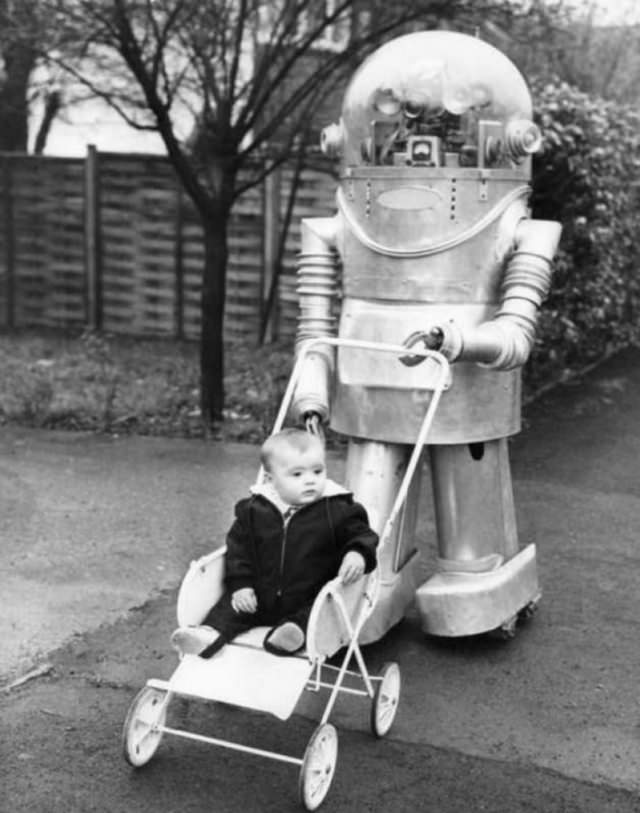
Mid-century optimism hums through this scene: a bulky, domed robot with exposed dials and mechanisms carefully pushes a baby stroller along a paved path. The contrast is striking—polished metal arms and ribbed joints paired with the everyday softness of a bundled child—turning a simple walk into a statement about the future of domestic life. For readers searching the history of robotics and home inventions, the photo offers a vivid snapshot of how “helpful machines” were imagined in the 1960s.
Tinker the Robot, presented as a real-life housekeeper-style invention, looks less like today’s sleek assistants and more like an industrial appliance brought into the yard. Details such as the transparent helmet-like top, the wide torso, and the squared base suggest a machine designed to be seen as modern and trustworthy, even friendly, while still unmistakably mechanical. The stroller handles tether the robot to a familiar routine, hinting at ambitions beyond factory floors: childcare, chores, and the promise of automated convenience.
What makes the image linger is its blend of wonder and practicality, a period fantasy rendered in metal and wheels. Rather than depicting robots as distant science fiction, it frames them as neighbors-in-waiting—devices meant to share ordinary tasks and free up time at home. In the story of 1966’s vision of the future, Tinker stands as a reminder that yesterday’s inventions were often as much about confidence and marketing as they were about engineering, inviting us to compare the dreams of then with the smart home realities of now.