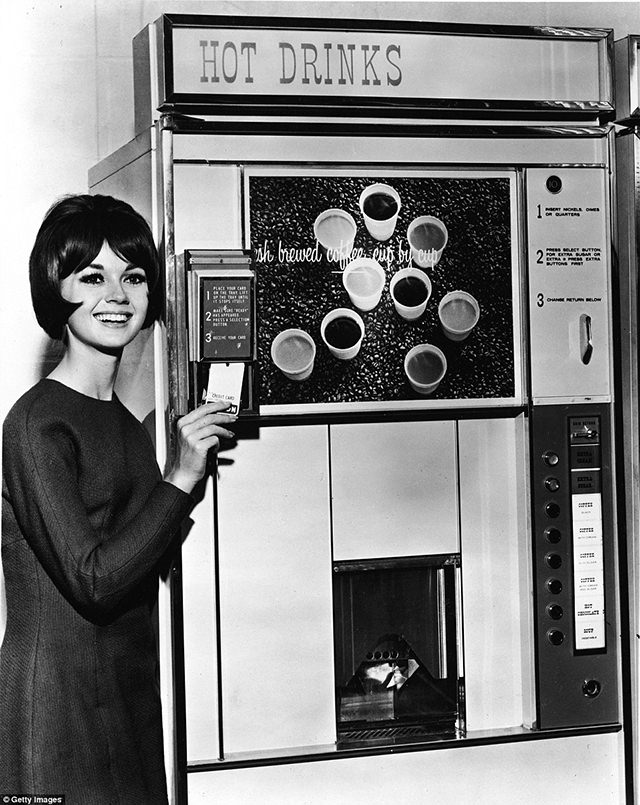
A smiling shopper stands beside a tall, boxy vending machine crowned with the bold promise of “HOT DRINKS,” its glossy front panel dotted with cup graphics that suggest instant choice and modern convenience. The controls are designed for quick decisions—coin slots, instructions, and selection buttons—turning a simple pause in the day into something a little more futuristic. In the lower compartment, the delivery hatch hints at the satisfying moment when the machine completes its mechanical transaction and produces the purchase.
By the 1960s, self-service culture was expanding beyond traditional counters, and machines like this helped reshape everyday shopping habits. The post’s title evokes a wider world of automated essentials—tins and packets such as Heinz Spaghetti and vegetable soup, Tetley tea, Sugar Puffs, Fray Bentos, Oxo cubes, light bulbs, mayonnaise, and cocoa—items that could be dispensed quickly and packed straight into a housewife’s own bag. Taken together, these details capture an era fascinated by labor-saving inventions, where the hum of a machine promised speed, reliability, and a taste of the future.
For readers interested in social history, retail technology, and mid-century domestic life, this photograph offers a vivid window into how innovation entered ordinary routines. It also speaks to marketing and design: clean lines, clear signage, and a friendly human presence all working to make automated retail feel trustworthy and desirable. Whether you arrive here searching for 1960s vending machines, the history of self-service shopping, or the evolution of household essentials, the image highlights a moment when convenience was becoming a defining feature of modern consumer culture.